[pageLogInLogOut]

#Denim

Archroma and CleanKore join forces to promote sustainable, cost-effective indigo dyeing process

Archroma, a global leader in specialty chemicals towards sustainable solutions, today announced a strategic partnership with technology innovator CleanKore, aiming to advance sustainable dyeing processes throughout the denim supply chain.

The agreement will allow Archroma and CleanKore to promote the benefits of each other’s technologies.

This includes Archroma’s robust catalog of dyes and specialty chemicals along with CleanKore’s patented process of dyeing yarns at the denim mill that completely eliminates the need for potassium permanganate (PP) spray and laser booster to achieve the bright white abrasion effect in the garment finishing process.

The result is a large and circular bright white core with a small ring of indigo dye. The technology does not just eliminate the chemicals associated in the PP spray and laser process, which is much safer for denim workers, it also allows to save significant amounts of water and energy throughout the manufacturing process from fabric to garmenting.

CleanKore initially looked at eliminating potassium permanganate due to its being classified as hazardous if inhaled or ingested, or in case of contact with the skin or the eye. It is also considered very toxic to aquatic life.

No new equipment or capital expenses are needed to implement the CleanKore technology, which works on all denim fabric, including dark indigo, sulfur top/bottom and sulfur black.

This is where Archroma comes into the picture. Its global technical team of denim coloration specialists will provide support to denim mills seeking to implement the CleanKore technology and develop the desired looks and effects - with the right colors and chemical systems for their production set-up.

CleanKore estimates that the technology allows to save up to 15 liters of water per garment, or the equivalent to the drinking needs of 5 people per day, and up to 0.51 kWh of energy per garment, or the equivalent of five 100-watt light bulbs on for 1 hour. The CleanKore technology also leads to a 10% to 20% increase in production throughput, as a result of a faster garment wash-down and the elimination of PP spray.


For CleanKore CEO Darryl Costin Jr., the announcement comes at an ideal time for CleanKore: "We have successfully proven the technology with mill partners such as Arvind and other denim mills in Pakistan, Bangladesh, China, Vietnam, Thailand and the United States. The response from the industry has been overwhelmingly positive. Having a partner in Archroma, one that is highly respected for their innovation and emphasis on sustainability throughout the industry, will allow us to take CleanKore to the next level.”
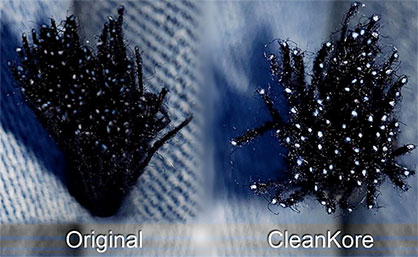
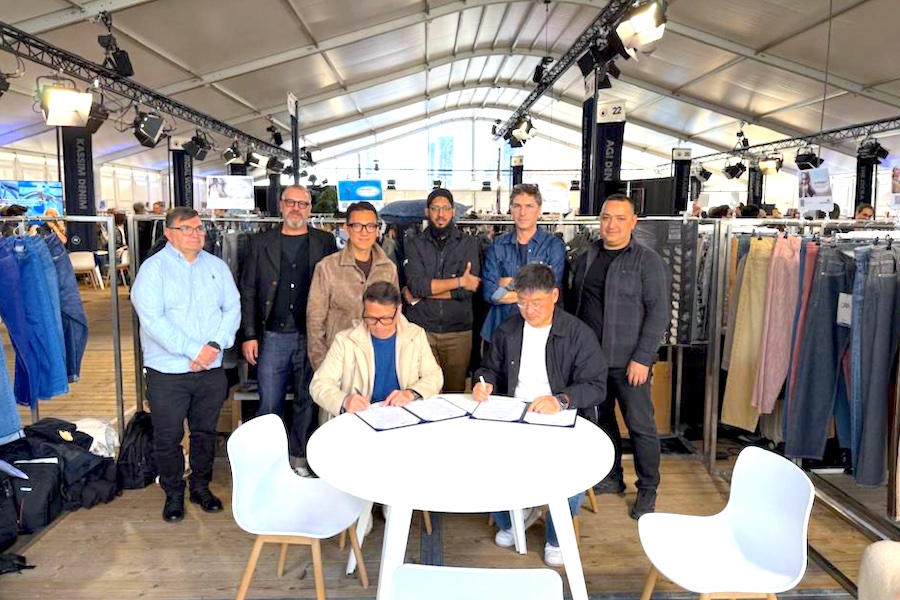
Archroma and CleanKore join forces to promote sustainable, cost-effective indigo dyeing process. (Photo: CleanKore)


Umberto Devita, Global Indigo Manager at the Archroma Global Competence Center for Denim & Casualwear, adds: "CleanKore is perfectly aligned with the 3 pillars of 'The Archroma Way to a Sustainable World: Safe, efficient, enhanced'. 'Safe' through the elimination of a potentially harmful substance and the protection of the denim workers, 'Efficient' through the reduction of resource consumption, improved productivity and cost-effective profile. And 'Enhanced' through the gorgeous colors and effects allowed with Archroma's innovations and systems, in particular our aniline-free* Denisol® Pure Indigo and Diresul® sulfur dyes. We look forward to help promoting an innovation that will help with many of the challenges facing our denim customers throughout the world. Because it’s our nature."

* Below limits of detection according to industry standard test methods

More News from Archroma Textile Specialties

#Textile chemistry

Archroma and Prosperity Textile to collaborate on denim innovation

Archroma, a global leader in specialty chemicals, and Prosperity Textile, an international fabric manufacturer with production bases in China and Vietnam, have announced a partnership to drive denim innovation. They will collaborate to develop, evaluate and implement new approaches to improve denim aesthetics, durability and performance, with a shared commitment to sustainability.

#Textile chemistry

Nicca names Archroma exclusive ZELAN™ distributor, extending a decade-long legacy

Archroma and Nicca Chemical are collaborating to support the continued growth of ZELAN™ non-fluorinated durable water repellents (DWRs) across the global textile industry. The announcement follows Nicca’s acquisition of the ZELAN™ business from The Chemours Company in March 2026 and extends Archroma’s decade-long legacy with the ZELAN™ brand.

#Textile chemistry

Archroma and Lameirinho partner in pioneering deployment of InOneGO single-step dyeing

Archroma, a global leader in specialty chemicals, and Lameirinho, a leading home textiles manufacturer based in Portugal, are collaborating to bring InOneGO by Archroma, a new single-step dyeing process, into commercial production. Lameirinho’s first InOneGo bedlinens collection is now available worldwide.

#Textile chemistry

Archroma wins ICIS Innovation Award for sulfur dye breakthrough

Archroma, a global leader in specialty chemicals, has won a coveted 2026 ICIS Innovation Award for Best Product Innovation from a Large Company for FiberColors®. These high-performance sulfur dyes are synthesized from pre-consumer wool waste, reducing industry reliance on petroleum-based inputs while contributing to the circular economy by upcycling unwanted wool that farmers would otherwise pay to dispose of.

More News on Denim

#Textile processing

Jeanologia combines digitalisation, laser and ozone technology to strengthen China’s textile competitiveness

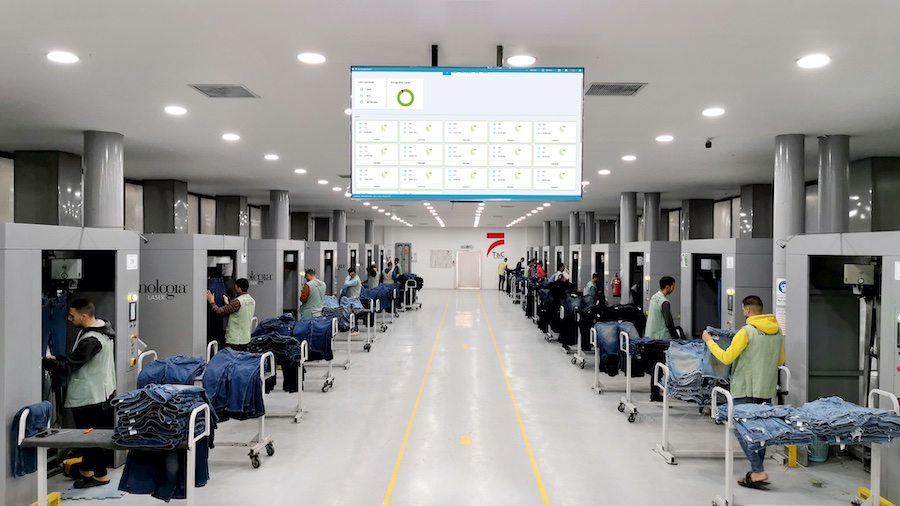
At ITMA Asia + CITME 2026 in Shanghai, Jeanologia showcased how the combination of digitalisation, laser technology and G2 Ozone can help China’s textile industry improve productivity, speed, quality and efficiency. With its Compact Super Flash laser system and integrated production concepts, the Spanish technology specialist demonstrated how connecting product development and industrial production can enable faster, more automated and sustainable manufacturing processes.

#Textile processing

Jeanologia and Sue Barrett explore new interpretations of camouflage in COMMON GROUND

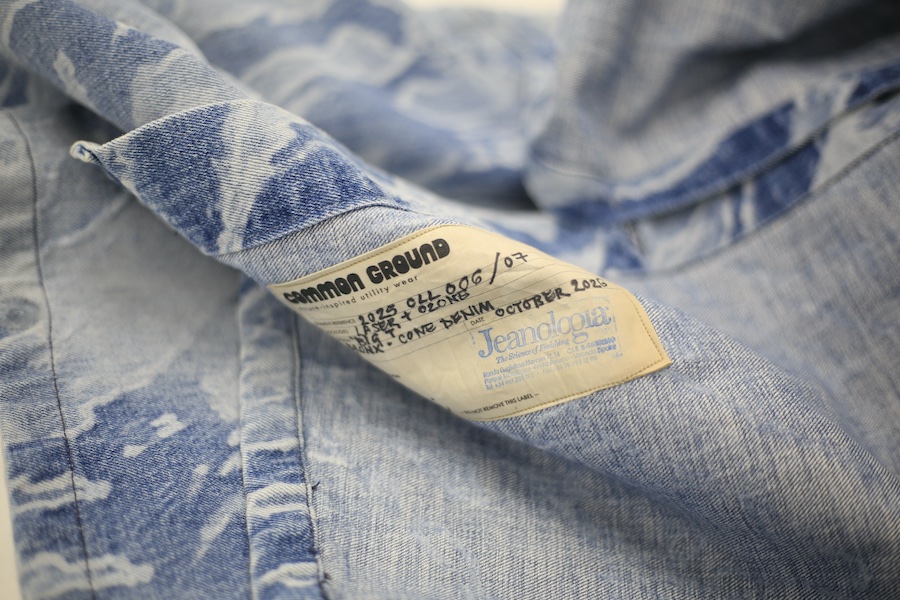
Jeanologia has collaborated with Sue Barrett, founder of Denim Forum, to create COMMON GROUND, a new denim collection that reinterprets camouflage through nature-inspired patterns, vintage garments and modern finishing technologies. Developed as part of Jeanologia’s Denim Métiers initiative, the project combines archival references and creative experimentation with laser and ozone technologies to explore new possibilities in contemporary denim design.

#Recycling / Circular Economy

Blue Jeans Go Green celebrates 20 years of denim recycling with more than six million items collected

Cotton Incorporated is celebrating the 20th anniversary of its Blue Jeans Go Green™ denim recycling program. Since its launch in 2006, the initiative has collected more than six million denim items, diverted over 3,000 tons of textile waste from landfills and enabled the production of more than 12 million square feet of denim-based insulation. What began as a college campus collection drive has developed into a nationwide recycling initiative involving consumers, retailers, schools and community organisations across the United States.

#Industry 4.0 / Digitalization

Jeanologia and BCome connect factory data with Life Cycle Assessment and Digital Product Passports

A new white paper by EIM by Jeanologia and BCome demonstrates how primary environmental data from denim finishing processes can be integrated into a garment's Life Cycle Assessment (LCA) and prepared for use in a Digital Product Passport (DPP). A comparative case study highlights significant improvements at the production stage while also showing how these translate into the environmental performance of the finished garment.

Latest News

#Spinning

Alexander Hoffmann to succeed Klaus Schäfer and Wolfgang Imping as managing director of BB Engineering

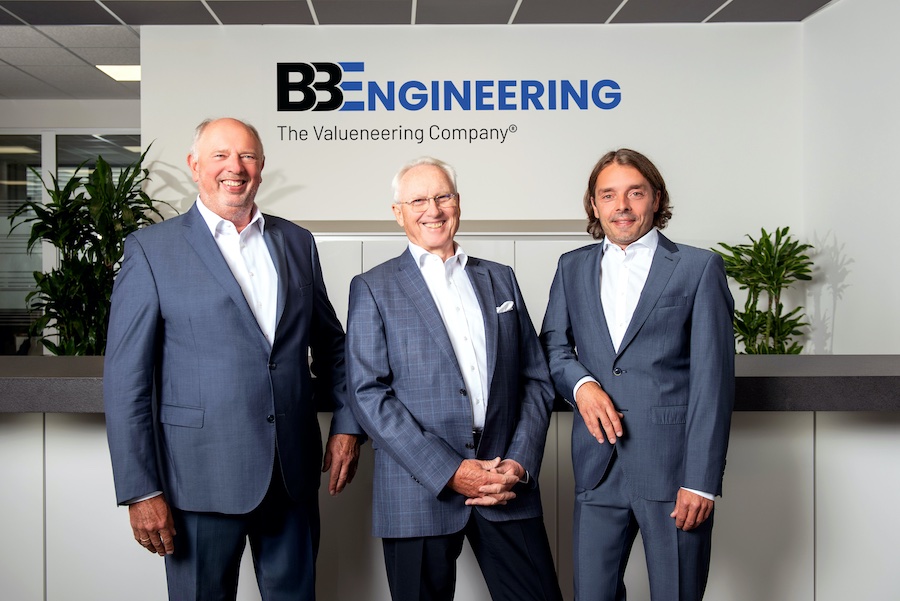
Starting January 1, 2027, Alexander Hoffmann will take over as managing director of BB Engineering GmbH, a German manufacturer of machinery and equipment for the plastics and textile industries. He succeeds Dr.-Ing. Dr. h.c. Klaus Schäfer and Wolfgang Imping, who will both retire at the end of 2026.

#Raw Materials

Cotton Brazil strengthens ties between Brazilian growers and the international textile industry at ITMA ASIA 2026

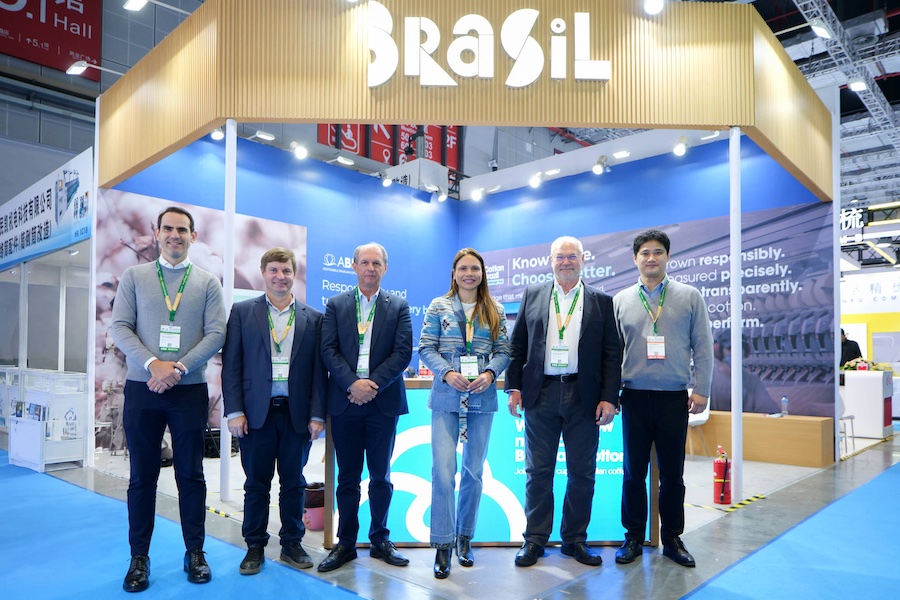
Cotton Brazil's participation in ITMA ASIA + CITME 2026 in Shanghai highlighted responsible production, traceability, fibre quality and technical knowledge sharing as key differentiators of Brazilian cotton. Strengthening relationships between Brazilian cotton growers and the international textile industry was a central objective of the initiative at the exhibition, which took place from November 20 to 24.

#India ITME 2026

Itema demonstrates weaving versatility for apparel, suiting and sarees at India ITME 2026

At India ITME 2026, taking place from December 4 to 9 in Greater Noida, Itema will present three weaving machines configured for specific requirements of the Indian textile industry. Visitors to Hall 15, Stand G9 will see an A9500EVO air-jet weaving machine and two R9500EVO rapier weaving machines producing fabrics for apparel, suiting and sarees.

#India ITME 2026

Groz-Beckert targets energy efficiency, productivity and process reliability across six textile technology sectors at India ITME 2026

At India ITME 2026 in Greater Noida from 4 to 9 December, Groz-Beckert will present its latest innovations across all six product areas – Knitting, Weaving, Nonwovens, Sewing, Tufting and Spinning. At Hall 14, Booth B6, the German textile technology specialist will showcase advanced components, systems, services and digital solutions designed to improve energy efficiency, productivity, process reliability and textile quality while addressing the increasingly diverse requirements of modern textile manufacturing.

TOP