[pageLogInLogOut]

#Denim

Cone Denim introduces Ionic+™ sustainable antimicrobial protection for denim

Cone Denim®, a global leader in denim authenticity and sustainable innovation, is excited to launch the newest in denim innovation – the Self-Clean Jean. In partnership with Noble Biomaterials, the global leader in antimicrobial and conductivity solutions for soft-surface applications, Cone Denim has developed its newest denim fabric using Noble’s Ionic+™ technology, which harnesses the power of positive ions embedded in yarn fibers to inhibit the growth of bacteria and microbes on the surface of fabric.

Through this advanced technology, Cone has created sustainable protection for jeans that remain clean and odor-free, thus reducing the need for frequent washing.

“Cone remains committed to being a leader in the development of sustainable denims and working with likeminded partners to identify and lead initiatives to create more sustainable, responsibly produced denims,” said Steve Maggard, President of Cone Denim. “We are very excited to be the first to bring together the advanced science of Ionic+ with Cone’s authentic denim, creating another industry first in sustainable denim innovation.”

© 2020 Cone Denim
© 2020 Cone Denim


“Consumers today are looking for apparel that provides not only comfort, but also hygiene benefits,” said Joel Furey, CCO of Noble Biomaterials. “We’re very pleased to be partnering with Cone Denim to incorporate our Ionic+ technology into this innovative, sustainable denim that provides long-lasting antimicrobial protection.”

The newest Cone denim with Noble’s Ionic+ silver technology was designed with sustainability and protection at its core. Ionic+ uses positively charged ions found in nature to disrupt the growth of microbes on Cone’s fabric, promoting self-cleaning to eliminate odors.


Silver ions are permanently incorporated within the fibers and the fabric requires no additional chemistry or finishing process that could be washed or worn out. The performance lasts the lifetime of the garment, resulting in fewer needed washings and reduced water consumption and energy use.

The denim is also dyed using one of Cone Denim’s Distilled Indigo (pre-reduced) shades, which offers additional water, energy and chemical savings.

Noble Biomaterials is a bluesign® System Partner and Ionic+ fibers and filaments have received OEKO-TEX® Standard 100 accreditation, which certifies that they support human ecology through biocompatibility and the absence of harmful substances in the manufacturing process.

Pierette Scavuzzo, Director Product Design for Cone Denim added, “The Self-Cleaning Jean is a game changer. The fabric is versatile in a 10.5 ounce weight with 44 percent stretch, incorporating well-balanced yarn character and a very soft hand. Combine this superior comfort with silver, odor-free technology and its many sustainable benefits that promote resource savings and you have your favorite go-to jean.”

Cone Denim is launching the Self Clean Jean in our Spring / Summer ’22 collection which debuts next week in conjunction with the Kingpins Amsterdam virtual trade show.
More News from TEXDATA International

#ITM 2026

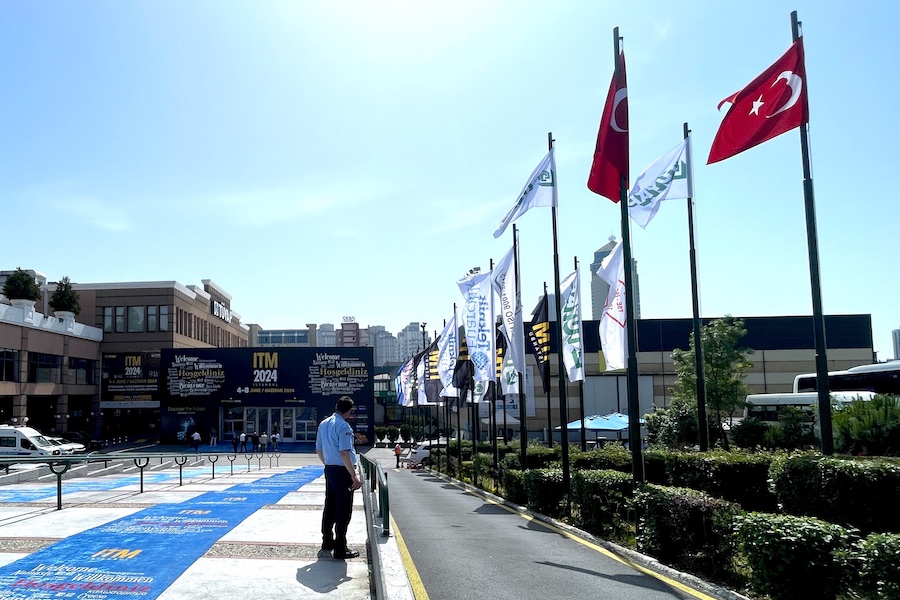
ITM 2026: The new geography of textile production

New production hubs are emerging across North Africa and Central Asia, while Türkiye is accelerating its transformation toward higher-value, technology-driven and more sustainable textile manufacturing.

#Research & Development

“Production is a product”

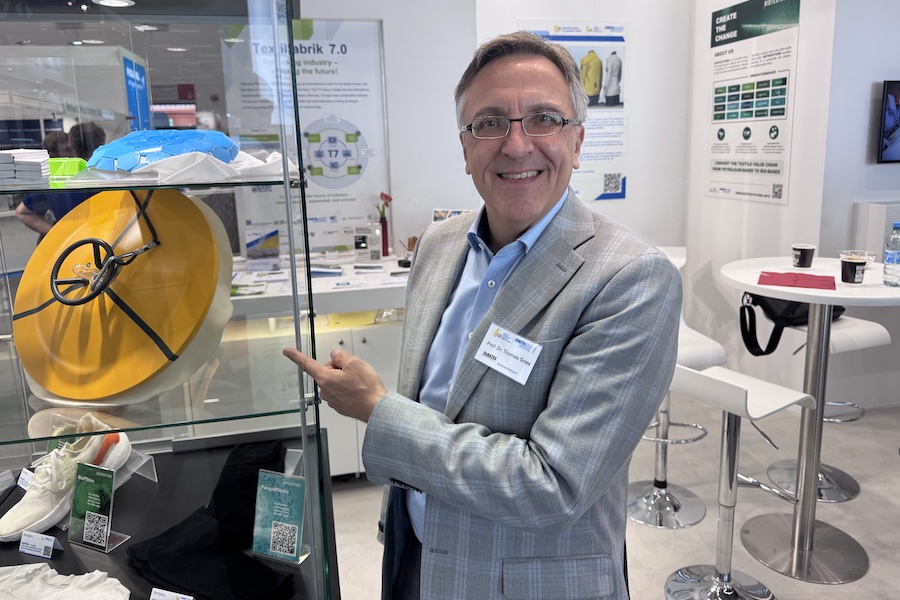
From technical textiles and AI-driven robotics to the limitations of textile circularity: Professor Dr Thomas Gries looks back on more than two decades of development at ITA Aachen. In the interview, he explains why production technology remains a decisive success factor, discusses international collaborations and innovation ecosystems, and shares his views on the transformation of production landscapes and the challenges facing an increasingly regulated industry.

#Knitting & Hosiery

“We need to move away from the price trap and return to a value-driven mindset.”

With its new Textile Innovation Center, KARL MAYER is sending a strong signal for innovation, collaboration, and the future of textile applications. In this interview, Karl Josef Mayer discusses new opportunities in warp knitting, the processing of staple fibres, recycling, the changing role of machinery manufacturers, and why the textile industry must once again focus more strongly on the value of textiles. by Oliver Schmidt

#Associations

“Innovation, resilience and international experience remain the great strengths of the Swiss textile machinery industry”

Geopolitical uncertainty, growing competitive pressure from China, new free trade agreements and the shift towards a circular economy are currently reshaping the global textile industry. In this interview, Cornelia Buchwalder discusses the current mood within the Swiss textile machinery sector, the industry’s distinctive innovative strength, new market opportunities in India and Asia, and the technological trends that could shape the upcoming trade fair cycle leading up to ITMA 2027.

More News on Denim

#Recycling / Circular Economy

Blue Jeans Go Green celebrates 20 years of denim recycling with more than six million items collected

Cotton Incorporated is celebrating the 20th anniversary of its Blue Jeans Go Green™ denim recycling program. Since its launch in 2006, the initiative has collected more than six million denim items, diverted over 3,000 tons of textile waste from landfills and enabled the production of more than 12 million square feet of denim-based insulation. What began as a college campus collection drive has developed into a nationwide recycling initiative involving consumers, retailers, schools and community organisations across the United States.

#Industry 4.0 / Digitalization

Jeanologia and BCome connect factory data with Life Cycle Assessment and Digital Product Passports

A new white paper by EIM by Jeanologia and BCome demonstrates how primary environmental data from denim finishing processes can be integrated into a garment's Life Cycle Assessment (LCA) and prepared for use in a Digital Product Passport (DPP). A comparative case study highlights significant improvements at the production stage while also showing how these translate into the environmental performance of the finished garment.

#Denim

Inside the Making connects denim and sportswear supply chains at Ecomondo 2026

Six European companies are joining forces at Ecomondo 2026 in Rimini to demonstrate how different stages of denim and sportswear production are interconnected. The new initiative, Inside the Making, highlights the importance of cooperation across the textile supply chain in addressing sustainability challenges, from reducing resource consumption to improving transparency and the reliability of environmental claims.

#Denim

Catalyst Club connects fashion industry leaders and emerging talent at Kingpins Amsterdam

Following its debut in Florence, Catalyst Club hosted its second networking event during the Kingpins Show in Amsterdam, bringing together international fashion and denim industry representatives to exchange ideas, share experiences and explore new opportunities for collaboration.

Latest News

#India ITME 2026

Stäubli to introduce new S3292 dobby for high-speed weaving at ITME India 2026

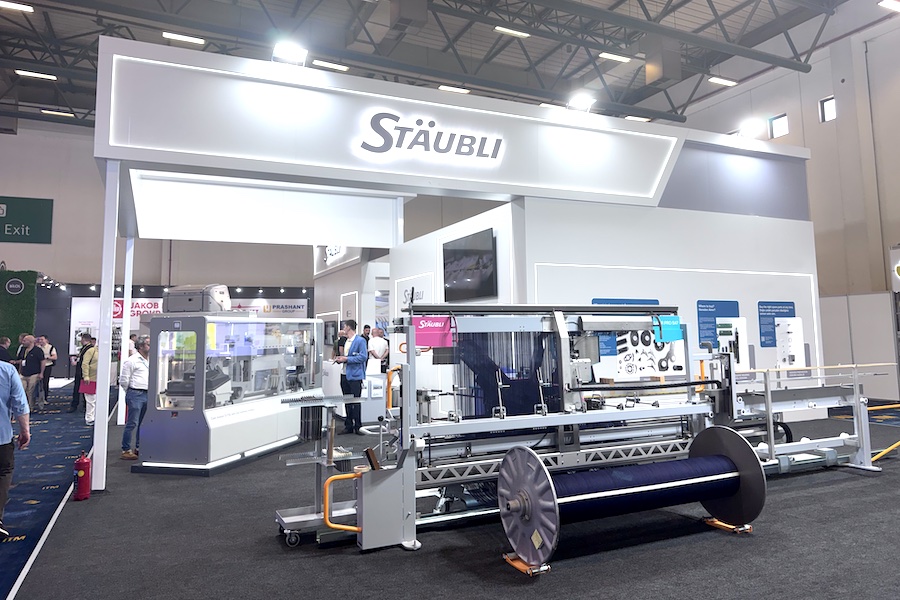
Stäubli will introduce its new S3292 dobby at ITME India 2026, taking place from December 4 to 9 at the India Expo Centre & Mart in Greater Noida, Uttar Pradesh. Designed for high-speed air-jet weaving, the new machine will be among the highlights of the company's presentation, which also includes warp preparation systems, cam motions, Jacquard technologies and digital services.

#Research & Development

DITF develops bio-based binding fibers for wood-fiber insulation materials

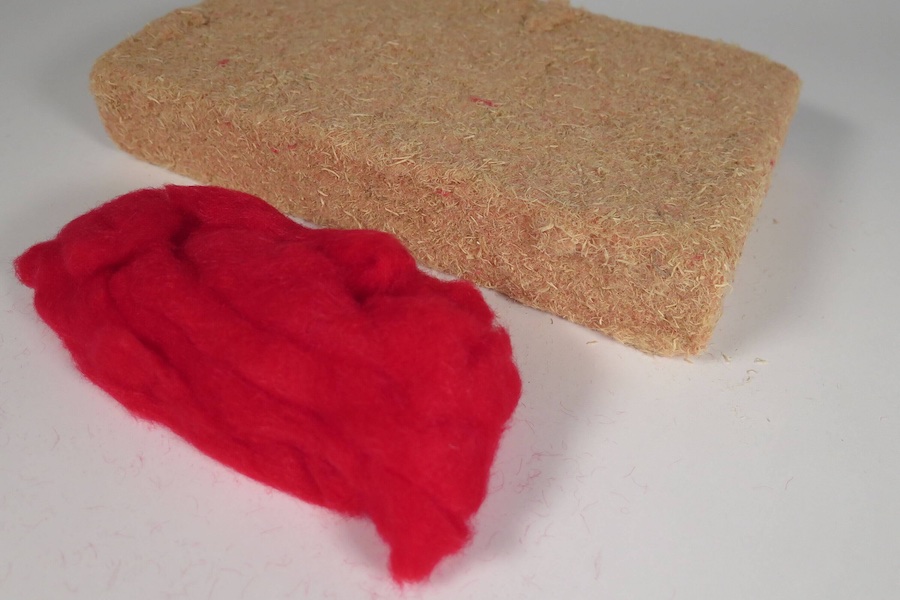
As part of the CelluWoodFlex project, the German Institutes of Textile- and Fiber-Research in Denkendorf (DITF) are developing bio-based cellulose ester fibers as alternative binding fibers for flexible wood fiber insulation materials. In addition to the spinning process and the production of suitable staple fibers, the institute is also investigating how wood and cellulose fibers can be separated and recycled at the end of their useful life.

#Recycled Fibers

Reju expands textile-to-textile recycling network with six international fabric manufacturers

Reju, a textile-to-textile regeneration company, is expanding its industrial network through collaborations with six fabric manufacturers in Europe and the Americas. The initiative aims to accelerate the integration of regenerated polyester into textile manufacturing and support the development of finished fabrics for commercial applications.

#Nonwovens

Magnera highlights HighPleat™ filtration media technology at FiltXPO 2026

At FiltXPO 2026, held on October 28–29 at the Minneapolis Convention Center in Minneapolis, Minnesota, Magnera highlighted advances in air filtration media architecture, with a particular focus on its HighPleat™ platform for MERV 8–10 applications. The technology combines a lofted fiber structure with optimized pore architecture to address the challenge of balancing filtration efficiency, airflow resistance and contaminant-holding capacity.

TOP