[pageLogInLogOut]
USTER Think Quality

#Yarn & Fiber

Trevira looks back on an eventful year 2019

Global economic conditions deteriorated and Trevira had to face a decline in new orders in all segments of both business units (fibres and filaments). With a total turnover of approximately 208 million Euros in 2019, this result was below expectations.

Trevira GmbH & Trevira CS: 2019 business and 2020 business outlook

However, in spite of the difficult situation, 2019 was also a year in which Trevira was able to take important steps to set the course for the future. With the support of Trevira’s parent company Indorama Ventures PCL, important investment projects could be implemented. Measures were taken at both production sites to continue to secure business. As early as April, Trevira was able to put the new twin warping machine in Guben into operation and, in addition, new POY spinning machines were also started up. Funds were also invested in the fibre business in Bobingen, Germany: In November, Trevira’s second own converting line was successfully launched. Moreover, in order to expand the bi-component fibre business, a new spinning plant is now also available.

Social demands for more sustainability concerning the use of plastic have led to rethinking among customers and consumers. Here, Trevira relies on various processes to recover reusable materials. In post-consumer recycling, filaments and fibres are produced from regranulated PET bottles. Using an agglomeration facility, reusable materials can be recovered from production waste and processed further to create new high-quality products. This is a pre-consumer recycling method. Trevira has all products and processes from both methods certified according to the GRS standard (Global Recycled Standard).

Overall, a continuing trend in favour of special fibres and a greater demand for PLA or bio-based fibres can be recorded. The demand for antimony-free raw materials in the fibre sector also develops positively. In 2020, the polycondensation capacities in the Trevira plant in Bobingen will be fully utilized.


The flame retardant fibre and yarn business was also marked by a very challenging year: challenges that included numerous trade conflicts, the unsolved issue regarding BREXIT, as well as uncertainties about the further developments in Turkey and the Middle East. Compared to 2018, there has been an obvious restraint along the value chain on the contract market in respect to new orders and consequently, Trevira was unable to reach its targets set for 2019 in full.

European countries, in particular Germany, Italy, and Scandinavia remain the main markets for our direct business with flame retardant Trevira fibres and yarns. A most positive sign is that the global reach of the Trevira CS brand, which stands for flame retardant textile fabrics, is on course for further growth. This can be seen in the growing number of enquiries from the USA/Canada, Asia, Australia, and Russia.

In 2020, Trevira will continue to take various combinations of measures. Initially, focus will be on the enhancement of synergy effects, which result from the recent purchase of the Italian polyester filament manufacturer Sinterama Spa by Indorama Ventures PCL. Numerous new and further developments, particularly in the area of sustainable products and the Trevira CS product range, represent great potential.

“This year, we will be at the Heimtextil trade fair together with 31 customers. We are confident that this presence as well as the introduction of the new variants of our Trevira CS brand, which stand for more flexibility in design and sustainability, will have a positive impact,” says Trevira CEO Klaus Holz.

More News from Trevira GmbH

More News on Yarn & Fiber

#Man-Made Fibers

Lenzing improves profitability as strategic transformation gains momentum

The Lenzing Group reported improved operating profitability in the first nine months of 2026 despite declining revenue and a challenging market environment. Revenue decreased by 2.3 percent to EUR 1.93 billion, while adjusted EBITDA remained stable at EUR 353 million. The adjusted EBITDA margin increased from 17.9 percent to 18.3 percent, reflecting progress in the company's strategic transformation under its “Grow Nonwovens. Reset Textiles.” strategy.

#Recycled Fibers

C&A and Zalando join Altag® Fiber Club to accelerate adoption of agricultural waste-based fibres

Fashion for Good and AltMat announced today that C&A and Zalando have joined the Altag® Fiber Club as its first brand signatories, marking a critical commercial milestone in the journey to mainstream adoption of next-generation fibres derived from agricultural waste.

#Man-Made Fibers

Kraig Biocraft Laboratories launches performance yarn development program based on spider silk

Kraig Biocraft Laboratories has launched a development program for high-performance yarns based on its recombinant spider silk technology. The initiative follows the company's first commercial shipment of a custom spider silk yarn to a performance apparel customer and includes the delivery of spider silk samples to a textile technology company with experience in aerospace-related material development.

#Man-Made Fibers

Lenzing and Kaihara to debut REMOD denim collection at Kingpins Amsterdam

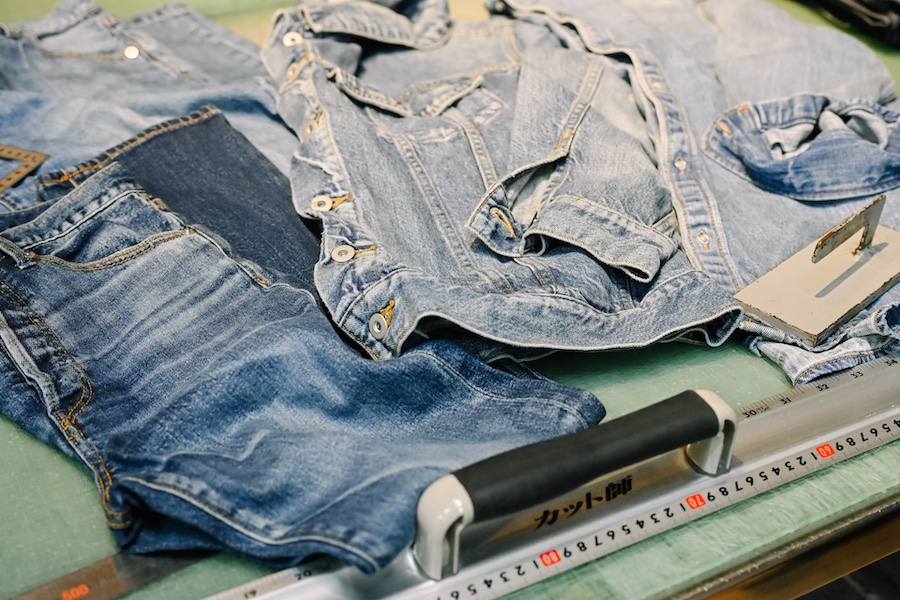
The Lenzing Group, a global producer of wood-based fibers for the textile and nonwovens industries, has partnered with Japanese denim manufacturer Kaihara Corporation to launch the “REMOD Collection”. The collection combines three of Lenzing's fiber offerings for denim applications: TENCEL™ Lyocell Standard, TENCEL™ Lyocell – HV100 and TENCEL™ Lyocell dtex 2.2.

Latest News

#India ITME 2026

Stäubli to introduce new S3292 dobby for high-speed weaving at ITME India 2026

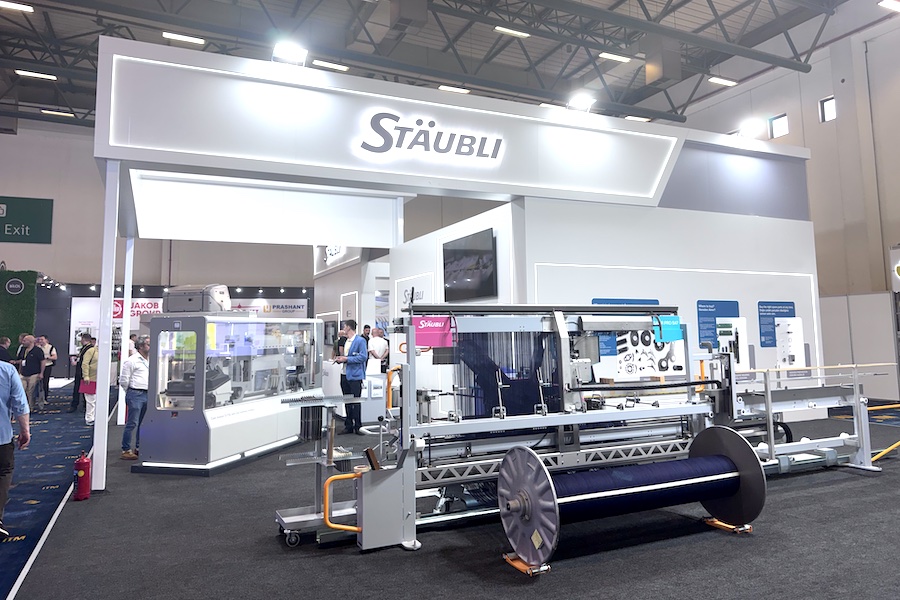
Stäubli will introduce its new S3292 dobby at ITME India 2026, taking place from December 4 to 9 at the India Expo Centre & Mart in Greater Noida, Uttar Pradesh. Designed for high-speed air-jet weaving, the new machine will be among the highlights of the company's presentation, which also includes warp preparation systems, cam motions, Jacquard technologies and digital services.

#Research & Development

DITF develops bio-based binding fibers for wood-fiber insulation materials

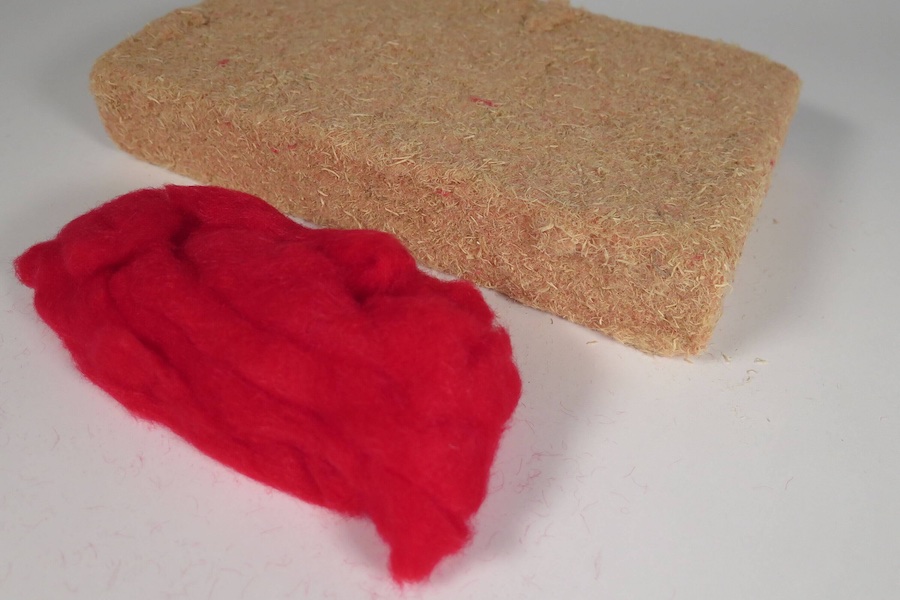
As part of the CelluWoodFlex project, the German Institutes of Textile- and Fiber-Research in Denkendorf (DITF) are developing bio-based cellulose ester fibers as alternative binding fibers for flexible wood fiber insulation materials. In addition to the spinning process and the production of suitable staple fibers, the institute is also investigating how wood and cellulose fibers can be separated and recycled at the end of their useful life.

#Recycled Fibers

Reju expands textile-to-textile recycling network with six international fabric manufacturers

Reju, a textile-to-textile regeneration company, is expanding its industrial network through collaborations with six fabric manufacturers in Europe and the Americas. The initiative aims to accelerate the integration of regenerated polyester into textile manufacturing and support the development of finished fabrics for commercial applications.

#Nonwovens

Magnera highlights HighPleat™ filtration media technology at FiltXPO 2026

At FiltXPO 2026, held on October 28–29 at the Minneapolis Convention Center in Minneapolis, Minnesota, Magnera highlighted advances in air filtration media architecture, with a particular focus on its HighPleat™ platform for MERV 8–10 applications. The technology combines a lofted fiber structure with optimized pore architecture to address the challenge of balancing filtration efficiency, airflow resistance and contaminant-holding capacity.

TOP