#Associations
Data and skills, not algorithms, hold back AI adoption in textiles, finds ITMF and ITA white paper
New study identifies fragmented data systems, skills shortages and governance gaps as major obstacles to AI adoption and calls for industry-wide collaboration to unlock its potential by 2030.
The white paper draws on the ITMF & ITA webinar series AI in the Textile Value Chain, held between 2024 and 2026. Across ten sessions, more than 20 experts from companies, research institutions and policy organisations contributed their perspectives. Additional insights came from a World Café discussion with industry practitioners during the ITMF Conference 2025 in Yogyakarta, Indonesia.
Textile industry is digitally fragmented rather than under-digitalised
According to the authors, the growing relevance of AI is driven primarily by structural pressures rather than technological hype. These include demographic change, persistent skills shortages, volatile markets and increasing demands for quality, traceability and sustainability.
Although decades of digitalisation have generated substantial amounts of data throughout the textile value chain, much of this information remains distributed across disconnected systems. The white paper therefore describes the industry as “not under-digitalised, but digitally fragmented.”
This fragmentation limits the ability of companies to use existing information effectively and creates significant obstacles to implementing AI applications across production processes and organisational boundaries.
AI already delivers measurable benefits in textile production
The study identifies several areas in which AI is already generating measurable improvements. These include computer-vision systems for fabric and yarn inspection, predictive maintenance, energy optimisation and demand forecasting.
One example from a nonwovens production line demonstrates the potential of causal AI, which reportedly reduced scrap by 10%.
However, the authors emphasise that successful applications depend on clearly defined use cases and reliable data. Industry participants warned that AI cannot compensate for poor data quality and may instead amplify existing weaknesses. Many companies also overestimate the amount of structured and usable data available within their organisations.
From decision support to autonomous process optimisation
The white paper also examines the transition from AI-based decision support towards systems capable of coordinating or executing operational tasks.
Agentic AI systems are beginning to manage multi-step processes, including sourcing activities, while causal AI applications are increasingly capable of adjusting production parameters directly. Both approaches continue to require human supervision.
According to the study, end-to-end AI workflows could become realistic within the next two to three years.
Alongside these technological developments, trust remains a decisive factor for broader adoption. Industry representatives identified control over sensitive data, cybersecurity, transparency regarding system limitations and clearly defined human accountability as essential requirements.
Industry collaboration and workforce development are essential
The authors recommend that textile companies prioritise investment in people and organisational capabilities before scaling AI technologies. They also encourage businesses to treat data as a shared infrastructure resource and introduce AI incrementally, beginning with clearly defined applications.
Industry associations and pre-competitive collaboration could play a particularly important role in supporting small and medium-sized enterprises. Proposed approaches include common data standards, secure data spaces that preserve ownership of information and sector-specific AI tools, such as a controlled “Textile GPT”.
Olivier Zieschank, Director of ITMF, emphasises the importance of realistic expectations and knowledge exchange in addressing the industry's structural challenges:
“AI is not a shortcut around the structural challenges our industry faces, but it can help companies manage complexity and make the most of scarce expertise. Understanding where AI genuinely helps is a learning process. That is why exchange through associations like ITMF matters so much.”
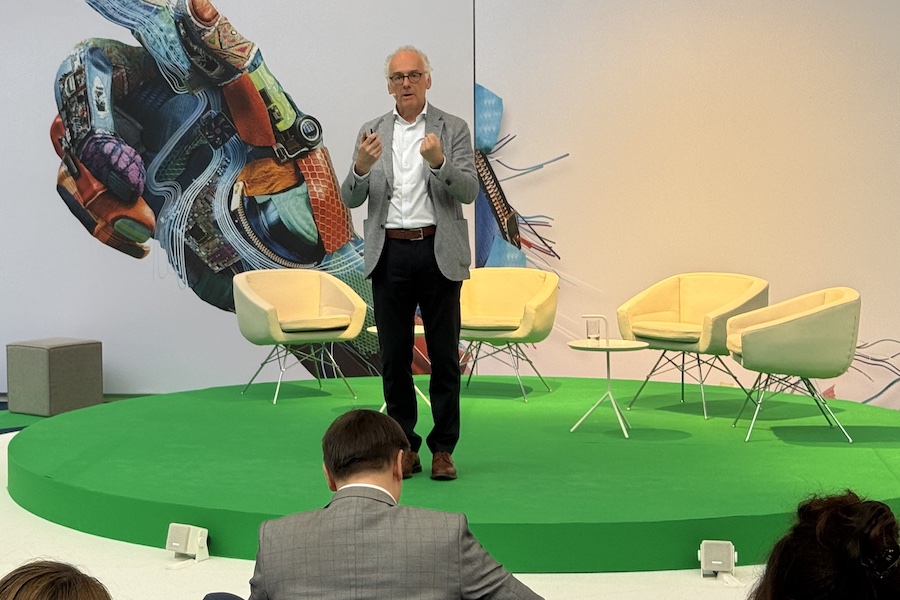
Prof. Thomas Gries, Director of the Institut für Textiltechnik ITA at RWTH Aachen University, highlights the need to integrate data management into everyday business and production processes: “Companies need a dedicated task force to embed data integration into their day-to-day and strategic technical and business processes. Partnering with external experts on a transparent assessment — a data or automation waste walk — and on effective implementation is not only decisive to future success, but essential to survive!”
White paper available online
The white paper provides strategic guidance for textile manufacturers seeking to identify practical AI applications and establish the organisational and technical foundations needed for their implementation.
The publication is available through the RWTH Aachen University publication repository under
Recordings of the ITMF & ITA webinar series are available to ITMF members through the