[pageLogInLogOut]

#Associations

Promoting sustainability, digitalisation and resilience

The EU project ADDTEX has reached an important milestone with the two publications White Book and E-Book. Both publications contain comprehensive guidelines, findings and policy recommendations to support the sustainable, digital and resilient transition of the textile industry. The focus is on technical textiles, whose innovations are considered key to the competitiveness and resilience of the European industry.

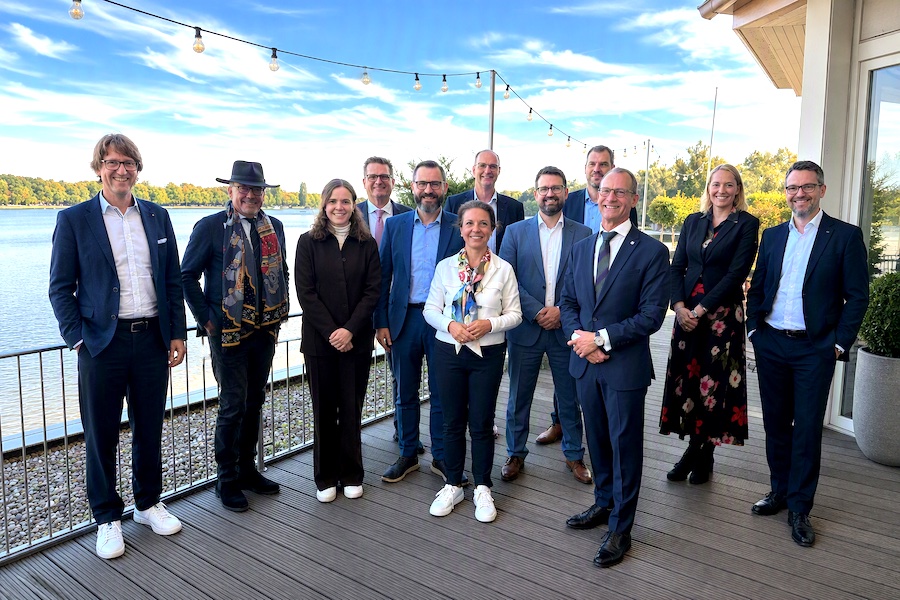
The ADDTEX project brings together partners from a total of twelve European countries. The IVGT, Frankfurt is a partner for Germany and represents the interests of its members and the entire technical textiles sector. The aim of the project is to sustainably promote close co-operation between industry, science, politics and civil society. This innovative approach, known as the ‘quadruple helix model’, is intended to help prepare the industry for the challenges of a volatile, uncertain, complex and ambiguous environment (VUCA), which have been exacerbated by crises such as the COVID-19 pandemic. ‘By focusing on green technologies, digitalisation and continuous training, we are making the technical textiles industry fit for the future,’ says Stefan Schmidt, IVGT project manager. ‘We want to strengthen the competitiveness and sustainability of this important sector.’
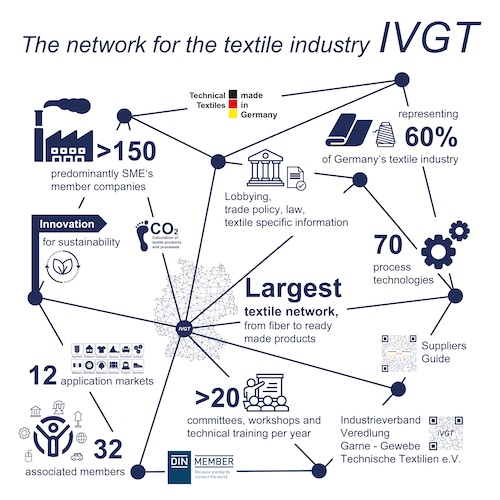
Industry clusters such as the IVGT play a crucial role by strengthening networks between companies, educational institutions and governments. They promote the exchange of knowledge, support the introduction of new technologies and help to drive forward circular economy projects. Picture: IVGT


Workshops as a basis for policy recommendations

Between September and October 2024, the ADDTEX partners organised interactive workshops in Germany, Greece, Italy and Spain. These served as a platform for a broad dialogue between industry, science and politics, in which innovative approaches and concrete strategies for action were developed. The participants focussed on topics such as sustainable practices, digital transformation and promoting resilience in the textile industry.
The future is digital! The IVGT offers a range of programmes to make you fit for the digital transformation. Image: IVGT


Key competences for change

A central aspect of the White Book is the emphasis on education and training to promote the dual transition - green and digital. The most important skills required of employees to shape a sustainable future for the industry are expertise in renewable energy, recycling, environmentally friendly materials and sustainable production (green transition), skills in data analysis, cyber security, IT and the ability to use AI-supported technologies (digital transition), as well as adaptability, innovation, risk management and cross-functional collaboration (promoting resilience). Ten aspects emerged as the most important political recommendations for action (see chart). These include, in particular, the promotion of sustainable practices in companies, investment in digital infrastructure along the textile value chain, support for collaborative research projects and industry-specific training funds to impart the essential skills mentioned. 

Further information www.addtex.eu; www.addtex.eu/resources/
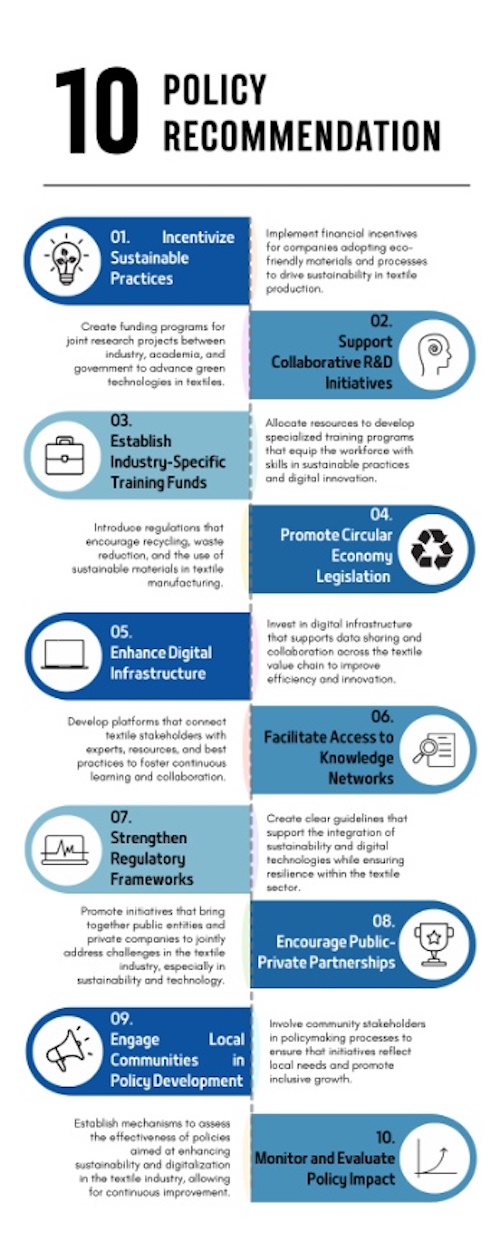


To promote both the double transition and the resilience of the industry, policy should incentivise sustainable practices and investment in green technologies. The developed recommendations for action as a graphic. Picture: ADDTEX


More News from Industrieverband Veredlung - Garne - Gewebe - Technische Textilien e.V.

#Recycling / Circular Economy

Eco-design as the foundation of circular textiles

Based on the results of an extensive European analysis, the Erasmus+ project Skills4Circularity is currently developing three practice-based training modules covering recycling technologies, eco-design for the circular economy and sustainable manufacturing. This was preceded by a comprehensive company survey and a joint analysis conducted by the project partners under the leadership of IVGT. The results show that the greatest challenges lie not so much in a lack of technology as in skills gaps.

#Associations

IVGT membership: expertise that pays off

For energy-intensive textile companies, government compensation mechanisms are an important economic factor. The IVGT successfully supports its member companies in applying for state aid and thereby regularly contributes to significant financial relief.

#Recycling / Circular Economy

New skills for a circular textile economy

Based on the results of a comprehensive analysis, the Erasmus+ project Skills4Circularity is developing three practical training modules covering recycling technologies, eco-design for the circular economy and sustainable manufacturing. The content of the first module, Recycling Technologies, has now been developed and validated together with industry representatives. The module provides participants with knowledge of regulatory requirements, material sorting and the preparation of textile waste for recycling.

#Recycling / Circular Economy

The textile industry in transition

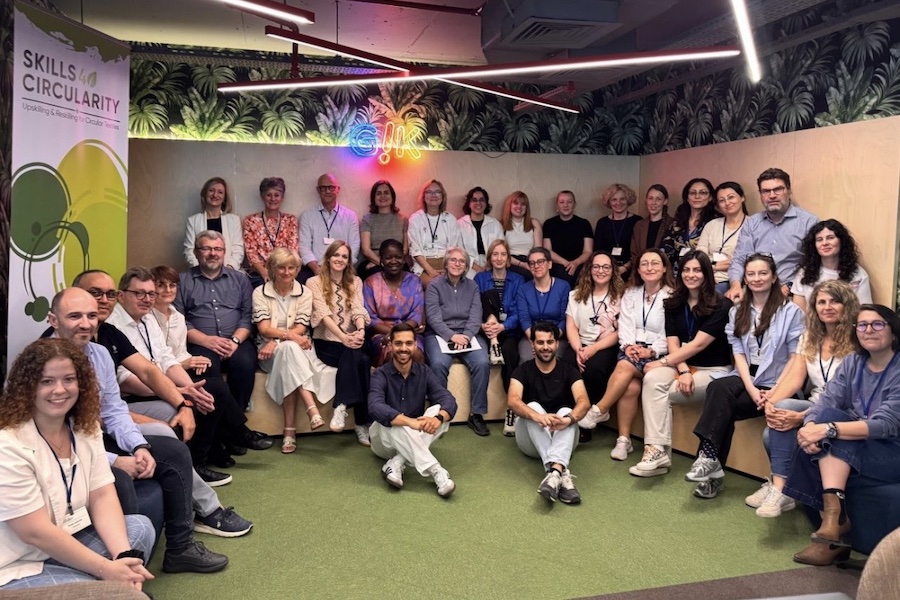
Recycling, traceability, eco-design and digitalisation are among the key future challenges facing the European textile industry. The Erasmus+ project Skills4Circularity, involving 21 partners from twelve countries, is investigating the skills required to address these challenges. As the German industry partner, the Industry Association for Finishing – Yarns – Fabrics – Technical Textiles (IVGT) is bringing the industry’s perspective to the project.

More News on Associations

#Raw Materials

Cotton Brazil Dialogues 2026 concludes with 50 international participants immersed in Brazilian cotton production

The Cotton Brazil Dialogues concludes its 2026 edition after a series of technical visits to farms, cotton gins and reference centers, as well as workshops focused on Brazilian cotton production. A total of 50 participants from 14 countries took part in the field trips. The initiative is led by the Brazilian Association of Cotton Growers (Abrapa) and the National Association of Cotton Exporters (Anea), with support from the Brazilian Trade and Investment Promotion Agency (ApexBrasil).

#Europe

European textile industry calls for €10 handling fee on ultra-fast-fashion imports

The introduction of the €3 customs duty on low-value imports marks an important milestone in Europe’s efforts to address the challenges created by the rapid growth of ultra-fast-fashion imports. Together with the abolition of the €150 customs duty exemption, it demonstrates that policymakers are willing to act when market distortions become impossible to ignore. However, the European textile and clothing industry considers this a first step rather than the final destination.

#Associations

Business situation weakens slightly, but the industry stays cautiously optimistic

The International Textile Manufacturers Federation (ITMF) has published the results of its 39th Global Textile Industry Survey (GTIS), conducted from 14 to 22 July 2026 among companies along the entire global textile value chain. Worldwide, 10% of participants rated their business situation as good, 53% as satisfactory and 37% as bad — a balance of -26pp, down from -17pp in May but still well above the 2023 lows. All regions are now in negative territory, from South Asia at -3pp to North & Central America at -58pp.

#Associations

Italian textile machinery orders show quarterly recovery in Q2 2026

In the period between April and June 2026, order intake for Italian textile machinery manufacturers showed mixed but encouraging signals for the second half of the year. The order index at constant prices stood at 46.6 points (taking 2021=100 as the base year), showing a slight decrease of 3% compared to the same quarter of 2025. This trend was largely due to the contraction recorded in the domestic market, which fell by 25% compared to the corresponding period of the previous year.

Latest News

#Nonwovens

25 years in the room: EDANA’s OUTLOOK™ returns to Cascais to shape a changing industry

The market does not wait, and it does not grant easy answers. Across the absorbent hygiene, personal care, and wipes sectors, business is undergoing a period of intense, necessary adjustment. New European rules on packaging, single-use items, product safety, and end-of-life are forcing companies to drop old assumptions about materials and performance. At the same time, producers must keep their goods safe, reliable, and affordable for the babies and aging adults, who rely on them every day.

#Recycling / Circular Economy

Recover™ names Enes Adak and Fehmi Yüksel as Co-CEOs to accelerate its next growth phase

Recover™, a leading materials science company and global producer of consistent high-quality, recycled cotton fibers and circular material solutions at scale, today announced the appointment of Enes Adak and Fehmi Yüksel as Co-Chief Executive Officers. This leadership transition marks an important step in Recover’s evolution as the company enters its next stage of development.

#Research & Development

ADD-ITC 2026 highlights strong industry participation

The Aachen-Dresden-Denkendorf International Textile Conference (ADD-ITC) 2026 will place a strong focus on the exchange between textile research and industry when it takes place on November 26–27, 2026, at the International Congress Center Dresden. According to the preliminary conference program, more than two-thirds of all presentations will be contributed by companies or jointly presented by industry and research institutions.

#Recycling / Circular Economy

Arc'teryx introduces System 0™, a new framework for the future of product design and circularity

Arc'teryx Equipment, the global design company specializing in technical high-performance apparel and equipment, today introduced System 0™, a new framework that reimagines how products can be designed, manufactured, used, repaired, and ultimately regenerated. System 0 represents the next evolution for sustainability in the outdoor industry, as it embeds circular thinking across an entire product lifecycle while maintaining the uncompromising performance standards that define the Arc’teryx brand.

TOP