#Associations
A new Swedish meeting place for sustainable textile production

— We felt that there was a need for a physical meeting place for the textile industry in Sweden where people can meet to exchange experiences and ideas. For us, it is important to have a close collaboration with the industry and to make sure that our students and researchers have access to the best available technique on the market, says Anneli Bentzlin, head of the textile labs at the University of Textiles in Borås.
Therese Premler Andersson, Secretary General of the Textile Machinery Association of Sweden (TMAS), is very positive about the initiative:
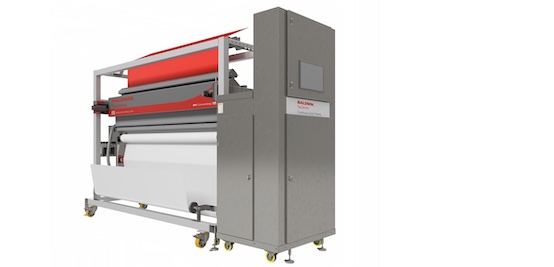
– It has been several decades since this type of meeting opportunity existed in the industry in Sweden. For our members in TMAS, it is extra fun to show off Swedish technology in Sweden. For many years, Swedish machine builders have contributed with energy-efficient and resource-efficient technical solutions and expertise to the textile industry globally. Here, we get the opportunity to convey experience and competence from projects all over the world to the Swedish market. I am also convinced that if we are to be able to solve the sustainability challenge, the industry and academia need to work even more closely together, and the fair is an excellent opportunity to make new contacts.
Interest in sustainable local production in Sweden is growing
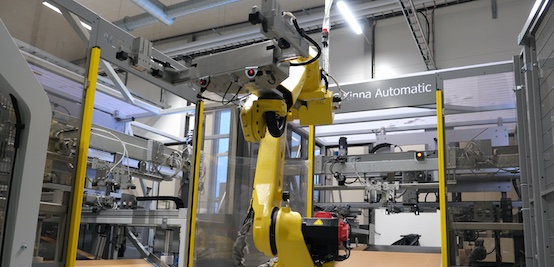
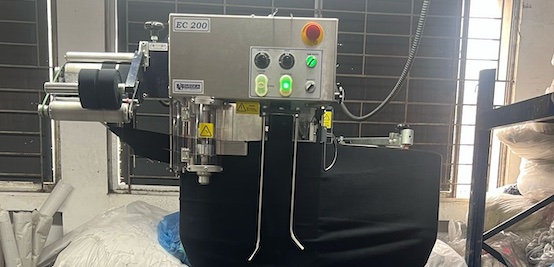
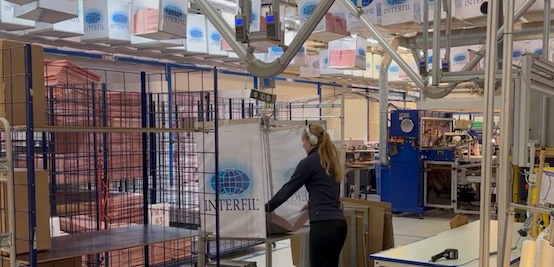
New requirements regarding sustainability and transparency mean that many companies are forced to review their production. With new technology, automation and machines at the forefront, conditions are great for moving home all or parts of production previously located abroad.
– There are several factors that contribute to the increasing interest. The pandemic was a wake-up call for many. It became clear that everyone needs to review their supply chains to be less vulnerable. But even beforet, we saw a higher awareness that sustainable production by definition should take place closer to the end customer. Not least, we now also have technical solutions that enable more flexible production with a higher degree of digitization and automation. It is a necessity to achieve cost efficiency, says Therese Premler Andersson.
The industry faces several challenges
Despite the fact that technology has advanced rapidly, there are still major challenges within the industry that need to be resolved in order to be able to move more production back to Europe. Therese Premler Andersson emphasizes the importance of daring to test new ideas and to provide ongoing training of staff to secure the right skills:
– We need to get started and test new ways and ideas to evolve and become better. The technology already exists. Better support and reduced financial risk for larger projects could contribute.
The willingness to invest in automation among brands has previously been low as production has been moved to regions where labor was cheap. Now, however, a change is noticeable, but the textile companies need support to be able to make the investments that a move entails.
-“All “production will not be possible to move “home” and it does not need to be done “at home” either. However, it should be produced in a more sustainable way wherever the production takes place.
The Secretary General of TMAS also sees lack of skills as one of the major challenges facing the industry:
– In order to be able to make investments locally, we need to invest in education, both within the textile area as well as automation and digitization. The lack of skills will be an obstacle if we do not get young people interested in the industry and use the skills that we have in Sweden in the textile area from, for example, from immigrants from Syria and Ukraine.
Great interest
The organizers and the industry are very satisfied with the first Swedish Textile Machinery Expo. Anneli Bentzlin sees this as the start of a recurring event:
– It has been two days filled with exciting and rewarding meetings! The interest in the Swedish Textile Machinery Expo has been great, both from Swedish and international machine manufacturers and textile producers. The word has really spread, which is incredibly fun! We see the Swedish Textile Machinery Expo as the starting point for a recurring tradition, Anneli Bentzlin sums up.
This article is a translation of an interview made University of Textiles in Borås and first published here.
https://www.hb.se/textilhogskolan/om-textilhogskolan/aktuellt/nyheter/nyhet/136339/
https://www.youtube.com/watch?v=kkxqLIuVmX0&feature=emb_logo