[pageLogInLogOut]

#Associations

IAF, EURATEX and ABIT Collaborate on Content International Conferences

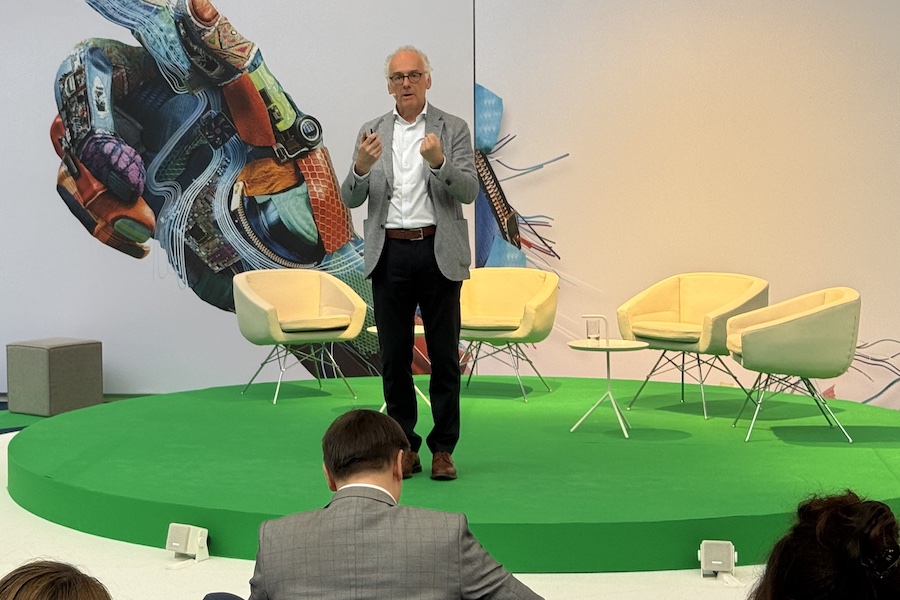
The International Apparel Federation (IAF) and ABIT, the national association for the Brazilian Apparel and Textile industry, have even given their conferences the same theme, namely ‘Transition of the Global Fashion System’. EURATEX’s conference’s theme is ‘A new paradigm for the European Textile and Clothing Industry’ and therefore also emphasizes transition.  All three associations are fully aware of the urgency and importance of the transition that the apparel and textile industries are currently going through. Through their collaboration they are able to offer a global audience complimentary programs, each focusing on different elements of this transition.

The International, European and Brazilian associations IAF, EURATEX and ABIT are collaborating on the content of their annual, international conferences in the fall of 2021.

ABIT’s focus is on people, exploring data gathering; a transition to a design more guided by individualization and communication in a digital environment. IAF’s focus is on the intra supply chain dynamics, looking at how the relations between buyers and suppliers need to change. And EURATEX focuses strongly on the role of legislation shaping our industry’s actions.

ABIT’s international conference takes place on October 27 and 28. Visitors from across the world can join online www.congressoabit.com.br/ to hear a mix of Brazilian and international speakers. Brazil containing complete supply chains from cotton to consumer often presents examples of transition that can inspire companies from other parts of the world.


IAF and EURATEX are holding their conferences back-to-back in Antwerp, Belgium on November 8 and 9 respectively. For those visitors that might be held back by pandemic related restrictions to visit the venue in Antwerp, the conferences will be available online. A joint dedicated website, www.conventionantwerp.com contains all the information and the link to register. Antwerp is less than 50 kilometres away from Brussels, where the EU Commission is unveiling a very ambitious environmental and social agenda aimed at large scale transition that will have large consequences for our industry.

Three global conferences offer complementary insights into the huge transition the apparel and textile industries are going through. Their connection underlines that we have one global fashion system. To get the full pictures, ABIT, EURATEX and IAF invite you to join all three!

More News from INTERNATIONAL APPAREL FEDERATION (IAF)

More News on Associations

#Raw Materials

Cotton Brazil Dialogues 2026 concludes with 50 international participants immersed in Brazilian cotton production

The Cotton Brazil Dialogues concludes its 2026 edition after a series of technical visits to farms, cotton gins and reference centers, as well as workshops focused on Brazilian cotton production. A total of 50 participants from 14 countries took part in the field trips. The initiative is led by the Brazilian Association of Cotton Growers (Abrapa) and the National Association of Cotton Exporters (Anea), with support from the Brazilian Trade and Investment Promotion Agency (ApexBrasil).

#Europe

European textile industry calls for €10 handling fee on ultra-fast-fashion imports

The introduction of the €3 customs duty on low-value imports marks an important milestone in Europe’s efforts to address the challenges created by the rapid growth of ultra-fast-fashion imports. Together with the abolition of the €150 customs duty exemption, it demonstrates that policymakers are willing to act when market distortions become impossible to ignore. However, the European textile and clothing industry considers this a first step rather than the final destination.

#Associations

Business situation weakens slightly, but the industry stays cautiously optimistic

The International Textile Manufacturers Federation (ITMF) has published the results of its 39th Global Textile Industry Survey (GTIS), conducted from 14 to 22 July 2026 among companies along the entire global textile value chain. Worldwide, 10% of participants rated their business situation as good, 53% as satisfactory and 37% as bad — a balance of -26pp, down from -17pp in May but still well above the 2023 lows. All regions are now in negative territory, from South Asia at -3pp to North & Central America at -58pp.

#Associations

IVGT membership: expertise that pays off

For energy-intensive textile companies, government compensation mechanisms are an important economic factor. The IVGT successfully supports its member companies in applying for state aid and thereby regularly contributes to significant financial relief.

Latest News

#Industry 4.0 / Digitalization

Coats Digital launches AI-powered GSD RealMotion for motion analysis

Coats Digital has launched GSD RealMotion, an AI-powered solution designed to provide apparel manufacturers with greater visibility into factory-floor operations. By analysing shop-floor video and applying Coats Digital’s GSD methodology, the solution turns video recordings into structured, motion-by-motion method studies.

#Textile chemistry

Archroma and Lameirinho partner in pioneering deployment of InOneGO single-step dyeing

Archroma, a global leader in specialty chemicals, and Lameirinho, a leading home textiles manufacturer based in Portugal, are collaborating to bring InOneGO by Archroma, a new single-step dyeing process, into commercial production. Lameirinho’s first InOneGo bedlinens collection is now available worldwide.

#Knitting & Hosiery

KARL MAYER launches extra-wide HKS 3-M EL for increased productivity

KARL MAYER has launched a new extra-wide version of its HKS 3-M EL tricot machine, designed to increase productivity particularly in the manufacture of textiles for sports, activewear and athleisure applications.

#Research & Development

Reducing development times for technical textiles by accelerated thermo-oxidative aging in a high-pressure autoclave

Synthetic polymers used in technical textiles can be effectively protected against degradation caused by heat, oxygen, and water through the use of stabilizer systems. This enables service lives of several decades, extending to more than 50 years. As the use of durable technical textiles continues to grow, so does the demand for reliable methods to predict their service life within economically feasible testing periods. For the first time the German Institutes of Textile and Fiber Research Denkendorf (DITF) developed methods for robust service life prediction for textiles in an IGF research project.

TOP