[pageLogInLogOut]

#Spinning

UHMWPE fibres – FET’s game changer for the biomedical market
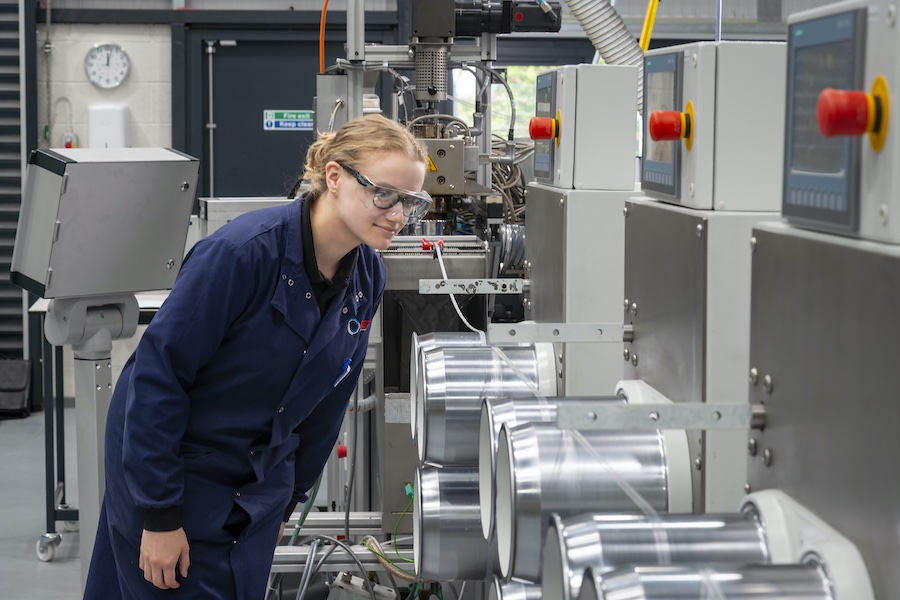
FET is launching the FET-500 Series of gel spinning systems in a move that could revolutionise the research and development of UHMWPE fibres.
© 2025 FET
© 2025 FET


Fibre Extrusion Technology Ltd (FET) of Leeds, UK, has built a reputation in medical fibre extrusion technology and innovations, designing and delivering high-performance equipment for a range of precursor medical products, including bespoke extrusion systems for the production of both resorbable and non-absorbable sutures. FET’s equipment supports small-scale, adaptable production and rapid new product development. 

In recent years, there has been a growing demand for R&D of UHMWPE fibres. These fibres are prized in many industries due to their extraordinary properties. However, current production processes are complex and focused on the large-scale output of existing fibre grades. This rigid supply chain has stifled innovation in this untapped product market.

The FET-500 gel spinning systems will address this gap in the market. The FET-500 enables a flexible and consistent process, able to produce quality fibres with less than 100 grams of polymer, while avoiding the harsh processing chemicals that were historically associated with gel spinning. The key to unlocking this lab and pilot scale flexibility is the use of supercritical carbon dioxide as a green solvent in a patent-pending process.

Gel spinning starts with extrusion, but the additional washing and drawing technology to produce finished yarn is critical to the overall performance characteristics. An example of the wide range of features and benefits can be shown in the Washing process, with Patent Pending technology using Supercritical Carbon Dioxide:

Extract carrier oil without using toxic, environmentally harmful chemicals such as Hexane and DCM

+++ CO2 is green, cheap, abundant, and significantly safer to work with

+++ CO2 efficiently dissolves carrier oils without affecting the polymer yarn

Reduced operational costs

+++ 9-Vast reduction in solvent use (CO2 vs Hexane/DCM)

+++ Comprehensive oil recovery and recycling

+++  Zero solvent waste is generated, unlike the hexane route

Compact and efficient batch washing system

+++ Recipe controlled plug and play technology

+++ Scalable and adjustable to customer needs

+++ Carrier oil is recovered and fed back to the extrusion process

+++ 80% reduction in factory footprint vs hexane route

FET’s Fibre Development Centre is critical to the inception and success of the FET-500. Having this facility located in Leeds where the manufacturing takes place allows FET to offer a gateway to de-risk, develop and demonstrate the system’s capabilities. FET houses a full demonstration line of the FET-500 to allow customers, existing and new, to visit and experience the system operating from start to finish. We can also aid in developing new products and operating parameters through R&D trials, giving you the confidence and knowledge to transfer a new product offering onto a production line.


More News from Fibre Extrusion Technology Ltd.

More News on Spinning

#ITMA Asia + CITME 2026

ITMA Asia 2026: How Barmag is reshaping the future of man-made fiber production

The textile industry is entering a groundbreaking era. Manufacturers face rising energy prices, growing sustainability demands, increasing labor shortages, and an unprecedented need for flexibility. For a globally active textile industry, where competitiveness is closely linked to production efficiency and cost leadership, this means that technology is no longer merely a means of improving operational processes – it is increasingly becoming a strategic differentiator.

#Spinning

Eltex takes the tension out of heat-setting

The ACT-MULTI system developed by Eltex – a member of TMAS, the Swedish textile machinery association – is bringing individual yarn tension monitoring and automatic control to the heat-setting process, helping manufacturers maintain consistent processing conditions across every yarn position.

#Spinning

Heberlein reinforces its commitment to the Chinese market

Heberlein, globally recognised as a leading provider of air interlacing and air texturing jets for synthetic filament yarns, is consolidating its success in the Chinese market with its APh- and APe-series for DTY applications. Particularly in the field of Air Covering, Heberlein technologies combine excellent quality with significant savings in compressed-air consumption. A new service hub in Shengze City underlines the company’s long-term commitment in the Chinese market.

#Recycled Fibers

Driving circularity with Uster Recycled Fiber Matrix

The textile industry’s commitment to circularity continues to accelerate, and mechanical recycling is viewed as a targeted approach to cutting textile waste and its environmental impact. At the forefront of this drive, Uster has developed the Recycled Fiber Matrix, a two-dimensional assessment of mechanically recycled fibers to guide optimum processing and end-uses.

Latest News

#Industry 4.0 / Digitalization

Coats Digital launches AI-powered GSD RealMotion for motion analysis

Coats Digital has launched GSD RealMotion, an AI-powered solution designed to provide apparel manufacturers with greater visibility into factory-floor operations. By analysing shop-floor video and applying Coats Digital’s GSD methodology, the solution turns video recordings into structured, motion-by-motion method studies.

#Textile chemistry

Archroma and Lameirinho partner in pioneering deployment of InOneGO single-step dyeing

Archroma, a global leader in specialty chemicals, and Lameirinho, a leading home textiles manufacturer based in Portugal, are collaborating to bring InOneGO by Archroma, a new single-step dyeing process, into commercial production. Lameirinho’s first InOneGo bedlinens collection is now available worldwide.

#Knitting & Hosiery

KARL MAYER launches extra-wide HKS 3-M EL for increased productivity

KARL MAYER has launched a new extra-wide version of its HKS 3-M EL tricot machine, designed to increase productivity particularly in the manufacture of textiles for sports, activewear and athleisure applications.

#Research & Development

Reducing development times for technical textiles by accelerated thermo-oxidative aging in a high-pressure autoclave

Synthetic polymers used in technical textiles can be effectively protected against degradation caused by heat, oxygen, and water through the use of stabilizer systems. This enables service lives of several decades, extending to more than 50 years. As the use of durable technical textiles continues to grow, so does the demand for reliable methods to predict their service life within economically feasible testing periods. For the first time the German Institutes of Textile and Fiber Research Denkendorf (DITF) developed methods for robust service life prediction for textiles in an IGF research project.

TOP