[pageLogInLogOut]

#Yarn & Fiber

Lenzing unveils the new potential of TENCEL™ Lyocell fibers as alternative material for stretch fabrics

Lenzing Group, a leading global producer of wood-based specialty fibers, announces a new processing technique of TENCEL™ branded lyocell fibers tailored to create stretch fabrics that enhances comfort of the wearer. This solution offers a fossil-free alternative that delivers exceptional stretch and recovery properties while adhering to responsible production methods.
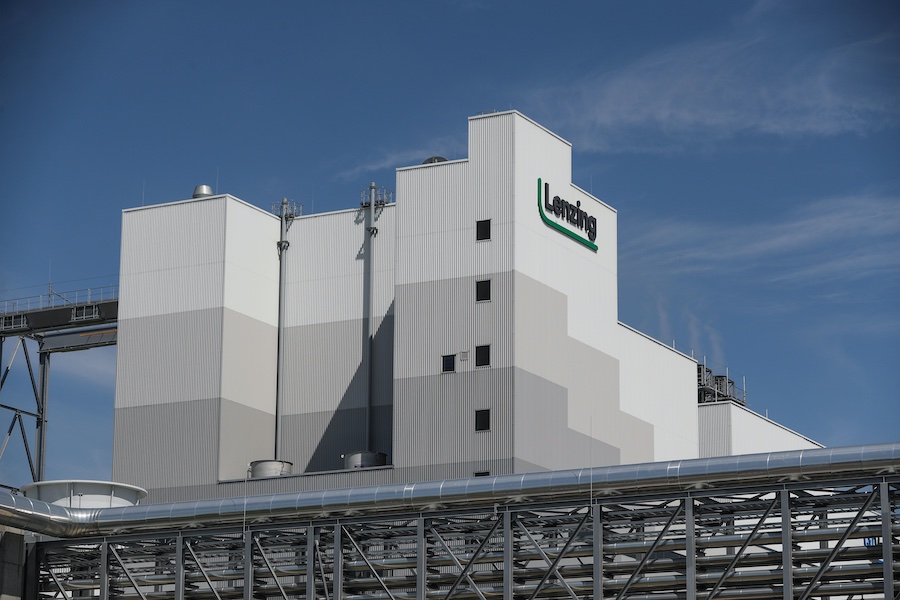
© Lenzing
© Lenzing


Fabric innovation features enhanced stretch, comfort and easy-to-care properties

Lenzing’s new processing technique involves re-engineering woven fabric composed of TENCEL™ Lyocell fibers coupled with a fabric pre-treatment. During the wet process, TENCEL™ Lyocell fibers undergo significant swelling in diameter, leading to increased yarn crimps in the widthwise direction. This translates into a fabric that can stretch with enhanced recovery[1] and does not shrink or wrinkle easily, maintaining a smooth appearance even after home laundering[2].

“Our technical innovation unlocks the inherent potential of TENCEL™ Lyocell fibers for producing stretch fabrics that move in harmony with the body. This enhances comfort with easy-to-care properties, making it ideal for lightweight apparel,” said Rex Mok, Vice President of Fiber Technical Marketing and Development at Lenzing. “We are committed to fostering responsible production practices[3] through innovations in the textile sector and are delighted to share this latest innovative development with our fabric mill partners. Together, we are taking a significant stride towards reduced usage of fossil-based materials within the textile value chain while ensuring comfort and material performance.”


Empowering partners in their journey towards a more sustainable future

To take a step further, Lenzing extends its comprehensive support at the fabric development level to mill partners. The stretch fabrics made using TENCEL™ Lyocell fibers meet the international standard for fabric stretch and recovery properties[4]. The collaboration with Lenzing will enable mills and brands to unleash unlimited design possibilities while addressing the growing consumer demand for comfortable apparel produced responsibly, particularly in sectors such as sportswear, athleisure garments, loungewear, and home textiles.

A fossil-free alternative to conventional synthetic materials, TENCEL™ Lyocell fibers used in the stretch fabrics are derived from controlled or certified wood sources and made from a resource-saving closed-loop production process[5]. Additionally, the fibers are identifiable in end products and traceable back to their sources, ensuring greater accountability and transparency in the supply chain.

[1] Data from SGS Report No SL12100263549701TX. Material: fabrics made of 100% TENCEL™ Lyocell Ne30 x Ne30 / 98*74.

[2] Data from SGS Report No SL12200348946801TX: Material: fabrics made of 100% LENZING™ Lyocell Ne50 x Ne50 / 116x75.

[3] TENCEL™ Lyocell and Modal fibers are made with at least 50% less carbon emissions and water consumption, compared to generic (unbranded) lyocell and modal. The results were calculated according to LCA standards (ISO 14040/44) and are made available via the Higg MSI by Sustainable Apparel Coalition (Version 3.7).

[4] The “BS EN 14704-1” standard published by the British Standards Institution determines the elasticity of fabrics.

[5] Savings consider solvent recovery.

More News from Lenzing

#Nonwovens

Lenzing Group highlights scalable, bio-based nonwovens solutions at leading global industry fairs

From CIDPEX in China to Techtextil in Frankfurt and INDEX in Geneva, the Lenzing Group showcases ready-for-market, bio-based nonwoven solutions and receives industry recognition for LENZING™ Nonwoven Technology.

#Yarn & Fiber

Lenzing AG appoints Georg Kasperkovitz as Chief Executive Officer

The Supervisory Board of Lenzing AG has appointed Georg Kasperkovitz, Member of the Management Board and Chief Operations Officer, as Chief Executive Officer (CEO) of Lenzing AG with effect from June 1, 2026.

#Denim

TENCEL™ Lyocell - HV100 achieves global denim availability in six months; Vol. 2 debuts at Kingpins Amsterdam

When TENCEL™ Lyocell - HV100 debuted at last year’s Kingpins Amsterdam in October, 17 mill partners across five countries presented fabrics featuring the new fiber. Just six months on, participation has more than doubled, evolving into a global network that spans nine countries and four continents, signaling both strong industry momentum and growing demand.

#Techtextil 2026

Lenzing unveils three-tier cellulosic fiber portfolio for next generation protective wear

The Lenzing Group, a leading supplier of regenerated cellulosic fibers for the textile and nonwovens industries, today introduces Lenzing Solutions for Protective Wear. This integrated three-tier portfolio is anchored by LENZING™ FR fibers at the highest protection tier for inherent flame resistance and brings together complementary solutions including TENCEL™ Lyocell fibers, both EU Ecolabel-certified² and derived from certified or controlled wood sources³, within a unified protective wear architecture for the first time. The launch marks the most significant expansion of Lenzing’s protective wear business since the company pioneered inherently flame-resistant cellulosic fiber in 1977, and comes as the global personal protective equipment (PPE) market accelerates toward an estimated USD 130 billion by 2033⁴.

More News on Yarn & Fiber

#Yarns

Yarns and technologies in symbiosis: Biella Yarn presents Fall/Winter 2027/2028 collection “New Romance_”

Biella Yarn, the flat knitting brand of Suedwolle Group, launches new Fall/Winter 2027/2028 collection, inspired by the symbiosis of yarns and technologies – elements that blend, adapt and evolve together, forming something new without losing their origin. The name “Neu Romance_” reflects the emotional and neurological dimension of the yarns: a connection that engages the senses, experienced through material, touch and interaction. The collection is further brought to life through design collaborations, featuring selected yarns used in different design approaches.

#Recycling / Circular Economy

The textile industry in transition

Recycling, traceability, eco-design and digitalisation are among the key future challenges facing the European textile industry. The Erasmus+ project Skills4Circularity, involving 21 partners from twelve countries, is investigating the skills required to address these challenges. As the German industry partner, the Industry Association for Finishing – Yarns – Fabrics – Technical Textiles (IVGT) is bringing the industry’s perspective to the project.

#Research & Development

GenuTrace client advisory: Is your cotton supply chain UFLPA ready?

U.S. Customs and Border Protection has released updated operational guidance (CBP Publication No. 5560-0526) expanding its forced labor enforcement framework. The guidance supersedes the original 2022 UFLPA Operational Guidance and now covers all forced labor enforcement authorities — UFLPA, CAATSA, and WROs/Findings — in a single unified document. For cotton importers, the enforcement posture has not softened. It has become more structured, more documented, and more demanding. Learn more about UFLPA.

#Spinning

"We will become a recycling powerhouse"

The textile industry is now in its fourth consecutive year of crisis, while automation, artificial intelligence and recycling are reshaping the rules of the game. In this interview, Rieter CEO Thomas Oetterli discusses the first signs of a market recovery, reflects on his first three years at the helm of the company, explains the integration of Barmag, outlines Rieter’s vision of the fully automated spinning mill and highlights the strategic importance of recycling. In doing so, he explains why the new Rieter Group aims to play a leading role in transforming the textile value chain into a circular economy.

Latest News

#Research & Development

2026 general meeting of the Friends and Supporters of RWTH Aachen at ITA

The Friends and Supporters of RWTH Aachen e. V. (proRWTH) looked back on a successful year of support at their 2026 general meeting. The meeting took place at Institut für Textiltechnik (ITA) of RWTH Aachen and was combined with a joint session of the Executive Board and the Administrative Board. Before the general meeting began, participants were given a guided tour of ITA, providing them with fascinating insights into current research and development topics in textile engineering.

#Natural Fibers

Cotton ConneXions Insight to Impact brings supply chain leaders together around cotton innovation

Cotton Incorporated’s Cotton ConneXions Insight to Impact brought together more than 300 industry leaders from 140 companies across 10 countries, including more than 45 top global brands and sourcing organizations, underscoring strong global interest in cotton-rich product development, sourcing and supply chain collaboration.

#Knitting & Hosiery

Footwear innovation enabled by warp knitting technology– insights from New Balance

The future of the athletic shoe is increasingly being shaped on warp knitting machines. For KARL MAYER, the footwear industry is one of the most important growth markets – and one of the sectors where innovative textiles can realize their full potential. In his keynote address at the opening of KARL MAYER’s TEXTILE INNOVATION CENTER in Obertshausen in April, Vishnu Prakash Muthusamy, Senior Textile and Materials Engineer at New Balance, explained the opportunities that warp knitting technology opens up for performance, sustainability, and faster development processes, and why textile manufacturers are transitioning from suppliers to development partners.

#Natural Fibers

Cashmere specialist joins AbTF Board of Trustees

The Aid by Trade Foundation (AbTF) is pleased to welcome Brian Yu, the chief executive officer of the Artwell Group, to its board of trustees. As CEO, Brian Yu developed Artwell into the world’s largest supplier of responsibly produced cashmere knitwear.

TOP