[pageLogInLogOut]

#Yarn & Fiber

Toray invents 100% bio-based adipic acid from sugars derived from inedible biomass, scaling up for application to eco-friendly Nylon 66
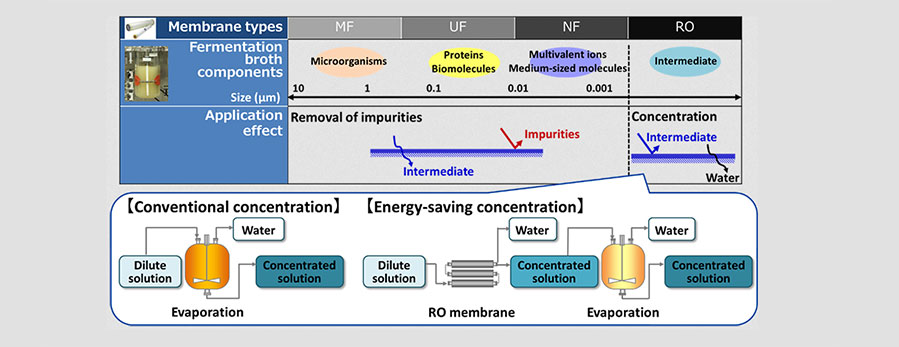
Membrane-based purification technology for biochemicals © 2022 Toray
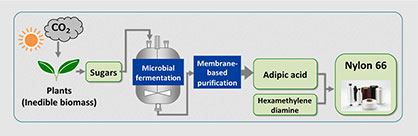
Toray Industries, Inc., announced today that it has developed the world’s first 100% bio-based adipic acid, a raw material for nylon 66 (polyamide 66), from sugars derived from inedible biomass. This achievement came from using a proprietary synthesis technique combining the company’s microbial fermentation technology and chemical purification technology that harnesses separation membranes.

The company has started to scale up its capabilities in this area. It will test polymerization of nylon 66, develop production technology, conduct market research, and take steps to commercialize applications for this bio-based adipic acid by around 2030.

Nylon 66 has been used for many years in fibers, resins, and other applications due to its exceptionally durable, strong, and rigid properties. Pressures to develop eco-friendly nylon 66 have risen in recent years amid a growing awareness of the need to realize a sustainable society. One challenge is that conventional chemical synthesis for producing adipic acid, the raw material of nylon 66, generates a greenhouse gas called dinitrogen monoxide.

Toray was the first in the world to discover microorganisms that produce an adipic acid intermediate from sugars. The company reconfigured metabolic pathways within microorganisms to enhance production efficiency by applying genetic engineering technology, which artificially recombines genes to streamline synthesis in microorganisms. It also employed bioinformatics technologies to design optimal microbial fermentation pathways for synthesis. Quantity of the intermediate synthesized by microorganisms has increased more than 1,000-fold since the initial discovery, and the efficiency of synthesis has improved dramatically.

Toray is using reverse osmosis separation membranes to concentrate the intermediate in the purification process. This approach is more energy efficient than other methods that do not use these membranes.

This bio-adipic acid production technique is free of dinitrogen monoxide emissions, unlike the manufacturing processes for petroleum-derived adipic acid,?and is expected to help combat global warming.


Overview of process, from inedible biomass-derived sugars to nylon 66
© 2022 Toray
© 2022 Toray


Toray is developing a process for producing sugars from crop residues and other inedible plant resources. Sugars from this process could be used as raw materials for bio-based adipic acid. Toray would thus be able to create a total supply chain to make chemicals from inedible biomass, helping pave the way to a circular economy.

Toray’s achievement is partly attributed to joint research with the National Institute of Advanced Industrial Science and Technology, and RIKEN, Japan’s largest comprehensive research institution. That effort is part of two projects that the three partners are undertaking with funding from the New Energy and Industrial Technology Development Organization. The first project is “Development of Production Techniques for Highly Functional Biomaterials Using Plant and Other Organism Smart Cells”, and the second ongoing project is “Development of bio-based production technology to accelerate Carbon Recycling”.

Under the Toray Group Sustainability Vision, the company aims to assist the international community pursue sustainable development by offering innovative technologies and advanced materials solutions. The new bio-adipic acid production technology is part of the Group’s drive to become carbon neutral by 2050 and should help the world overcome challenges in achieving circular economy.

Toray will continue to offer solutions through innovative technologies and advanced materials for better, more diverse lifestyles and sustainable societies.


Technology overview

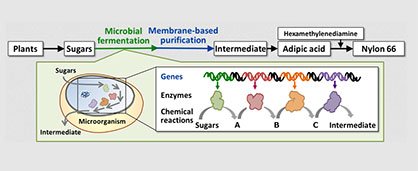
1. Microbial fermentation technology
© 2022 Toray
© 2022 Toray


Enzymes produced from microbial genes carry out chemical reactions to convert sugars into the intermediate.

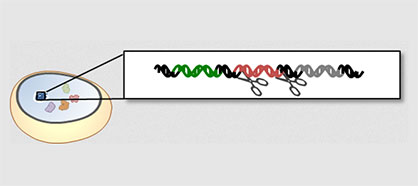
(1) Genetic recombination technology
© 2022 Toray
© 2022 Toray


Allows deletion or insertion of genes for more efficient synthesis.

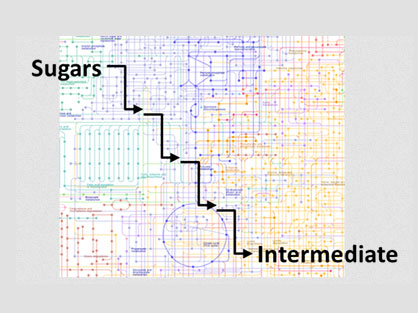
(2) Bioinformatics technology

Designing the optimal fermentation pathway by selecting the most efficient chemical reactions from all the available microbial metabolic pathways (consisting of several thousand reactions).
© 2022 Toray
© 2022 Toray


2. Chemical purification technology using separation membranes

Microfiltration, ultrafiltration, and nanofiltration membranes separate and remove unwanted components in microbial fermentation broth. Reverse osmosis membranes concentrate intermediates. Use of RO membranes can reduce energy consumption compared to conventional concentration by evaporation.


References

New Energy and Industrial Technology Development Organization-supported projects

- Funded project: Development of Production Techniques for Highly Functional Biomaterials Using Plant and Other Organism Smart Cells

https://www.nedo.go.jp/english/activities/activities_ZZJP_100118.html

-  Demonstration project: International Demonstration Projects on Japan's Energy Efficiency Technologies/ Demonstration Project for an Energy-Saving Cellulosic Sugar Production System Using Bagasse

https://www.nedo.go.jp/english/activities/activities_AT1_00175.html

https://www.nedo.go.jp/english/news/AA5en_100389.html

- Toray’s water treatment membranes

https://www.water.toray/

-  Toray’s New Frontiers Research Laboratories

https://www.toray.com/global/technology/organization/laboratories/lab_008.html


More News from Toray Engineering Co. Ltd.

#Recycling / Circular Economy

Toray develops recycling technology that retains carbon fiber strength and surface quality

Toray Industries, Inc., announced today that it has developed a recycling technology that can decompose diverse carbon fiber reinforced plastics (CFRP) made from thermosetting resins while retaining the strength and surface quality of those fibers. The company drew on this technology to create a nonwoven fabric employing recycled carbon fibers.

#Composites

HEAD launches more sustainable(1) BOOM RAW racquet on Earth Day by using Toray’s bio-circular carbon fibers

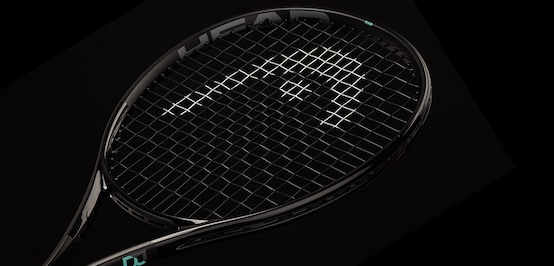
HEAD continues to innovate with the launch of the BOOM RAW tennis racquet, an encouraging development in the search for a more sustainable future for racquet sports. All of the carbon fibers are bio-circular carbon fibers in the limited-edition and highly innovative BOOM RAW racquet, which offers the same explosive power - along with the same fun, feel and easy playability - as the regular, in-line BOOM racquet. The bio-circular carbon fibers are manufactured by Toray and its subsidiary Toray Carbon Fibers Europe.

#Recycling / Circular Economy

Companies in Japan initiate demonstration to expand the automotive recycling process

DENSO CORPORATION and other partners have been chosen by an industry-government-academia collaborative project aiming to expand the recycle content for automobile in the fiscal year 2023 supported by Ministry of the Environment, Japan.

#Yarn & Fiber

Toray develops durable reverse osmosis membrane

Toray Industries, Inc., announced today that it has developed a highly durable reverse osmosis (RO) membrane (see glossary note 1). This innovative offering guarantees the long-term provision of high-quality water. It also maintains the superior removal performance of Toray’s existing membranes vital for reusing industrial wastewater and treating sewage.

More News on Yarn & Fiber

#Yarns

B.I.G. Yarns achieves EcoVadis Platinum Rating, ranking among top 1% of companies worldwide

B.I.G. Yarns, the carpet yarn brand of B.I.G. and a leading manufacturer of polyamide (PA), polypropylene (PP) and polyester (PET) yarns for contract, automotive, and high-end residential applications, has been awarded the EcoVadis Platinum Medal, placing the company among the top 1% of more than 130.000 companies assessed globally.

#Heimtextil 2026

Eastman Naia™ expands All-Night Comfort at Heimtextil 2026

New fill solutions and the debut of sleepwear highlight the versatility and performance of Naia™ Renew, its circular fiber, for home textile applications.

#Heimtextil 2026

Stability in volatile markets: Heimtextil 2026 launches with 3,000 exhibitors and design expertise from Patricia Urquiola

Heimtextil opens the new season with 3,000 exhibitors from 66 countries – maintaining stability while becoming even more international. The new hall layout increases visibility and connects supply and demand even more efficiently. At the opening, architect and designer Patricia Urquiola and Rosa Bertoli, Global Design Director of Wallpaper magazine, talk about AI, innovative materials and future-oriented design for modern living environments.

#Yarns

January 2026 marks Asahi Kasei’s restart of Bemberg production in restored sections of the Nobeoka facility

Beginning January 2026, production at the Asahi Kasei Nobeoka facility – Bemberg’s only production site – will gradually resume, marking a new chapter following the partial shutdown caused by the April 2022 incident. This progress is the result of significant investments and continuous work toreinforce safety measures, restore full operational capacity, and establish long- term stability.

Latest News

#Digital Printing

Epson launches SureColor G9000: high-production Direct-To-Film printer delivering greater productivity and reliability

Epson today announces the launch of the SureColor G9000, a new high-production Direct-To-Film (DTFilm) printer designed to meet growing global demand for flexible and efficient textile transfer printing. Expanding Epson’s DTFilm line-up alongside the SC-G6000, the SC-G9000 introduces enhanced speed, reliability and ease of maintenance for commercial garment decorators and textile producers.

#Nonwoven machines

Three ANDRITZ spunlace lines start operating at Alar Silk Road New Materials in China

Alar Silk Road New Materials and ANDRITZ have successfully commissioned three spunlace lines in crosslapped configuration at Alar’s facility in Aral City, Xinjiang, China.

#Raw Materials

Better Cotton Initiative opens enrollment in the US with promising opportunities for producers

Producer enrollment for the US Program of the Better Cotton Initiative (BCI) is open until May 15 for the 2026-2027 season. With over 2,600 members spanning the cotton supply chain and more than 11,000 users of its Better Cotton Platform (BCP) as of 2025, BCI’s standard is implemented in 15 countries and covers one fifth of global cotton production.

#Knitting & Hosiery

SHIMA SEIKI to exhibit at GMMSA Expo India

Leading Japanese computerized flat knitting technologist SHIMA SEIKI MFG., LTD. of Wakayama, Japan, together with its Indian sales representative Universal MEP Projects & Engineering Services, Ltd., will participate in the upcoming Garments Machinery Manufacturers & Suppliers Association (GMMSA) Expo India 2026 exhibition to be held in Ludhiana, India next month. Through its lineup at GMMSA, SHIMA SEIKI aims to further strengthen its presence within the Indian market with an exhibit that caters to diverse needs, consisting of seam-free WHOLEGARMENT® knitting technology as well as a brand-new shaping machine with high productivity and excellent cost performance.

TOP