[pageLogInLogOut]

#Yarn & Fiber

Producing apparel from waste oil: a challenge taken on by RadiciGroup through the Ulysses research project

A demonstration plant for industrial-scale production of polyamides (nylon) applicable to many production sectors, including fashion. Putting sustainability and circularity principles into practice. An investment of almost EUR 6.2 million, of which a EUR 1.7 million grant from the Region of Piedmont.

A pioneering objective: for the first time, to demonstrate the feasibility of industrial-scale production of polyamides (nylon) starting from bio adipic acid obtained from renewable raw materials, including waste oil and by-products of the oil industry. Potential application sectors for the process and products are textile/fashion, automotive, design, electrical and electronics. This major sustainability-and-circularity-oriented goal has been achieved by RadiciGroup, an Italian multinational headquartered in Bergamo, a world-leading producer of a wide range of chemical intermediates, polymers, high performance engineering polymers and advanced textile solutions.

The research was conducted through the Ulysses project and experimentation was performed in collaboration with research centres and universities. Partial funding was received from the Region of Piedmont, within the scope of the “Call for Proposals IR2 (Industrialization of research results)”. The ambitious, innovative multiyear project was launched in March 2018 and stemmed from RadiciGroup's desire to increase the sustainability of its products, whilst delivering the same quality and performance as required by product standards. What is more, the Group wanted to meet the demand coming from its various strategic sectors, in line with the European targets for the development of low-emission businesses and a circular economy.

The funding amounted to EUR 6.2 million, of which EUR 1.7 million was contributed as a grant by the Piedmont Region. This investment confirms RadiciGroup's great commitment to scientific research, which is strongly supported by the Group’s shareholders.

RadiciGroup's commitment to the ULYSSES project, carried out thanks to the facilities of Radici Chimica and the research and innovation expertise of Radici InNova," commented Stefano Alini, CEO of Radici InNova. "confirms the strategic importance of sustainability, which has always been part of the Group's DNA. Sustainability principles accompanied the project all through its development process. First, waste oil becomes a raw material for the production of adipic acid, which in turn serves as the base material for the production of polyamide polymers, the key ingredients for the manufacture of components.


Finally, the components are fully or partially recycled at the end of their useful life.” Mr. Alini continued: “In this way, the circular economy cycle is completed, thus responding to the demand coming from an ever-increasing number of customers, especially those in the world of fashion and textiles, who are very sensitive to the environmental impact of products. These customers are requesting the development of new materials that can also meet the sustainability goals at the national and EU level, such as Agenda 2030 and the Green Deal. The concept of bioeconomy fits perfectly into the RadiciGroup sustainability programme, in which the careful use of raw materials and resources is of vital importance.”

© 2021 Radici
© 2021 Radici


The ULYSSES project focused on three main areas of research, all of which had the same general approaches: firstly, the experimental processes developed within the Ulysses project framework were industrialization oriented; secondly, they had a strong innovative component; and, lastly, they implemented the principles of sustainability and the circular economy in real-world applications.
More News from Radici Partecipazioni SpA

#Recycled_Fibers

Recycling mixed-fibre garments becomes a reality: RadiciGroup, The LYCRA Company and Triumph take circular fashion a step forward

The process, which is both economically and environmentally sustainable, has enabled the production of an underwear set made from 100% recycled nylon and LYCRA® fibre in a closed-loop system.

#Sustainability

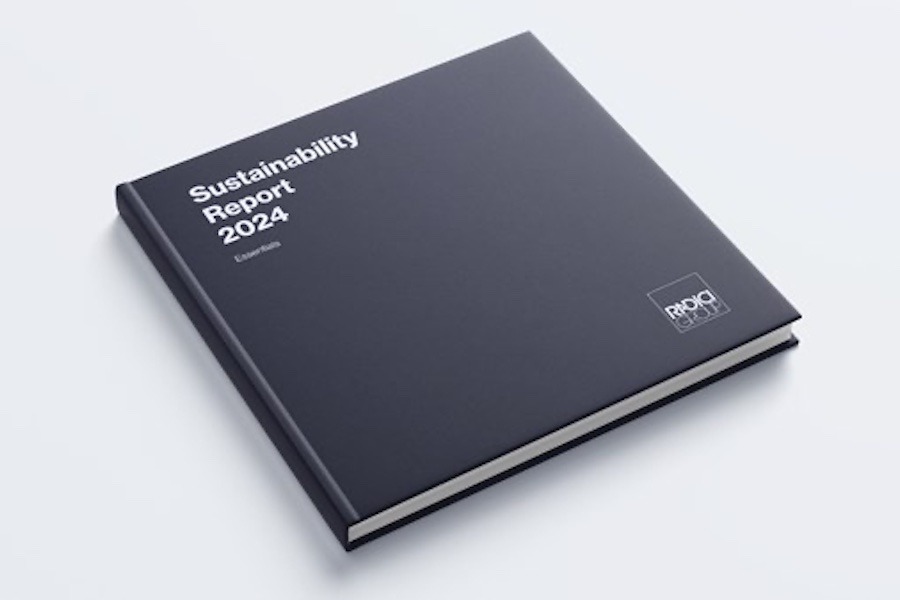
RadiciGroup: 21st Sustainability Report published

RadiciGroup has published its 21st Sustainability Report, covering the year 2024, confirming more than two decades of transparency and measurement in the economic, environmental, and social dimensions. From its first Social Report in 2004 to the current reporting aligned with the GRI Universal Standards, the Group is now preparing for its next challenge: the adoption of the criteria that will be set out by the Corporate Sustainability Reporting Directive (CSRD).

#Recycling / Circular Economy

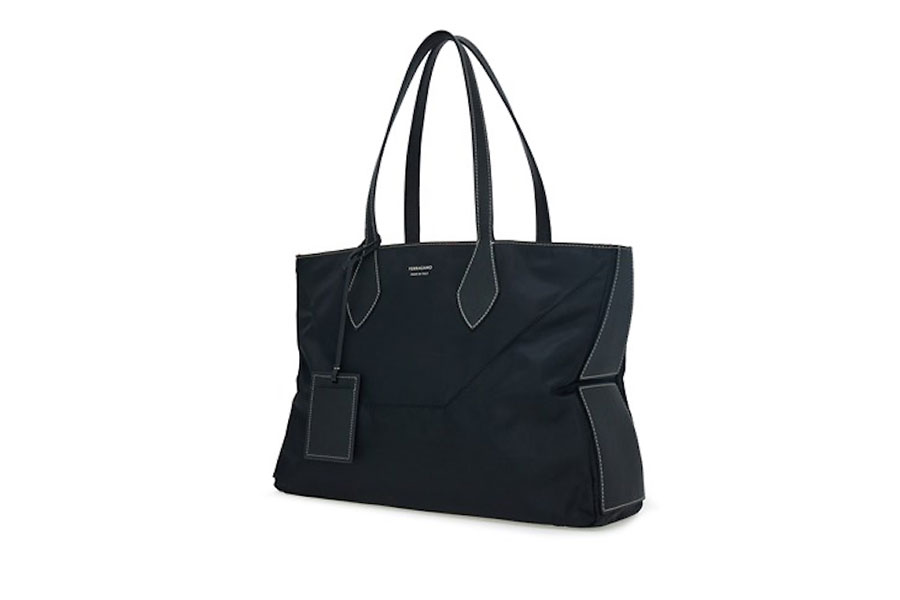
RadiciGroup and Ferragamo team up for an eco-design project under the Monitor for Circular Fashion initiative

RadiciGroup, a leading player in sustainable textile solutions, has partnered with Ferragamo to develop “Nova – The evolution of a Star”, an eco-design project that reimagines one of the Maison’s iconic handbags through the lens of circularity.

#Yarn & Fiber

Twenty years of Sustainability Report for RadiciGroup

The RadiciGroup Sustainability Report reaches an important milestone this year: twenty years have in fact passed since the Group published its first Social Report in 2004, qualifying it as one of the pioneering companies in the realisation of voluntary non-financial reporting. The document measures the Group’s achievements and the actions it has taken to reduce its environmental impact, respect social values, and implement good business management practices.

More News on Yarn & Fiber

#Man-Made Fibers

Lenzing advances its transformation: Higher EBITDA, stronger free cash flow and more than EUR 200 million in cost savings

The business performance of the Lenzing Group in 2025 was affected particularly in the second half of the year by external factors such as international tariff measures, subdued demand and declining market prices. As a result, revenue decreased slightly by 2.3 percent to EUR 2.6 billion, primarily due to lower fiber sales volumes and lower prices for fibers and pulp, which were further negatively impacted by currency developments. Nevertheless, thanks to the comprehensive Performance Program, Lenzing was able to improve its operating performance and key financial indicators compared with the previous year.

#Man-Made Fibers

“Lead Transformation – Generate Impact”: Lenzing presents its 2025 Annual and Sustainability Report

The Lenzing Group has published its 2025 Annual and Sustainability Report, entitled LEAD TRANSFORMATION – GENERATE IMPACT. The report shows how Lenzing is actively shaping change in the industry and making a lasting impact: economically, ecologically, and socially. Lenzing is consistently focused on the future: with targeted investments in premiumization, excellence, innovation, and sustainability, the company is strengthening its position as a leading provider of sustainable, cellulose-based premium fibers. The combined report is available in digital format.

#Raw Materials

Lenzing Group positions bio‑based materials as a strategic asset for Europe’s economic security

The Lenzing Group, a leading supplier of regenerated cellulose fibers for the textile and nonwovens industries, hosted a high‑level roundtable in Brussels to discuss how bio‑based materials can strengthen Europe’s economic security and support the shift toward a fossil‑free future. Organized in cooperation with Euractiv, the event brought together representatives of the European Commission, the UK Mission to the EU, academia, civil society, and industry.

#Yarn & Fiber

Teijin Carbon strengthens high‑end sports offering with advanced prepreg and resin technologies for next‑generation bicycle performance

High‑end bicycle manufacturers are entering a new era in which modern frames and components must be lighter, stiffer, tougher and more sustainable – all while enabling fast, repeatable and cost‑efficient production. To support this shift, Teijin Carbon is expanding its portfolio of advanced prepreg systems developed specifically for premium road, gravel and mountain bike applications.

Latest News

#Techtextil 2026

Gebr. Otto highlights versatility at Techtextil with regional supply chains, yarn innovations and new hygiene segment

At this year’s Techtextil, Gebr. Otto places its versatility at the center of its presentation. In addition to spinning, twisting and dyeing – traditionally focused on fine cotton – textile processors will also find a competent development partner for technical specialty solutions. The Dietenheim-based spinning mill has now built up a decade of experience in the production of technical yarns, particularly from aramids. A new hygiene segment has also been established, where yarns for medical and hygiene products are currently being produced. In the future, this department could also develop textile products for the food sector. Gebr. Otto will once again be present at the BW-i joint stand, booth D81, hall 12.1. What is wound onto the spool is determined by the customer: Gebr. Otto develops according to specific customer requirements and transforms its own ideas into yarn innovations.

#Europe

Commission presents proposal for EU Inc. - unlocking the full potential of the Single Market for Europe's entrepreneurs

Today, the European Commission presented its proposal for EU Inc., a new single set of corporate rules, building the cornerstone and starting point for the EU's 28th regime. EU Inc. is an optional, digital-by-default European corporate framework. It will make it easier for businesses to start, operate and grow across the EU – incentivising them to stay in Europe, and encourage those who once looked elsewhere to return.

#Man-Made Fibers

OnceMore® from Södra brings end-to-end traceability for circular Man-made Cellulosic Fibers (MMCF) using TextileGenesis

OnceMore® from Södra, the world’s first large-scale process for recycling blended fabrics into high‐quality dissolving pulp, will begin using TextileGenesis, a Lectra company, to strengthen traceability from raw material to retail across the value chain. OnceMore® produces dissolving pulp made from blended textile waste and wood sourced from responsibly managed Swedish forests. By integrating TextileGenesis, OnceMore® supports the growing need for verified data and secure, transparent tracking throughout increasingly complex supply chain.

#Sustainability

Experts publish APAC policy priorities

Cascale today announced the publication of its APAC Policy Priorities Paper, developed by the Asia-Pacific (APAC) Policy Member Expert Team (MET) to identify key regional sustainability challenges and provide practical, aligned recommendations for policymakers and industry stakeholders across Asia-Pacific.

TOP