[pageLogInLogOut]
USTER Think Quality

#Yarn & Fiber

Lenzing presents blockchain technology at Premiere Vision in Paris

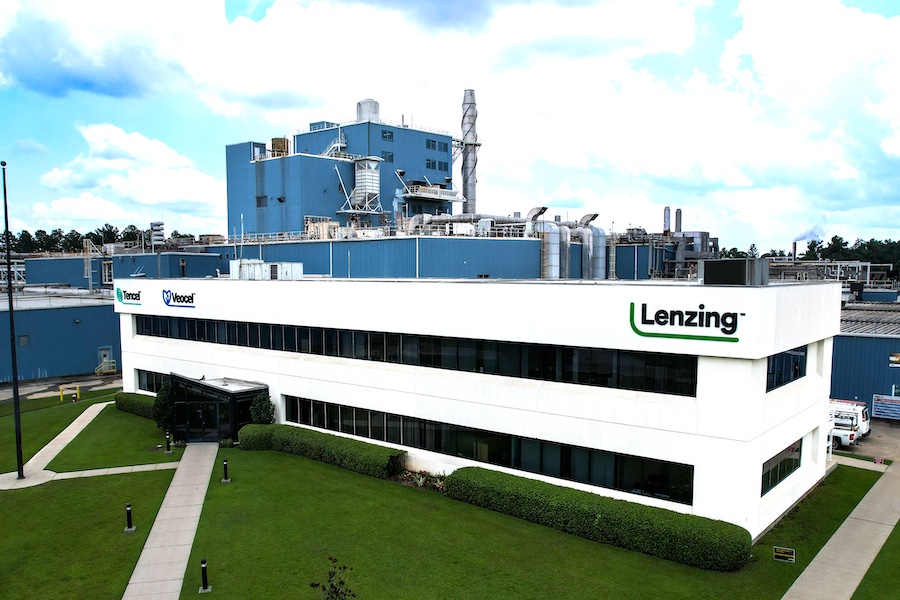
The Lenzing Group, world market leader in specialty fibers made from the renewable material wood, is strengthening its leading position in sustainability in the textile industry. Lenzing will use blockchain technology to support its TENCEL branded fiber business, ensuring complete transparency and traceability for brands and consumers of its fibers in the finished garment. After evaluating various initiatives Lenzing decided to join the platform of the Hong Kong based technology company TextileGenesis to accomplish this ambition.
  • Lenzing enters the age of digital traceability
  • Transparency ensured from wood to the finished garment
  • Partnership with Hong Kong based TextileGenesisTM

Consumers increasingly want to understand the ingredients and suppliers of the products they buy, requesting a new level of transparency and traceability. The supply chain transparency from wood to garment and home textiles will enable all customers and partners to identify TENCELTM fibers and the respective wood source in each production and distribution step. Thanks to a QR code on the final garment, consumers will be able to detect the origin of the clothes they intend to buy.

“The blockchain technology enables brands and consumers to identify TENCELTM branded fibers across each production and distribution step from fiber-to-retail of the finished garment or home textiles. The technology also allows consumers to verify the garment composition and the underlying textile supply chain at the point of sale, simply by scanning the barcode with a mobile device”, explains Andreas Dorner, Commercial Textile Director Europe & Americas.

With blockchain technology, Lenzing sets a new level of transparency and traceability in the textile industry. The first pilot was presented at this year’s Fashion Summit in Hong Kong on September 05, 2019. This pioneering pilot project was conducted in close cooperation with Lenzing. In the next months more partners will be involved along the entire value chain. Lenzing expects the platform to be fully operational as of 2020.


(c) 2019 Lenzing
(c) 2019 Lenzing


More News from Lenzing

#Nonwovens

Lenzing invests EUR 27 million in US facility to expand specialty fibers for nonwovens

The Lenzing Group is investing EUR 27 million (USD 31 million) to expand specialty fiber production capabilities at its lyocell fiber site in Mobile, Alabama, USA. The investment forms part of the company’s “Grow NW. Reset TX.” strategy and will strengthen its global Nonwovens business, with a particular focus on short-cut fibers and customized wood-based solutions for specialty applications.

#Man-Made Fibers

Lenzing improves profitability as strategic transformation gains momentum

The Lenzing Group reported improved operating profitability in the first nine months of 2026 despite declining revenue and a challenging market environment. Revenue decreased by 2.3 percent to EUR 1.93 billion, while adjusted EBITDA remained stable at EUR 353 million. The adjusted EBITDA margin increased from 17.9 percent to 18.3 percent, reflecting progress in the company's strategic transformation under its “Grow Nonwovens. Reset Textiles.” strategy.

#Man-Made Fibers

Lenzing and Kaihara to debut REMOD denim collection at Kingpins Amsterdam

The Lenzing Group, a global producer of wood-based fibers for the textile and nonwovens industries, has partnered with Japanese denim manufacturer Kaihara Corporation to launch the “REMOD Collection”. The collection combines three of Lenzing's fiber offerings for denim applications: TENCEL™ Lyocell Standard, TENCEL™ Lyocell – HV100 and TENCEL™ Lyocell dtex 2.2.

#Man-Made Fibers

Lenzing shareholders approve €300 million capital increase

Shareholders of Lenzing AG have approved a capital increase of approximately €300 million, providing financial support for the company's recently announced "Grow Nonwovens, Reset Textiles" strategy.

More News on Yarn & Fiber

#India ITME 2026

Uster to present novel solutions at India ITME 2026

Tackling contamination is a critical quality target in yarn production – and Uster now enables spinners to make the right choices for optimized profitability, with top technology, precise data and integrated analysis across the entire process. The new Uster Contamination Control solution and latest Uster Vision Shield 3i put spinners in command of contaminant removal, ensuring yarn quality, minimizing waste and protecting profits. These exciting developments – and even more news – will be featured at India ITME 2026.

#Recycled Fibers

C&A and Zalando join Altag® Fiber Club to accelerate adoption of agricultural waste-based fibres

Fashion for Good and AltMat announced today that C&A and Zalando have joined the Altag® Fiber Club as its first brand signatories, marking a critical commercial milestone in the journey to mainstream adoption of next-generation fibres derived from agricultural waste.

#Man-Made Fibers

Kraig Biocraft Laboratories launches performance yarn development program based on spider silk

Kraig Biocraft Laboratories has launched a development program for high-performance yarns based on its recombinant spider silk technology. The initiative follows the company's first commercial shipment of a custom spider silk yarn to a performance apparel customer and includes the delivery of spider silk samples to a textile technology company with experience in aerospace-related material development.

#Recycled Fibers

Circ and Huafon partner to scale textile-to-textile recycling in China

Circ® and Huafon, a leading spandex producer in China, are partnering to build and scale a new multi-phase textile-to-textile recycling site in China, expanding Circ's global pathway to industrial scale. The project will be located within Huafon's industrial footprint and will use Circ's technology to process polycotton textile waste and recycle both inputs, recovering recycled PTA, recycled MEG and recycled cellulosic pulp for use in new textiles. The site will be developed in phases, with Phase 1 designed for approximately 200 metric tons of textile waste per day and additional capacity planned.

Latest News

#India ITME 2026

India’s textile industry: Current position, growth targets and industrial development

With ambitious export targets, major investments in manufacturing infrastructure and new international trade agreements, India is pursuing a comprehensive development strategy for its textile and apparel industry. An overview of the industry’s current position, government initiatives, progress achieved and challenges ahead.

#Weaving

“A complex design is only useful if the machine can reproduce it consistently”

Andreas Schnabel, Head of R&D for Technical Weaving Systems at Stäubli, discusses how 3D weaving can create textile reinforcements tailored to the loads within a composite component, where near-net-shape weaving can reduce processing steps and material waste, and what it takes to produce complex structures reliably and economically. He also explains how manufacturers can adapt Stäubli’s modular TF weaving platforms to new applications and how the company’s centre of excellence in Bayreuth supports the transition from research to industrial production.

#India ITME 2026

India ITME 2026: Textile technology meets India's investment ambitions

With ambitious growth targets, government incentive programmes and industrial development initiatives already underway, India is preparing for the next stage of its textile transformation. Against this backdrop, the 12th India ITME, taking place in Greater Noida from 4 to 9 December 2026, arrives at a particularly important moment for machinery manufacturers and textile producers alike.

#ITMA Asia + CITME 2026

ITMA ASIA + CITME 2026: Shanghai prepares for a record edition

With record demand for exhibition space, a strong presence of international technology suppliers and growing interest in automation and intelligent manufacturing, ITMA ASIA + CITME 2026 will provide an important overview of technological developments in the world’s largest textile producing region.

TOP