#Weaving
Jakob Müller Group implements strategy 2030 with concrete measures
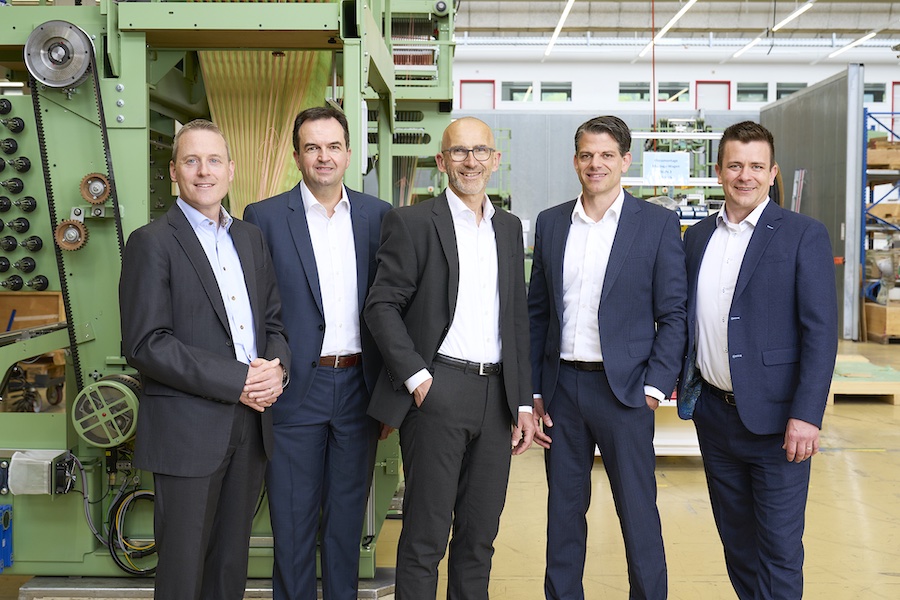
The current measures focus specifically on the company's core competencies and include, among other things, simplified corporate structures, adjustments and expansions of the product portfolio, a new acquisition, and targeted customer initiatives. With this, JMG strengthens its position in the market and lays the foundation for sustainable growth for the long-standing Swiss company.
The Swiss industrial landscape is changing – as is the global textile machinery industry, for which JMG manufactures machines and system solutions. As part of its JMG 2030 strategy, the world's leading machine manufacturer has now presented a series of measures designed to secure its market leadership and enable long-term growth.
JMG is investing specifically in strengthening customer focus and modernizing both its product portfolio and global internal processes. This includes the creation of innovative customer collaboration platforms, the expansion of the product portfolio in the volume segment, the optimization of the service offering, as well as the simplification of corporate and management structures.
Focus on core competencies and operational excellence
As part of its strategic realignment, JMG will increasingly focus on its core segments of Weaving, Label Production Systems, Warp Crochet Knitting, as well as Dyeing and Finishing. At the same time, the Winding & Making-up and Warping Systems segments at the JMG site in Schwelm, Germany, will be discontinued, with essential technologies and products being transferred to other areas. In addition, the Finishing segment will be relocated from Kadan, Czech Republic, to JMG’s sister company Benninger in Pune, India. These measures will lead to structural adjustments at the locations in Germany and the Czech Republic, where production will be gradually reduced.
"Even though these decisions were not easy for us, they are necessary to secure the future viability of the Jakob Müller Group. Our resources must be specifically directed where we see the greatest growth potential," says owner Stephan Bühler. Andreas Conzelmann, CEO of JMG, adds: "By focusing on our core segments, we are strengthening our innovative power and competitiveness – and ensuring that we can continue to offer our customers the best solutions in the future."
Unifying JMG’s brand identity and strengthening the global market position
COMEZ, the leading manufacturer of crochet and warp knitting machines in Italy, will be fully integrated into JMG and will operate under the name Jakob Müller Italy in the future. With investments in research and development – including the acquisition of MEI International, a renowned Italian manufacturer of label weaving machines – JMG will drive next-generation solutions and expand its product portfolio to include innovative air-jet technology. Further information regarding the acquisition of MEI will be provided in a separate announcement.
Sustainably improving customer experiences
Creating outstanding customer experiences is at the heart of the JMG 2030 strategy. The strategic investments in innovation and operational excellence enable JMG to offer state-of-the-art solutions, faster turnaround times, and an enhanced customer experience. A key element of this customer-centric approach is the opening of the new Customer Center and of the LAB1887 in Frick, Switzerland, in late summer 2025. This innovation factory serves as a development center where customers, together with JMG, can explore new technologies and develop novel applications for narrow fabrics.
"Our JMG 2030 strategy underscores our company’s commitment to long-term stability, sustainable growth, and maintaining our position at the forefront of the narrow fabric industry," says Andreas Conzelmann. "The changes we are implementing will enable us to become a more agile, customer-focused company – ready to seize future opportunities."