[pageLogInLogOut]

#Textiles & Apparel / Garment

The new project “Fashion schools for design - driven sustainable innovation” debuts at Fashion Graduate Italia 2022, in collaboration with C.L.A.S.S.

As of 2022, Piattaforma Sistema Formativo Moda Ente del Terzo Settore (non-profit organisation) renews its commitment in the field of responsible, eco-friendly fashion with a new ad hoc initiative for Fashion Graduate Italia: FASHION SCHOOLS FOR DESIGN - DRIVEN SUSTAINABLE INNOVATION. The project has been set up in a strategic partnership and with the support of C.L.A.S.S. (Creativity, Lifestyle And Sustainable Synergy).

Since 2007, C.L.A.S.S. (Creativity, Lifestyle And Sustainable Energy), the international eco-hub founded by Giusy Bettoni, has supported a next-generation fashion wherein the union of design, innovation, communication and responsibility creates aware and competitive businesses, capable of playing not only an economic but also a social role. C.L.A.S.S. supports the entire chain to trigger CHANGE in the system by activating VALUES that speak clearly and directly to modern consumers.

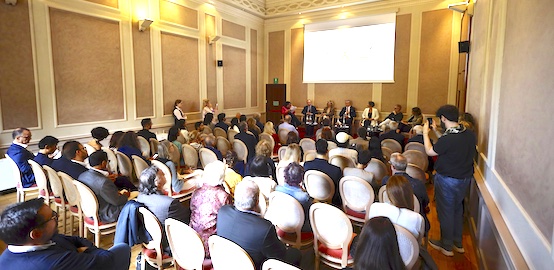
The project “Fashion Schools for Design - Driven Sustainable Innovation” is presented at the eighth edition of the event organised by Piattaforma Sistema Formativo Moda, staged from 3 to 5 November at BASE Milano.

Embracing the theme of this edition of Fashion Graduate Italia, “Sustainable Innovation”, Piattaforma Moda has invited students from fashion schools, academies and associated institutes to participate in a training course regarding the planning and creation of an outfit in compliance with a responsible fashion approach: starting with the design, including the choice of sustainable materials supplied by some of the hub’s partner companies, and also involving a look at the communication strategy for the project.

To create their looks, the selected students followed two training courses organised by C.L.A.S.S.: “Introduction to next-generation Fashion” and “Introduction to smart ingredients”. These courses covered the values of next-generation fashion (integrating sustainability with design and innovation) and the characteristics of innovative and sustainable materials to produce the outfits.

The development process of the 11 final looks was followed in person by creative director Olivia Spinelli - Coordination and Creative Direction at IED Moda Milano and member of the Artistic Committee of FGI 2022 - and by tutor Camilla Carrara - founder and zero-waste designer of ZEROBARRACENTO -, the project coordinator of C.L.A.S.S.

The students who participated in the project are:

  • Aissatou-Jole Diatta, AFOL MODA
  • Bianca Aloisi, Accademia Euromediterranea HARIM
  • Claudia Aubert, ISTITUTO MODARTECH
  • Federica Alessi and Sofia Ricci, NEXT FASHION SCHOOL
  • Federica Bombieri, ISTITUTO SECOLI
  • Francesco Imberti, ISTITUTO MARANGONI
  • Genn Benvenuto, IUAD ACCADEMIA DELLA MODA
  • Giulia Ciola, NABA, Nuova Accademia di Belle Arti
  • José Luis Alessandretti and Alessandra Bonini, FERRARI FASHION SCHOOL
  • Lorenzo Attanasio, ISTITUTO EUROPEO DI DESIGN - IED
  • Robin Capelli, ISTITUTO DI MODA BURGO


The partners of C.L.A.S.S. that contributed by supplying their materials are: Berto, Brunello, Iluna Group, Re.VerSo™ by A. Stelloni Collection by Mapel and Tessitura Grisotto; IED - European Institute of Design and ZEROBARRACENTO also gave support in the implementation of the initiative.

The students’ creations featured in a special display in a dedicated area for the entire duration of the event.

With the project “Fashion Schools for Design - Driven Sustainable Innovation”, C.L.A.S.S. and Fashion Graduate Italia wish to promote an innovative dialogue between fashion and sustainability which focuses on the new generation of designers and the sharing of training initiatives which accompany them towards new value-based approaches.

Matteo Secoli, Chairman of Piattaforma Sistema Formativo Moda Ente del Terzo Settore, commented: “FASHION SCHOOLS FOR DESIGN - DRIVEN SUSTAINABLE INNOVATION is another of the innovations in this edition of Fashion Graduate, set up thanks to our collaboration with C.L.A.S.S. It is a project that yet again sees young students as the protagonists, in this case acting as spokespersons for an essential issue in the fashion industry. Sustainability begins with the ability to make informed choices, rooted in culture and education, which is why the Piattaforma schools feel a sense of responsibility in their role. First of all, as schools, we must educate future designers by providing them with the right values, helping them understand that responsibility occurs from the moment they start to think about the outfits they want to create. Students must absorb these lessons and allow them to emerge in clothing which is sustainable as well as (obviously) attractive and well-made. I am sure that our students are the right people to promote this necessary change in mentality.”

Giusy Bettoni, CEO and founder of C.L.A.S.S., stated that: “The key theme is sharing the knowledge of new values resulting from the integration of responsibility in design, innovation, materials and communication. This means knowing the impact that each of these dimensions can have on people, the environment, wildlife and the oceans. The real innovation is that of raising the standards of performance and quality of life WITHOUT creating environmental impact... and this is the real meaning of responsible innovation.” 


More News from C.L.A.S.S. Eco Hub

More News on Textiles & Apparel / Garment

#Textiles & Apparel / Garment

YKK launches “YZiP® Light” aluminum alloy zipper for cotton pants

YKK Corporation (Headquarters: Chiyoda-ku, Tokyo; President: Koichi Matsushima; hereafter, YKK) has launched YZiP® Light, a lightweight aluminum alloy zipper for cotton pants, with sales beginning in late March. The introduction of YZiP® Light expands YKK’s zipper portfolio—led by the flagship YZiP® copper alloy zipper—providing customers with greater flexibility to meet diverse garment needs.

#Textiles & Apparel / Garment

Coats to showcase innovative reinforcement and filler materials for leather goods and accessories at APLF 2026

Coats, a world-class Tier 2 manufacturer and trusted partner for the apparel and footwear industries, will be promoting four advanced materials from its ‘Lifestyle Solutions’ portfolio at APLF 2026 in Hong Kong in March. Each innovation has been specifically engineered to help luxury and premium brands elevate the craft, durability, sustainability and creative expression required in the manufacturing of handbags, purses, and other high-end designer accessories.

#Textiles & Apparel / Garment

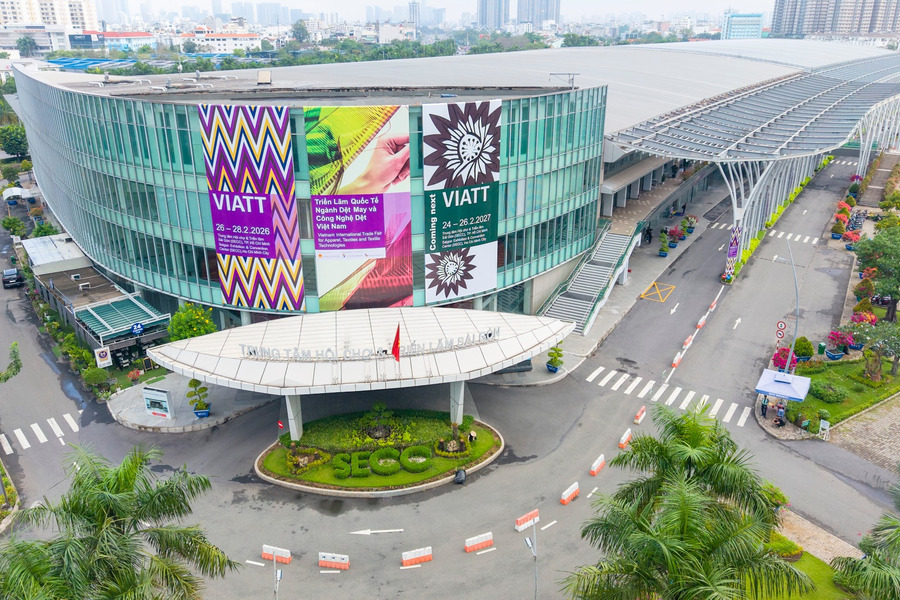
Design, innovation and sustainability propel VIATT 2026’s expanding role in ASEAN textile sourcing

At its third edition, the Vietnam International Trade Fair for Apparel, Textiles, and Textile Technologies (VIATT) further reinforced its role as a key sourcing and business platform for ASEAN’s textile industry. The three-day fair welcomed over 17,000 visits from 54 countries and regions, and featured over 460 exhibitors from 21 countries and regions across 18,000 sqm. The 2026 edition was marked by the introduction of new international pavilions and zones, broadening the fair’s sourcing scope across new geographies and product categories. The fringe programme, headlined by the debut Trend Forum, further distinguished VIATT as the region’s most integrated textile trade platform – uniquely spanning the entire value chain.

#Textiles & Apparel / Garment

Revived Replacement Elements for VISLON® wins the iF Design Award 2026

YKK Corporation (Headquarters: Chiyoda-ku, Tokyo; President: Koichi Matsushima; hereinafter “YKK”) is proud to announce that its Revived Replacement Elements for VISLON® has been awarded the prestigious iF DESIGN AWARD 2026, an award that recognizes excellence in design and quality, organized by iF Design Foundation.

Latest News

#Techtextil 2026

Performance Apparels: Functional textiles drive innovation at Techtextil 2026

From high-performance fibres and advanced membranes to smart textiles and sustainable material concepts – functional apparel is becoming one of the most dynamic innovation fields in technical textiles. At Techtextil 2026, exhibitors demonstrate how new materials, finishing technologies and digital functions are shaping the next generation of protective, workwear and outdoor systems.

#Textile chemistry

A flagship for chemical production: BASF inaugurates world-scale Verbund site in China

BASF today (March 26, 2026) celebrated the official inauguration of its newly built, world-scale Verbund site in Zhanjiang, Guangdong Province in southern China. Covering an area of around four square kilometers, it is more than a major BASF project in the chemical growth market of China. “Zhanjiang shows what the future of chemistry looks like: efficient, digital and sustainable by design. The site showcases a smart integrated Verbund structure on an industrial scale,” said Dr. Markus Kamieth, CEO of BASF, at the ceremony attended by representatives from government, customers, business partners and employees.

#Nonwovens

VEOCEL™ Lyocell production expands to Asia – Launching a new chapter for nonwovens in the region

VEOCEL™, Lenzing's flagship specialty nonwovens brand, expands production at its Thai plant in Prachinburi. This is the first-ever production of its nonwoven-grade lyocell fibers in Asia. Built in 2022 with a 100,000-ton annual production capacity, the facility - previously focused on fibers for textile applications - now can directly meet the demand for VEOCEL™’s biodegradable¹, wood-based lyocell fibers for nonwovens products. These fibers are an essential ingredient for high-quality nonwovens products, ranging from baby wipes to facial sheet masks and everyday personal hygiene items.

#Research & Development

Hof University develops sustainable textile coating for the fashion of tomorrow from mushrooms

Clothing is often treated as disposable: T-shirts for events, general merchandise, or short-term campaigns frequently end up in the trash after only a few uses. This is particularly problematic given that their production still largely relies on fossil-based materials. This is precisely where a new research project at Hof University of Applied Sciences comes in.

TOP