[pageLogInLogOut]

#Textiles & Apparel / Garment

Gore manufacturing plant for fabrics products in Putzbrunn achieved ISO14001 certification
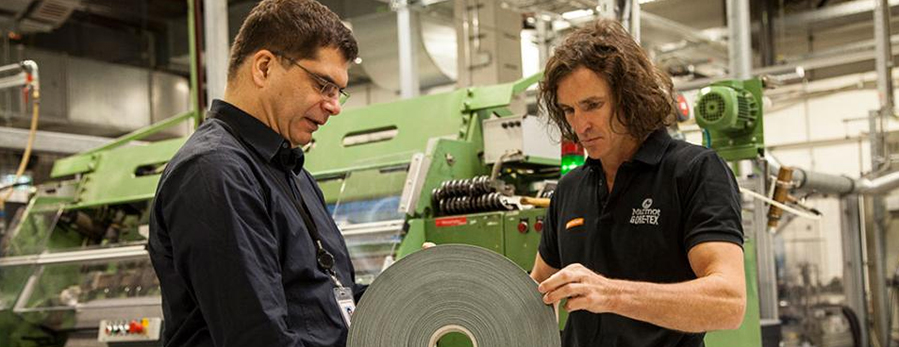
(c) 2020 Gore
W. L. Gore & Associates GmbH (Gore) announced today that its fabrics manufacturing plant in Putzbrunn, Bavaria, has been certified according to the environmental and quality management standard ISO 14001.

Now all fabrics manufacturing plants of Gore are certified according to ISO 14001

"With this certification, all three Gore-owned plants around the world that manufacture fabrics products are compliant with this globally accepted standard for environmental management systems. All our plants comply with equally high standards – for a smaller environmental footprint and safe working conditions. This ISO 14001 certification emphasizes our commitment to comply with the same high standards, partly going beyond legal requirement, in all plants of our Fabrics Division worldwide – for a smaller environmental footprint and safe working conditions.”

Environmental protection, together with social aspects, play a key role in the sustainability strategy of Gore Fabrics’ division. Worldwide accepted standards of environmental management, such as ISO 14001, help establish internationally consistent processes at the plants in order to identify potential improvements within Gore´s environmental management system and support its implementation.

Daniel Eckardt, Regional Quality Leader Europe for Gore fabrics products and in charge of the ISO 14001 introduction in Putzbrunn, says: “I am glad that we received this important certification. Our team did an excellent job, and I am proud of the fact that our manufacturing plant in Putzbrunn completed the range of ISO 14001 certified fabrics manufacturing plants of Gore around the world.”

ISO 14001 was presented by the International Organization for Standardization (ISO) in 1996. It specifies worldwide accepted requirements for environmental management systems that enable organizations, to improve its environmental footprint, comply with legal and other duties, and achieve its environmental goals. This international standard focusses on the concept of “continuous improvement”, based on the “plan-do-check-act” process cycle.

In 2010, Gore began establishing management systems at their manufacturing plants for fabrics products inspired by the ISO standard.


In order to obtain ISO 14001 certification, the plant in Putzbrunn was asked to fulfill a range of specific tasks and requirements similar to the Gore manufacturing plants for its fabrics products in Elk Mills, US and Shenzhen, China:

  • Identify significant environmental impacts such as gas or electrical energy usage and the waste from plants;
  • Monitor energy usage to achieve sustained energy reductions;
  • Measure environmental impact through greenhouse gas emissions;
  • Track projects to show progress;
  • Comply with all legal requirements relating to the environmental performance of Gore´s people, processes, plant and products (4Ps); an example would be, meeting the requirements of Gore´s environmental permit;
  • Follow operational controls, meaning that Gore follows proper procedures for handling and storage of chemicals, and has trained Associates for emergencies in place.

Daniel Eckardt shares the team´s high motivation to work hard on preparing for the audit and certification in Putzbrunn, and also knows about its reasons: “Ensuring that our impact on the environment becomes transparent was one of the most important steps to make all Gore Associates understand and accept the true value of our activities for improving our environmental footprint.”

Gore revolutionized the outerwear industry with waterproof, breathable GORE-TEX Fabric more than 40 years ago and remains a leading innovator of performance apparel. Gore fabrics products provide comfort and protection in challenging environments and in everyday life, enabling wearers to safely and confidently achieve and experience more. From hiking in downpours to defense operations and fighting fires, Gore’s deep understanding of consumer and industry needs drives development of products with meaningful performance advantages.?gore-tex.com and gore-workwear.com





More News from TEXDATA International

#ITM 2026

ITM 2026: The new geography of textile production

New production hubs are emerging across North Africa and Central Asia, while Türkiye is accelerating its transformation toward higher-value, technology-driven and more sustainable textile manufacturing.

#Research & Development

“Production is a product”

From technical textiles and AI-driven robotics to the limitations of textile circularity: Professor Dr Thomas Gries looks back on more than two decades of development at ITA Aachen. In the interview, he explains why production technology remains a decisive success factor, discusses international collaborations and innovation ecosystems, and shares his views on the transformation of production landscapes and the challenges facing an increasingly regulated industry.

#Knitting & Hosiery

“We need to move away from the price trap and return to a value-driven mindset.”

With its new Textile Innovation Center, KARL MAYER is sending a strong signal for innovation, collaboration, and the future of textile applications. In this interview, Karl Josef Mayer discusses new opportunities in warp knitting, the processing of staple fibres, recycling, the changing role of machinery manufacturers, and why the textile industry must once again focus more strongly on the value of textiles. by Oliver Schmidt

#Associations

“Innovation, resilience and international experience remain the great strengths of the Swiss textile machinery industry”

Geopolitical uncertainty, growing competitive pressure from China, new free trade agreements and the shift towards a circular economy are currently reshaping the global textile industry. In this interview, Cornelia Buchwalder discusses the current mood within the Swiss textile machinery sector, the industry’s distinctive innovative strength, new market opportunities in India and Asia, and the technological trends that could shape the upcoming trade fair cycle leading up to ITMA 2027.

More News on Textiles & Apparel / Garment

#Europe

European textile industry calls for €10 handling fee on ultra-fast-fashion imports

The introduction of the €3 customs duty on low-value imports marks an important milestone in Europe’s efforts to address the challenges created by the rapid growth of ultra-fast-fashion imports. Together with the abolition of the €150 customs duty exemption, it demonstrates that policymakers are willing to act when market distortions become impossible to ignore. However, the European textile and clothing industry considers this a first step rather than the final destination.

#Textiles & Apparel / Garment

Texworld Apparel Sourcing Paris opens with focus on AI, circularity and new sourcing regions

More than 1,000 exhibitors from around the world are gathering at Paris-Le Bourget as Texworld Apparel Sourcing Paris opens its doors from August 31 to September 2. With around 500 textile manufacturers and a similar number of apparel and accessories suppliers, the trade fair reflects the ongoing transformation of global sourcing and the growing diversification of supply regions.

#Man-Made Fibers

The LYCRA Company expands its co-creation vision through an immersive Lifestyle District at Intertextile Shanghai.

The LYCRA Company, a global leader in fiber and technology solutions for the apparel industry, is reimagining the trade show experience at Intertextile Shanghai Apparel Fabrics Autumn Edition, which opened today in China. Building on the success of last year's ALL IN concept, the company has expanded its co-creation vision into a 356-square-meter Lifestyle District featuring partners Jingzili New Material, JYT Textile, Lianxingfa Knitting, and Trend Textile. The district is part of a larger 895-square-meter pavilion showcasing a total of 19 co-exhibitors. Together, they demonstrate how innovations in fiber, fabric, and garments can be combined to create compelling solutions for both work and play.

#Textiles & Apparel / Garment

Hong Kong strengthens position as Asia's leading sustainable fashion hub

Hong Kong's position as one of Asia's most prominent sustainable fashion hubs has been further strengthened, with the HKTDC ESG Index 2026 released by the Hong Kong Trade Development Council (HKTDC) for the fashion industry rising to 65.5 in 2026, up 2.3 percentage points from 2025. The increase reflects growing industry confidence in Hong Kong as a premier platform for sustainable fashion development and ESG-related business opportunities.

Latest News

#Research & Development

From smart jackets to laser technology: Mona Neubaur explores Textile Factory 7.0

As part of her summer tour, North Rhine-Westphalia’s Minister for Economic Affairs and Climate Action, Mona Neubaur, visited Textilfabrik 7.0 in Mönchengladbach to experience the project’s innovations first-hand. Under the motto “smart and clean”, the visit focused on innovative technologies and sustainable alternatives for textile production - from smart jackets to the decolourisation of textiles using fungal cultures.

#CINTE Techtextil China 2026

Cinte Techtextil China 2026 has opened today, bringing global innovations and resources to Shanghai

As Asia’s premier platform catering to the evolving needs in technical textiles and nonwovens, Cinte Techtextil China has opened today at the Shanghai New International Expo Centre, gathering over 300 exhibitors from 15 countries and regions. Across Halls W3 to W5, this edition will create chances for fast-growing sectors and emerging trends – such as Mobiltech, Medtech & Protech, Indutech and more. The curated zones, pavilions, and fringe programme are designed to better connect exhibitors with targeted buyers from across China, Asia-Pacific, and further afield. Meanwhile, the Association Village will gather international industry associations to foster even more global collaboration.

#Raw Materials

Brazil sets new cotton export record and consolidates global leadership

Brazil ended the 2025/26 commercial year with a new record, consolidating its position as the world’s largest cotton exporter. Between August 2025 and July 2026, the country shipped 3,373,941 tonnes of the fiber, 19% more than in the previous cycle, and reached record revenue of US$5.3 billion. The result represents a milestone in Brazil’s expansion in the international market and reinforces the country’s role as a strategic supplier to the global textile industry.

#Raw Materials

Better Cotton Initiative partners with Avalo in AI plant breeding for climate-resilient cotton

The Better Cotton Initiative (BCI) has partnered with agriculture solutions company Avalo, whose platform accelerates the speed at which plants with key resiliency traits may be developed.

TOP