[pageLogInLogOut]

#Textile chemistry

Devan launches Purissimo® NTL, a full biobased, biodegradable allergen control technology
© Devan Chemicals
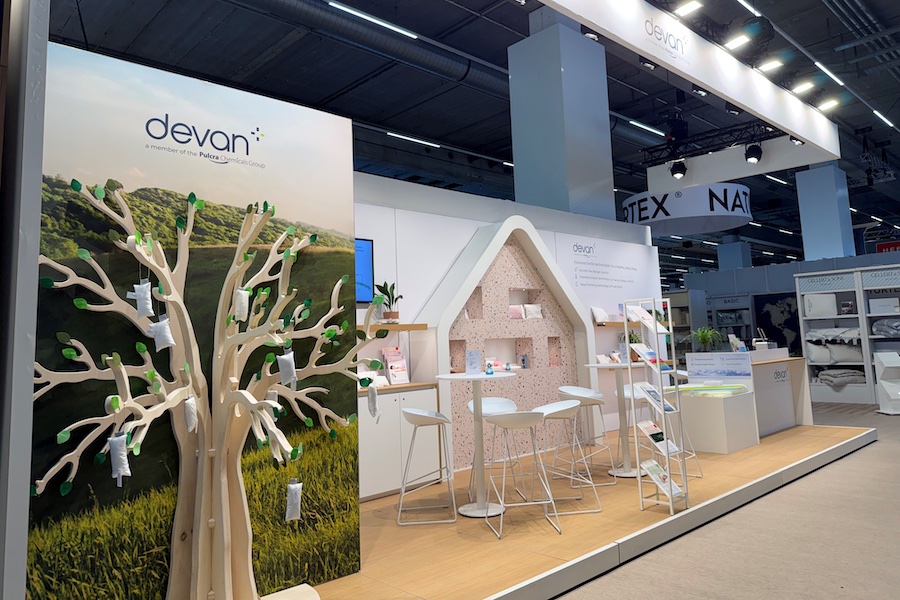
Belgian textile innovator Devan Chemicals will launch Purissimo® NTL, a biobased and readily biodegradable allergen control technology, at the upcoming Heimtextil trade show in Frankfurt (January 10-13, 2023). It is based on the well-known probiotic encapsulation technology and aims to improve the lives of people who suffer from allergies. It can be applied to textiles during the finishing stage of the textile manufacturing process.

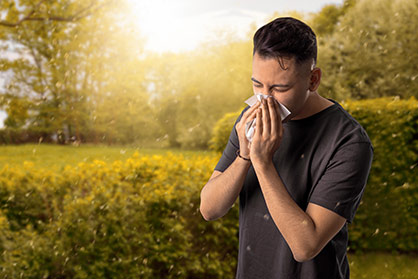
Worldwide, the prevalence of allergic diseases has continued to rise in the industrialised world for more than 50 years, according to the World Health Organisation. Allergies have an impact on the quality of life and are associated with other medical conditions. Devan is now launching Purissimo® NTL, a natural allergen control technology that cleans up pet dander, pollen and house dust mite allergens in textiles throughout the home. The technology is based on encapsulated probiotics, which are natural microorganisms similar in kind to those you can find in yoghurt, cheese and other probiotic food.
Devan launches Purissimo® NTL, a full biobased, biodegradable allergen control technology. © Devan Chemicals


Devan has many years of experience with probiotics. The company introduced probiotics in textiles already in 2010.

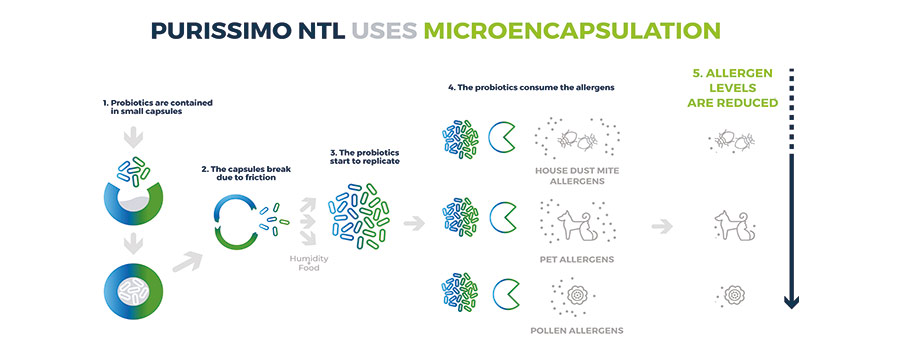
Purissimo® NTL is based on Devan’s already well-established probiotics, incorporated into a new microcapsule shell. The shell is based on a natural crosslinked biobased polymer, which results in microcapsules that are up to 97% biobased and readily biodegradable (OECD 301B).


Firstly, dormant probiotic bacteria (spores) are encapsulated. The microcapsule product is then integrated into textiles. Friction opens the capsules and releases the spores. The spores absorb humidity, self-activate and start to multiply. The probiotic bacteria start to consume the allergens that cause allergic reactions and asthma. Due to lower allergen concentration, individuals with respiratory allergies such as house dust mite matter, pet allergens and pollen allergens will have milder to no symptoms and hence a better well-being feeling.

Purissimo® NTL can be used on a wide range of textiles such as mattresses, pillows, bedcovers, blankets but also upholstered furniture, carpets, curtains and public transportation and pet items, such as bedding. It is Oeko-tex® compliant, has a long-lasting effect and a wash durability up to 30 washes is achievable.


 

More News from Devan Chemicals

More News on Textile chemistry

#Textile chemistry

bluesign updates chemical reference lists with stronger PFAS restrictions

bluesign has published the 2026 editions of its three core chemical reference lists, introducing updated substance limits and testing requirements in line with the latest scientific findings and regulatory developments.

#Textile chemistry

Fashion for Good launches DW(O)R-X to navigate the emerging landscape of PFAS-free finishes

Fashion for Good announced the launch of Project DW(O)R-X, a collaborative initiative designed to benchmark PFAS alternative durable water- and oil-repellent (DW(O)R) chemistries. Responding to growing market demand for alternatives to PFAS‑based finishes, the project aims to generate reliable, comparable data that can support informed sourcing decisions and the assessment of emerging chemistries.

#Sustainability

Indovinya advances sustainable solutions with agreement for the supply of renewable Oxygen from Air Liquide

Indovinya, the specialty chemicals and surfactants division of Indorama Ventures, has entered into an agreement with Air Liquide — a world leader in gases, technologies, and services for industry and healthcare — for the supply of renewable oxygen. The agreement represents a strategic advancement in Indovinya’s commitment to sustainability, as it increases the share of renewable raw materials in the production of ethylene oxide, one of its key products.

#Textile chemistry

DyStar releases FY2025 sustainability report, marking a new milestone towards its 2030 targets

DyStar, a leading specialty chemicals company with more than a century of expertise in product development and innovation, today announced the release of its FY2025 Sustainability Report, marking a significant milestone in its sustainability journey and reinforcing its commitment to long-term value creation.

Latest News

#Functional Fabrics

PERFORMANCE DAYS announces new focus topic & forums for October 2026

With its upcoming October 13–14, 2026 edition, PERFORMANCE DAYS is placing the spotlight on one of the textile industry’s most important transformations: “Bio-Based Materials – From Fiber to Fabric”, a two-part Focus Topic exploring the future of bio-based innovation across the textile value chain. Part 1, presented in October 2026, will focus on fibers and next-generation material developments, while Part 2 at the March 2027 edition will shift the perspective toward dyeing, finishing, additives, and processing technologies.

#Nonwoven machines

MENANG rapidly resumes production with new ANDRITZ airlay line after major fire

MENANG, a Malaysian manufacturer of nonwoven automotive components, has resumed production after a major fire severely damaged its airlay line in mid-March 2026. A new airlay line supplied by ANDRITZ enabled production to restart within only four months.

#Exhibitions & Events

Febratex 2026 to be the largest edition of the leading textile trade fair in the Americas with 10 exhibition halls

Febratex 2026 will be the largest edition in the history of the leading textile trade fair in the Americas. Dedicated to the textile and apparel manufacturing industries, the event will take place from August 18–21, 2026, in Blumenau, Santa Catarina, Brazil, with a strong focus on technology, sustainability, and business generation.

#Raw Materials

Cotton Brazil Dialogues field trip brings international stakeholders closer to Brazil’s cotton production chain

How do you build trust across the global textile value chain? By opening the farm gates. This is the principle behind the Cotton Brazil Dialogues. At the end of July, the programme welcomed its first group of international participants for a five-day immersion into Brazilian cotton production, combining field visits with technical workshops to showcase the quality, sustainability, innovation and traceability behind one of the world’s leading cotton origins.

TOP