[pageLogInLogOut]

#Textile chemistry

Archroma releases its Color Atlas online library for open access in design software for fashion, apparel, and textiles
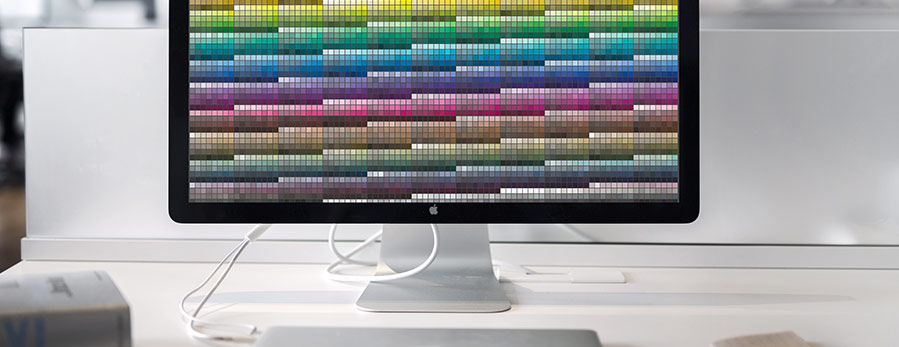
Screen capture of the Color Atlas library in ASE file format available for open access in most design software. (Photo: Pexels x Archroma)
Archroma, a global leader in specialty chemicals towards sustainable solutions, today announced that the 5’760 color references of its Color Atlas library will be available in ASE file format for open access to the users of most design software for fashion, apparel, and textiles. With this, designers and stylists are given open access to the largest library of colors for cotton and polyester.

ASE or .ase (for Adobe Swatch Exchange) files are used to upload, share and access colors through the swatch palette of design software such as Photoshop, Illustrator and most CAD (Computer-aided design) systems.

The Color Atlas by Archroma® was launched in 2016 to provide fashion designers and stylists with off-the-shelf color inspiration that can be implemented in production with just a few clicks.

The Color Atlas continues to evolve in line with Archroma’s commitment to sustainability through innovation. The company describes its approach as “The Archroma Way to a sustainable world: safe, efficient, enhanced, it’s our nature”.

All color references available in the Color Atlas have been formulated with products that comply with leading international eco-standards, and can be selected based on the desired sustainability profile.

Each color from the Color Atlas by Archroma® is available for purchase from Archroma as a physical color standard that includes precise digital data and access to global dyeing technical support.

The Color Atlas library in ASE file can be downloaded here:

https://www.archroma.com/tools-services/the-color-atlas-by-archroma.


“We are proud to open our vast online collections of colors to brands, designers and mills, and thus help them create clothes and articles that are both desirable and sustainable,” says Chris Hipps, Head of Color Management Services, at the Archroma Brand Studio. “With the Color Atlas by Archroma®, they can finally dream of a color, find it quickly within their design software and then specify it with the confidence that their design intent will be executed swiftly and reliably in their global supply chains.”


More News from Archroma Textile Specialties

#Techtextil 2026

Archroma showcases innovations delivering performance without compromise at Techtextil 2026

Archroma, a global leader in specialty chemicals, is bringing a full suite of advanced solutions to Techtextil 2026 to help technical textile manufacturers achieve cutting-edge functionality with optimized productivity and enhanced sustainability.

#Textile chemistry

Orta and Archroma launch denim collection dyed with wool waste

Archroma, a global leader in specialty chemicals, and Orta Anadolu, the premium Türkiye-based denim manufacturer behind the ORTA brand, today announced a collaboration to bring circular dye chemistry into commercial denim production.

#Denim

Archroma expands denim possibilities at Kingpins Amsterdam

Archroma, a global leader in specialty chemicals, will present a portfolio of six sustainable denim innovations at Kingpins Amsterdam from April 15-16, 2026. Under the theme “Creating Possibilities in Denim”, the showcase reflects Archroma’s commitment to giving brands and mills solutions that are as commercially compelling as they are environmentally responsible.

#Textile chemistry

Archroma brings high-impact textile innovations to Colombiatex 2026

Archroma, a global leader in specialty chemicals towards sustainable solutions, is proud to announce its participation in Colombiatex 2026, one of the most influential textile and apparel industry events in the Americas. The event will take place in Medellín, Colombia, from January 27 to 29, where Archroma will welcome visitors at Booth PC006.

More News on Textile chemistry

Latest News

#Spinning

Ibrahim Fibres and Trützschler: A strong partnership enters its next phase with the TC 30Si

For more than two decades, Ibrahim Fibres and Trützschler have grown side by side, driven by a shared ambition to continuously improve spinning performance, strengthen technology leadership and set new benchmarks in the textile industry. Today, Ibrahim Fibres is a leading yarn and polyester staple fiber manufacturer in Pakistan. The company operates the largest number of Trützschler cards in the country, with more than 200 machines running across its mills in Faisalabad, and plays an important role in one of Asia’s largest textile industries.

#Digital Printing

USColorworks expands digital platform with Kornit Atlas MATRIX and Atlas MAX PLUS solutions

Kornit Digital Ltd. (NASDAQ: KRNT), a global pioneer in sustainable, on-demand digital fashion and textile production, today announced that USColorworks, a North Carolina-based apparel decoration and fulfillment company specializing in custom and on-demand printing for retail and promotional markets, has expanded its Kornit digital production platform with the addition of Atlas MATRIX and Atlas MAX PLUS systems to deliver high-quality, on-demand apparel across cotton, blended fabrics and polyester.

#Functional Fabrics

CovationBio introduces two new bio-based innovations at Functional Fabric Fair New York

Covation Biomaterials LLC (“CovationBio®”) is showcasing its two new bio-based innovations, Xatryx® and Sorona® elasterell-p fiber, at this year’s Functional Fabric Fair in New York City, July 7–9, 2026. Attendees can visit CovationBio at Booth #404 to explore this next generation of bio-based performance materials.

#Research & Development

Geotextiles made from recycled materials: GREEN leads the way into the industry

For the industry, recycled materials are creating new opportunities in geotextile production. In the GREEN project, the Fraunhofer Cluster of Excellence Circular Plastics Economy CCPE demonstrates that recycled polypro-pylene (PP), polyethylene terephthalate (PET), and high-density polyeth-ylene (HDPE) can be processed into nonwovens, fibers, and membranes that meet industrial requirements. This creates opportunities for use in existing production lines and new value chains in the geotextile market.

TOP