[pageLogInLogOut]

#Textile chemistry

Covestro expands portfolio of circular TPU products
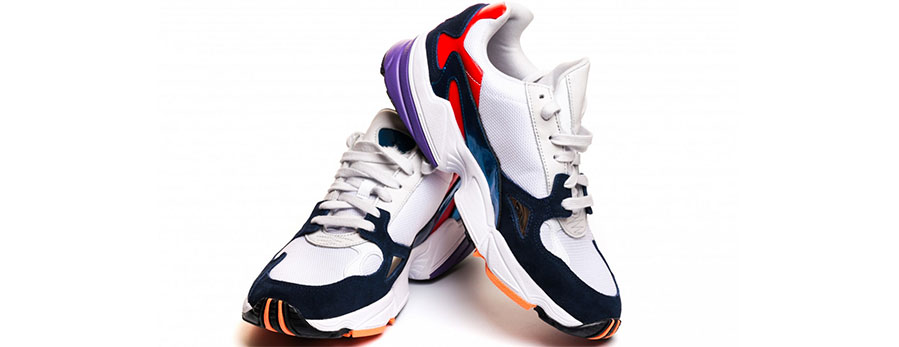
Covestro is currently expanding its portfolio of more sustainable and, above all, circular TPU products. Such sneakers could be manufactured with ISCC Plus-certified mass-balanced TPU grades from next year. © Covestro
As part of its program aimed at realizing the circular economy, Covestro is continuing to forge ahead with the expansion of its product portfolio based on alternative resources. As such, the company's product range in Europe is to be expanded to include mass-balanced thermoplastic polyurethanes (TPU) from as early as the beginning of 2022, and in Asia at a later date.

• Growing product portfolio based on alternative resources

• Production of mass-balanced thermoplastic polyurethanes with reduced carbon footprint planned

• Availability in Europe expected from early 2022, later also in Asia

The new products are produced using bioattributed raw materials and have a reduced carbon footprint in comparison to their fossil-based counterparts. At the same time, the mass-balanced products boast the same impressive quality and properties and can be integrated directly into manufacturing processes in downstream industries without technical modifications. In this context, the products are to be certified according to the ISCC Plus standard.

"I am thrilled that we will soon be able to help our customers in the electronics, footwear, automotive and other industries reduce their carbon footprint with this drop-in solution," said Dr. Andrea Maier-Richter, global head of the TPU business at Covestro. "With the ISCC Plus certification, we aim to achieve more transparency from raw material purchasing to our production and distribution to customer use. This is an important step in achieving our vision of becoming fully circular."

Extensive range of more sustainable TPU plastics

Covestro has already launched various TPU products based on alternative resources over the past few years, as more and more consumers prefer more sustainable products. Covestro is offering a webinar on this topic on October 28 as part of its CE Days event series. Outdoor outfitter VAUDE, for example, plans to use a foam midsole made partly from bio-based TPU in its new Lavik Eco hiking boot. Other product types contain a component that has been manufactured proportionately using CO2 instead of fossil raw materials. Covestro's range of Desmopan® brand TPU plastics also includes a range of fully recycled products. They are used, for example, in smartphone cases from the Dutch manufacturer Fairphone.

Thermoplastic polyurethanes are very versatile plastics. They come in a variety of hardnesses, are flexible yet impact resistant, and are therefore highly suitable for a wide range of applications.


Mass balancing creates transparency

Supplying mass-balanced products is part of Covestro's comprehensive global program designed to fully align itself with the circular economy. In doing so, the company is focusing on increasing the use of alternative resources such as bio-based materials, plastic waste and CO2, as well as renewable energies. The company is also collaborating with partners to develop innovative recycling technologies.

In mass balancing, fossil and alternative raw materials are mixed in production but treated separately in accounting. The chain-of-custody method enables materials to be tracked along the entire value chain and allows alternative resources, such as bioattributed components, to be allocated to selected end products. To date, a total of three Covestro production sites in Europe and Asia-Pacific have been certified in compliance with the ISCC Plus standard, with further sites to follow.

ISCC ("International Sustainability and Carbon Certification") is an internationally recognized system for the sustainability certification of biomass and bioenergy. The standard applies to all stages of the value chain and is recognized worldwide.



More News from Covestro AG

#Techtextil 2026

Covestro to exhibit solutions for a more sustainable and productive textile industry at Techtextil 2026

Covestro will present a broad portfolio of material innovations for textile coatings, adhesive films and thermoplastic polyurethanes (TPUs) at Techtextil 2026 (Hall 11.0, Booth C79). The exhibits will demonstrate how advanced solutions can enhance durability, recyclability and manufacturing efficiency across applications such as automotive, infrastructure, protective apparel and sportswear. A particular focus will be on more sustainable coating technologies, including antimicrobial systems based on INSQIN® in combination with AGXX from Heraeus Precious Metals, as well as the integration of Pontacol® thermoplastic adhesive films into Covestro’s offering.

#Technical Textiles

Covestro showcases monomaterial concept in autonomous SUE People Mover

UE | STUDIOS has unveiled the fully autonomous electric minibus “Self-driving Urban E-Shuttle” (SUE), placing strong emphasis on sustainable material design. Developed within a project funded by the Federal Ministry for Economic Affairs and Energy (BMWE) and the European Union, the vehicle will begin public road testing this year. At the core of the concept is the consistent use of recyclable monomaterials to improve circularity at end of life.

#Textile chemistry

Covestro and Heraeus Precious Metals collaborate to enable safer, more sustainable antimicrobial textile coatings

Laboratory tests reveal that AGXX antimicrobial surface technology from Heraeus Precious Metals is fully compatible with Impranil® PU dispersions which are part of the waterborne INSQIN® textile coating technology from Covestro, paving the way for more sustainable antimicrobial textile coatings. This discovery comes at a key moment for the textile coatings industry. As the sharing economy continues to grow, more people are coming into regular contact with high-use surfaces, creating ideal conditions for bacteria, viruses, and other microorganisms to thrive.

#Textile chemistry

Covestro celebrates decade of innovation and sustainable growth

Covestro celebrates its 10-year anniversary today. Since its carve-out from Bayer in 2015, the company has developed into a global leader in high-performance polymer materials and a pioneer in circular economy solutions. With a strong focus on innovation and sustainability, Covestro’s materials are now embedded in countless applications worldwide – from mobility and construction to electronics, healthcare, and consumer goods.

More News on Textile chemistry

#Textile chemistry

Orta and Archroma launch denim collection dyed with wool waste

Archroma, a global leader in specialty chemicals, and Orta Anadolu, the premium Türkiye-based denim manufacturer behind the ORTA brand, today announced a collaboration to bring circular dye chemistry into commercial denim production.

#Denim

Archroma expands denim possibilities at Kingpins Amsterdam

Archroma, a global leader in specialty chemicals, will present a portfolio of six sustainable denim innovations at Kingpins Amsterdam from April 15-16, 2026. Under the theme “Creating Possibilities in Denim”, the showcase reflects Archroma’s commitment to giving brands and mills solutions that are as commercially compelling as they are environmentally responsible.

#Techtextil 2026

TANATEX to spotlight compliance-driven innovation at Techtextil 2026

At Techtextil 2026, TANATEX Chemicals will present a focused innovation story built around a clear market need: helping textile manufacturers meet increasingly demanding sustainability and compliance requirements without compromising critical performance.

#Textile chemistry

A flagship for chemical production: BASF inaugurates world-scale Verbund site in China

BASF today (March 26, 2026) celebrated the official inauguration of its newly built, world-scale Verbund site in Zhanjiang, Guangdong Province in southern China. Covering an area of around four square kilometers, it is more than a major BASF project in the chemical growth market of China. “Zhanjiang shows what the future of chemistry looks like: efficient, digital and sustainable by design. The site showcases a smart integrated Verbund structure on an industrial scale,” said Dr. Markus Kamieth, CEO of BASF, at the ceremony attended by representatives from government, customers, business partners and employees.

Latest News

#Raw Materials

New study shows low environmental impact by Cotton made in Africa Organic Cotton from Tanzania

Today, the Aid by Trade Foundation (AbTF) is announcing the results of a comprehensive life-cycle analysis (LCA) for cotton produced in Tanzania under the Cotton made in Africa Organic (CmiA Organic) standard. The study emphasises the small ecological footprint of CmiA Organic verified cotton. This can largely be traced back to the absence of synthetic pesticides, artificial fertilisers, and artificial irrigation. Consequently, CmiA Organic cotton can help the textile industry meet regulatory requirements as well as science-based targets. The results also show that the consequences of climate change threaten the livelihoods of these cotton farmers, even though the type of agriculture they practise barely contributes to climate change.

#Raw Materials

Better Cotton Initiative strengthens regenerative focus in standard update

The Better Cotton Initiative (BCI) has strengthened the regenerative focus of its field-level standard with the launch of a new version of its Principles & Criteria (P&C), which marks the next step in the organisation’s journey to becoming a regenerative standards system.

#Man-Made Fibers

Selenis and Kintra Fibers partner to scale 100% bio-based synthetic fiber technology

Selenis, a leading global specialty polyester manufacturer, today announced a strategic manufacturing partnership with materials science company Kintra Fibers to scale Kintra’s patented fiber-grade PBS resin - a 100% bio-based and biodegradable material designed for textile applications.

#Functional Fabrics

PERFORMANCE DAYS proves its relevance as the industry’s key meeting point

Held on March 18–19, 2026, PERFORMANCE DAYS once again confirmed its position as a leading international platform for functional textiles. A total of 3.366 trade visitors and around 560 exhibitors gathered in Munich, with the event already kicking off successfully on DAY 0, which received highly positive feedback for its interactive format. Despite challenging conditions caused by the public transport strike in Munich, the event saw strong attendance and a consistently high level of activity across both exhibition days.

TOP