[pageLogInLogOut]

#Associations

AATCC method quantifies fiber shedding

Test Method for Fiber Fragment Release During Home Laundering, provides a standardized method for quantifying fiber fragment shedding in the ongoing challenge to combat aquatic pollution. These fragments are sometimes referred to as “microfibers” or “microplastics.” T-shirt breaking into dustAATCC TM212 was developed to provide a means to determine the mass of fiber fragments released in an accelerated laundering setting. This method provides the global industry with a consistent and uniform test method to follow.

AATCC TM212 defines standard nomenclature with the terms fiber fragment and microfiber, which address discrepancies that have long been a source of confusion for many who work to tackle pollution.

Originally assumed to be a plastics problem, natural fibers are also appearing in marine life’s food cycle. AATCC TM212 is not limited to man-made fibers, as it can be used to determine the fiber shedding potential of natural fibers and blends.

trash on beachThe standard is the result of collaboration, not only within AATCC committee RA100 Global Sustainability, but among stakeholders from several organizations including The Microfibre Consortium, headquartered in the UK, and the Cross Industry Agreement of European signatories. The outgoing Chair of RA100, Heather Elliot of Adidas, extends her sincere gratitude. She says, “Thank you to everyone who helped make this test method happen. It has been years in the making and would never have happened without the hands and minds of so many amazing people. We can’t thank you enough! Here’s to measuring our mess so we can figure out how to clean it up!”


The incoming Chair of RA100, Shulong Li of Milliken goes on to add, ” small fiber fragments in the environment is an emerging and serious concern that raises heightened public attention. TM212-2021 results from extensive collaboration representing a broad range of stakeholders in the textile industry, public and private institutions, and technical experts in the Global Sustainability committee. This new standard method provides a common and useful tool for the textile industry to gain a better understanding of the issues.”

Although unofficial and proprietary methods have been in use, AATCC TM212 is the first global standard published to address the issue of quantifying fiber fragment release. The test method was developed and approved by consensus from a diverse group of experts from around the world and across related industries.

AATCC TM212-2021 is now available for purchase at https://members.aatcc.org/store/tm212/3573/. It will also be included in the AATCC 2022 Manual of International Test Methods and Procedures to be released January 2022.




More News from American Association of Textile Chemists and Colorists

#Associations

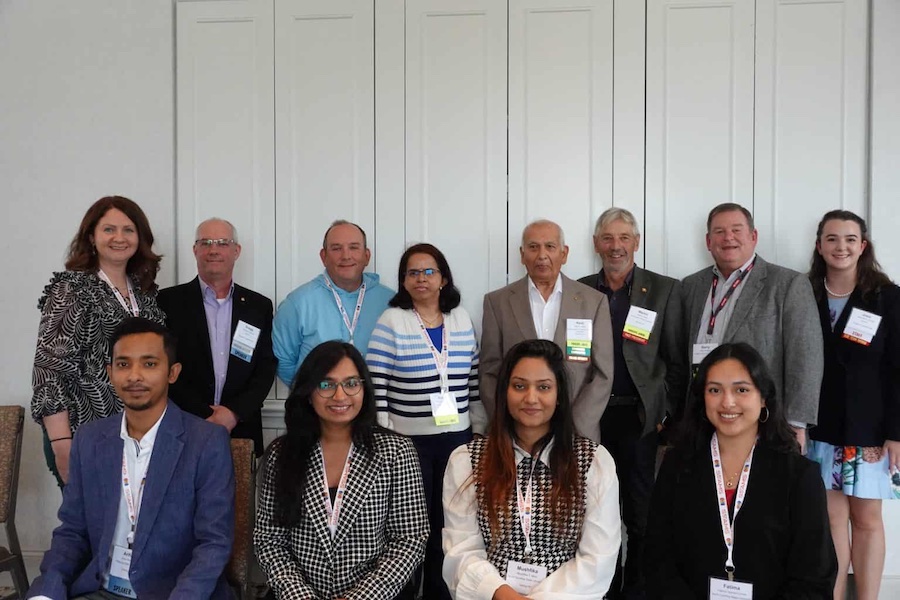
AATCC announces 2025 Herman & Myrtle Goldstein Graduate Student Paper Competition winners

The American Association of Textile Chemists and Colorists (AATCC) recognized the winners of the 2025 Herman & Myrtle Goldstein Graduate Student Paper Competition. Founded in 1982 to give student members the chance to conduct and present original research, the competition was renamed in 1994 in honor of Herman and Myrtle Goldstein, following their US$60,000 endowment. Their gift is a lasting remembrance of their dedication to young people in the textile industry.

#Research & Development

New funding available for textile research

The AATCC Foundation Student Research Support Grant Program provides financial assistance for undergraduate and graduate students pursuing textile-related projects. Students may submit proposals now for funding to be awarded January 2026. Applications must be submitted by October 1, 2025, to be considered.

#Recycling / Circular Economy

AATCC’s Circularity Conference approaches as organization continues 2025 Sustainable Textile Event series

The American Association of Textile Chemists and Colorists (AATCC) announces that registration is closing soon for its highly anticipated Circularity Conference, continuing this year’s sustainability event series that has delivered significant value to industry professionals.

#Associations

AATCC Textile Standards adopted by Colombian and Sri Lankan Governments

AATCC test methods and procedures are international standards, meeting the criteria set forth by the World Trade Organization and used around the globe. The standards gain additional recognition through Memoranda of Understanding with Colombia and Sri Lanka.

More News on Associations

#Associations

Meadow Grove Research joins ITMF as Corporate Member

Meadow Grove Research is a commodity research firm specializing in supply, demand, and trade analysis in cotton and other soft commodities. Providing clarity to the complex nature of the global fiber supply chain is one of its most formidable services. The firm thrives on customer engagement and providing the best framework for critical decisions.

#Associations

Sustainability: European industry calls on EU to keep Single-Use Plastics Directive unchanged

A broad coalition of European industry associations, including EDANA, Euratex and Plastics Europe, has urged EU institutions to maintain the current legal framework of the Single-Use Plastics Directive (SUPD). In a joint statement, the organisations argue that reopening the Directive at this stage would create legal uncertainty, increase regulatory complexity and undermine investment, while its implementation across the European Union is still incomplete.

#Associations

Textile machinery: Italian technology charts the course for revival

Operating in a scenario characterized by geopolitical instability, slowing industrial investments, and new protectionist pressures. This is the main challenge for the Italian textile machinery industry that emerged during the General Assembly of ACIMIT (Association of Italian Textile Machinery Manufacturers), held today in Milan at the Shareholders’ Hall of Palazzo Edison.

#Recycling / Circular Economy

New skills for a circular textile economy

Based on the results of a comprehensive analysis, the Erasmus+ project Skills4Circularity is developing three practical training modules covering recycling technologies, eco-design for the circular economy and sustainable manufacturing. The content of the first module, Recycling Technologies, has now been developed and validated together with industry representatives. The module provides participants with knowledge of regulatory requirements, material sorting and the preparation of textile waste for recycling.

Latest News

#Spinning

Rieter sees Barmag integration on track as orders and sales rise

The first half of 2026 was shaped by the successful completion of the largest acquisition in Rieter’s history. The Man-Made Fiber Division enables entry into the growth segment of man-made fibers and sustainably strengthens Rieter’s market position in the Asia region. The expanded Group is now the world’s leading system supplier for the processing of natural and man-made fibers. In the first half of the year, initial cost savings in material costs and operating expenses have already been realized. The targeted synergies are expected to amount to at least CHF 20 million by the end of the 2028 financial year. Due to the completion of the acquisition on February 2, 2026, the first half of the year for the Man-Made Fiber Division only amounts to five months.

#Knitting & Hosiery

Groz-Beckert at Igatex 2026

From October 15 to 18, 2026, Groz-Beckert will present its latest innovations and solutions across the product areas of Knitting, Weaving, Sewing and Spinning at Igatex in Pakistan (Hall 1, Booth A-1-08).

#Natural Fibers

Better Cotton Initiative multistakeholder event in US unpacks regenerative agriculture potential

The Better Cotton Initiative (BCI), in collaboration with Texas-based partner, Quarterway Cotton Growers, will expand upon its annual US field event to relay the vast potential of regenerative agriculture through an immersive experience of tours and demonstrations.

#Sustainability

bluesign appoints Hanane Taidi as CEO to lead next phase of global impact

bluesign, which partners with the textile industry to reduce adverse impact across the value chain, appoints Hanane Taidi as Chief Executive Officer, marking a pivotal moment as the company builds on its leadership amid rapid industry change.

TOP