[pageLogInLogOut]

#Textile chemistry

Teijin and Kinoshita Fishing Net develop world's first fishing net made with UHMWPE film

Teijin Limited and Kinoshita Fishing Net Mfg. Co., Ltd. jointly announced today that they have developed the world's first high-performance knotless fishing net made with an ultra-high molecular weight polyethylene (UHMWPE) film. Kinoshita Fishing Net will begin selling MX-4 made with Teijin’s Endumax® UHMWPE film in early August and is targeting annual sales of 50 tons by 2025, including Endumax® fishing nets for purse seine net fishing and later for traps, fish farms and trawling.

Teijin continues to discover new industrial applications for Endumax®, such as ropes, bulletproof wear and lightweight containers for air cargo, as well as fishing nets, and expects to develop additional applications going forward.

MX-4 combines Teijin's advanced Endumax® film and Kinoshita Fishing Net’s manufacturing technology implemented with world-leading net-knitting machines for knotless netting, made by crossing threads with each other for extra strength and abrasion resistance. In addition to Muketsu knotless netting made with twisted threads, Kinoshita Fishing Net also boasts the world’s only machines for making braided knotless nets, sold under the BM brand for purse seines, traps and fish farms.

Endumax® is a 60 µm-thick film offering high strength, high modulus and resistance to impact, abrasion, chemicals and sunlight. Advanced technologies are normally required to mass produce fish nets made with film, but Kinoshita Fishing Net’s proprietary technology enables Endumax® that has been cut to just several millimeters in width to be knit into highly functional MX-4 fishing net.

MX-4 is especially suitable for purse-seine nets for skipjack, tuna, horse mackerel and mackerel, which are used in harsh environments where durability and fast drainage are crucial. MX-4 does not shrink easily and is resistant to breakage due to abrasion even after hundreds of castings, so it can be used safely for long periods.

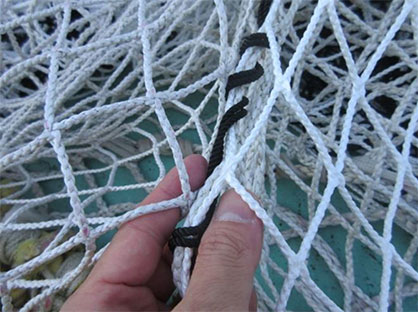
MX-4 Usage (c) 2020 Teijin


(left) MX-4 net showing almost no deterioration after approx. 300 uses and (right) unused knotless net (c) 2020 Teijin


It also improves work efficiency and cost efficiency by reducing needs for net reconditioning and tailoring. In addition, it reduces the frequency of net disposal and is more marine friendly. Furthermore, when MX-4 is pulled up from the sea, it immediately sheds water and becomes lighter, making it easier to work. It also stays clean.

Various types of fishing nets are used commercially depending on the fishing method, fish species and marine environment. In the case of purse-seine net fishing, where nets can become heavily loaded, over time the nets can shrink considerably, lose shape, become less efficient in enclosing fish, and require frequent repair or replacement.

Teijin aims to be a company that supports the society of the future by creating new value based on the changing times, providing solutions to realize a more prosperous and sustainable world.

Kinoshita Fishing Net’s philosophy is be an essential enterprise that develops unique solutions by working directly with customers to understand their situations, requirements, goals and prospects. Going forward, the company will expand MX-4 applications for purse seine net fishing, and later for fish farms, traps and trawling, as a socially responsible enterprise that places top priority on evolving with distinction and sustainability. 


More News from Teijin Aramid

#Yarn & Fiber

Teijin Aramid: Taiichi Machida to succeed Peter ter Horst as CEO

Peter ter Horst will step down as Chief Executive Officer at the end of 2025, after 19 years of dedicated service. Effective October 1, 2025, Taiichi Machida will take over as CEO.

#Yarn & Fiber

Teijin announces availability of DPP-compliant products aligned with Europe’s ESPR Environmental Regulation

Teijin Limited announced today that it has started rolling out initiatives to enable aramid fibers and carbon fibers to be accompanied by Digital Product Passport (DPP) technology, which enhances supply chain transparency by verifying the origins of materials and supporting sustainability claims. The company is using the supply chain traceability system from Netherlands-based Circularise B.V., in which Teijin has invested since November 2024, to develop DPPs for each product.

#Composites

Teijin Carbon showcases new eco-friendly Tenax Next™ R2S 513 6mm short carbon fiber at JEC World 2025

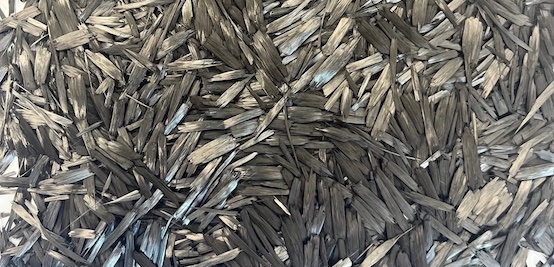
Teijin Carbon, a leading manufacturer of carbon fiber products, is presenting its latest development in sustainable materials at JEC World 2025 (hall 6, G22). New Tenax Next™ R2S 513 6mm is a short carbon fiber product in rice-shaped form for reinforcing thermoplastic compounds that not only offers exceptional performance characteristics but also reinforces the company’s commitment to environmental responsibility and circularity.

#Recycling / Circular Economy

Teijin to invest in Circularise B.V. and adopt its supply chain traceability platform to promote the Circular Economy

Teijin Limited announced today that it will invest in Circularise B.V., a company based in The Hague, Netherlands, which develops product traceability management systems using blockchain technology. Teijin will also implement Circularise’s software to improve visibility into its global supply chain. Circularise’s proprietary “Smart Questioning”(*) solution, which utilizes Zero-Knowledge Proof (ZKP) technology, provides both anonymity and transparency to ensure a highly reliable product traceability system.

More News on Textile chemistry

#Techtextil 2026

Covestro to exhibit solutions for a more sustainable and productive textile industry at Techtextil 2026

Covestro will present a broad portfolio of material innovations for textile coatings, adhesive films and thermoplastic polyurethanes (TPUs) at Techtextil 2026 (Hall 11.0, Booth C79). The exhibits will demonstrate how advanced solutions can enhance durability, recyclability and manufacturing efficiency across applications such as automotive, infrastructure, protective apparel and sportswear. A particular focus will be on more sustainable coating technologies, including antimicrobial systems based on INSQIN® in combination with AGXX from Heraeus Precious Metals, as well as the integration of Pontacol® thermoplastic adhesive films into Covestro’s offering.

#Textile chemistry

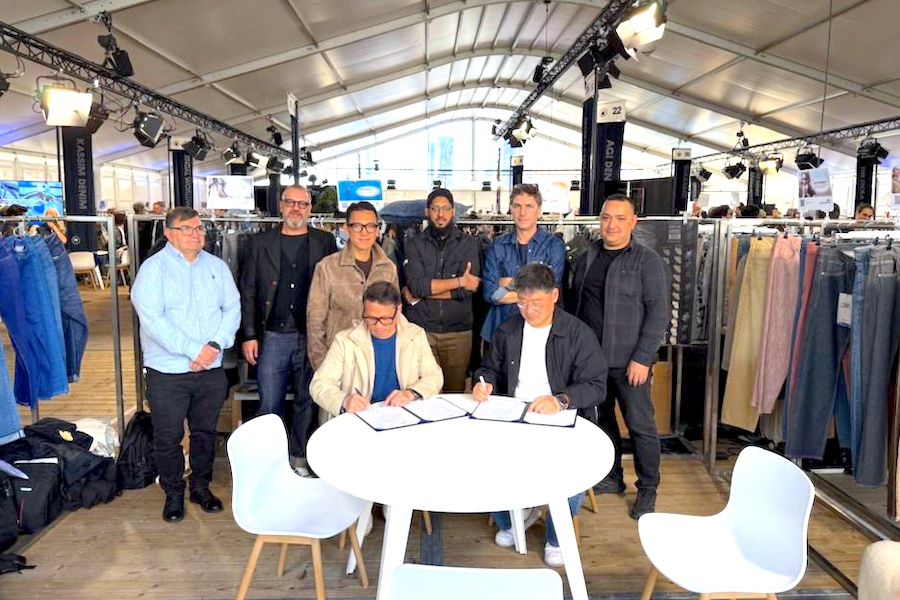
Orta and Archroma launch denim collection dyed with wool waste

Archroma, a global leader in specialty chemicals, and Orta Anadolu, the premium Türkiye-based denim manufacturer behind the ORTA brand, today announced a collaboration to bring circular dye chemistry into commercial denim production.

#Denim

Archroma expands denim possibilities at Kingpins Amsterdam

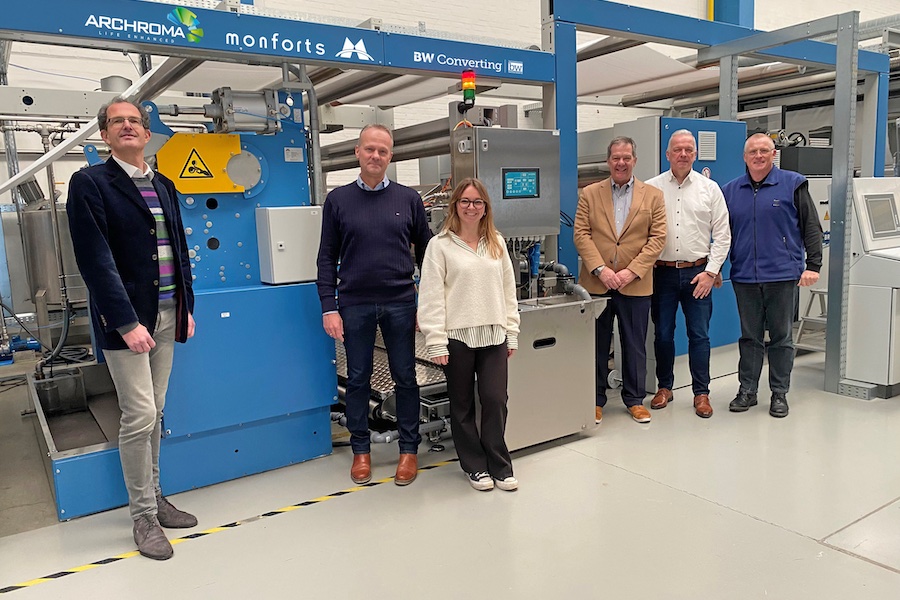
Archroma, a global leader in specialty chemicals, will present a portfolio of six sustainable denim innovations at Kingpins Amsterdam from April 15-16, 2026. Under the theme “Creating Possibilities in Denim”, the showcase reflects Archroma’s commitment to giving brands and mills solutions that are as commercially compelling as they are environmentally responsible.

#Techtextil 2026

TANATEX to spotlight compliance-driven innovation at Techtextil 2026

At Techtextil 2026, TANATEX Chemicals will present a focused innovation story built around a clear market need: helping textile manufacturers meet increasingly demanding sustainability and compliance requirements without compromising critical performance.

Latest News

#Raw Materials

New study shows low environmental impact by Cotton made in Africa Organic Cotton from Tanzania

Today, the Aid by Trade Foundation (AbTF) is announcing the results of a comprehensive life-cycle analysis (LCA) for cotton produced in Tanzania under the Cotton made in Africa Organic (CmiA Organic) standard. The study emphasises the small ecological footprint of CmiA Organic verified cotton. This can largely be traced back to the absence of synthetic pesticides, artificial fertilisers, and artificial irrigation. Consequently, CmiA Organic cotton can help the textile industry meet regulatory requirements as well as science-based targets. The results also show that the consequences of climate change threaten the livelihoods of these cotton farmers, even though the type of agriculture they practise barely contributes to climate change.

#Raw Materials

Better Cotton Initiative strengthens regenerative focus in standard update

The Better Cotton Initiative (BCI) has strengthened the regenerative focus of its field-level standard with the launch of a new version of its Principles & Criteria (P&C), which marks the next step in the organisation’s journey to becoming a regenerative standards system.

#Man-Made Fibers

Selenis and Kintra Fibers partner to scale 100% bio-based synthetic fiber technology

Selenis, a leading global specialty polyester manufacturer, today announced a strategic manufacturing partnership with materials science company Kintra Fibers to scale Kintra’s patented fiber-grade PBS resin - a 100% bio-based and biodegradable material designed for textile applications.

#Functional Fabrics

PERFORMANCE DAYS proves its relevance as the industry’s key meeting point

Held on March 18–19, 2026, PERFORMANCE DAYS once again confirmed its position as a leading international platform for functional textiles. A total of 3.366 trade visitors and around 560 exhibitors gathered in Munich, with the event already kicking off successfully on DAY 0, which received highly positive feedback for its interactive format. Despite challenging conditions caused by the public transport strike in Munich, the event saw strong attendance and a consistently high level of activity across both exhibition days.

TOP