[pageLogInLogOut]

#Sustainability

NEMO Equipment launches the first bluesign® product backpacking tent
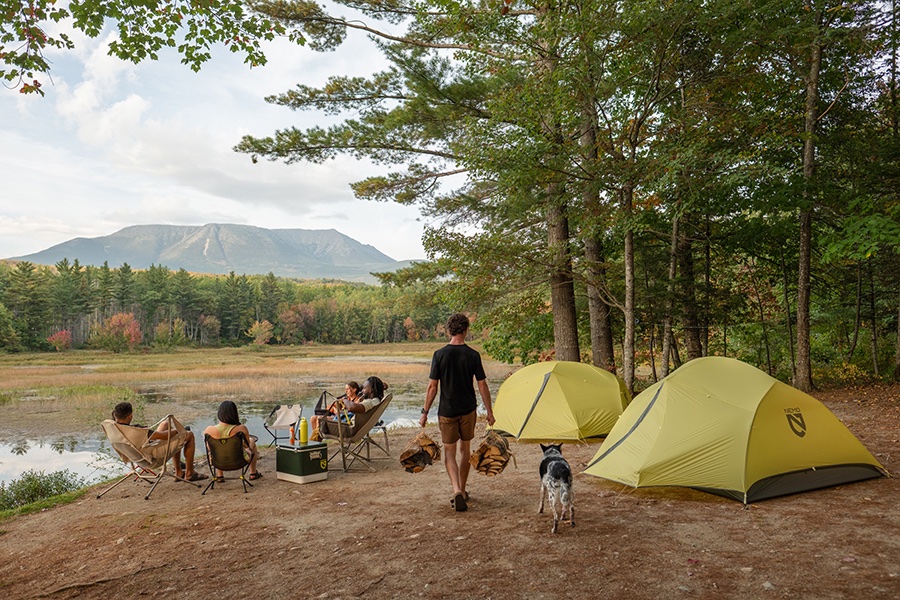
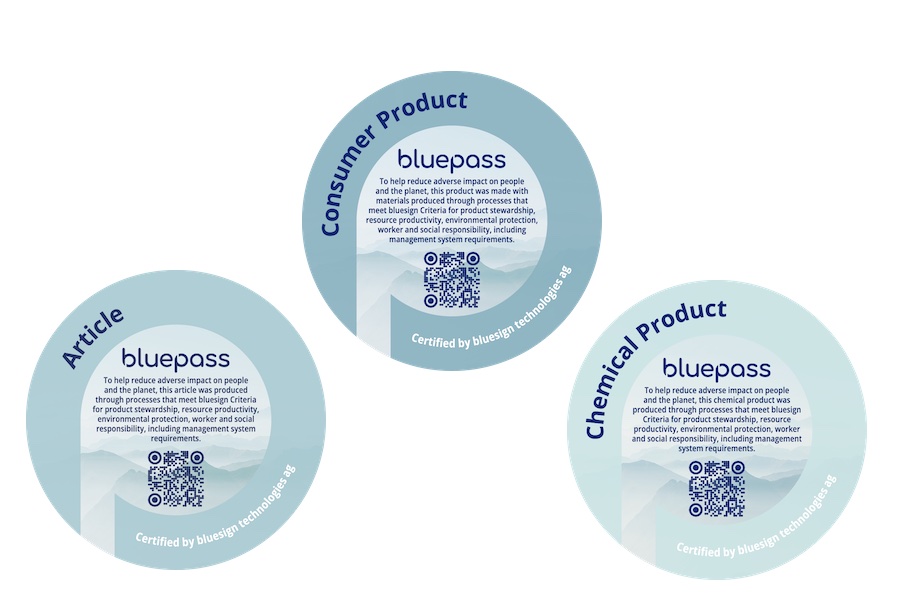
Dagger OSMO™, a top-selling tent in specialty outdoor stores, and a favorite among backpackers and campers, is now a bluesign® PRODUCT. This milestone highlights NEMO’s commitment to clean chemistry and responsible manufacturing, adhering to the industry’s most rigorous environmental and worker safety standards. Made with solution-dyed, 100% recycled, PFAS- and FRC-free fabrics, the 2025 Dagger OSMO has more livable space without adding ounces thanks to new custom hardware and painstaking attention to every detail of the tent’s construction.
The best-selling Dagger OSMO™ tent is now more spacious and more sustainable than ever © 2025 NEMO


The bluesign® PRODUCT designation represents one of the highest standards of sustainability in consumer goods. It eliminates harmful chemical substances at the start of the textile supply chain, minimizing impacts on both people and the planet. This achievement for Dagger OSMO marks a significant milestone, as tents have traditionally been a challenging category for sustainability with their diverse components and high expectations for performance. Elite backpacking tents require materials that are lightweight, durable, water-resistant, and UV-resistant, often relying on chemical treatments like PFAS and flame retardants—substances that pose significant environmental and health risks. NEMO’s breakthrough OSMO tent fabric has forged a path to that high level of performance while bypassing these harmful substances.

Built for backpacking and camping enthusiasts, Dagger OSMO is a versatile, lightweight tent that features an updated pole structure equipped with NEMO’s custom Elements™ hardware to expand its already roomy interior and increase the door opening and peak height. A standout of the Elements collection is the Axial™ corner anchor, which allows for a quick and easy setup and tensioning without re-staking. Each vestibule also gets 22% more usable storage space thanks to the new, near-weightless Stash™ volumizing strut. And the improved Divvy Cube™ is now easier to pack, fits efficiently in a backpack, and can be compressed when splitting the weight with a partner. Dagger OSMO is available in a 2- and 3-person capacity with a minimum weight of 3 lbs., 5 oz for the 2P and an MSRP of $499.95. 

“In the fall of 2023, our Product team set out to take Dagger further by not only using 100% recycled fabrics that are free of PFAS and added fire retardant chemicals, but by creating the industry’s first bluesign® tent,” said Gabi Rosenbrien, Product Development Director at NEMO. “Partnering with bluesign® was a natural evolution of our collaboration in other product categories and highlights NEMO’s dedication to responsible chemicals management. The development process involved close cooperation with both new and existing suppliers to ensure that all 65+ materials used in the tent met rigorous performance and chemical compliance standards.”

“Achieving bluesign® PRODUCT for the Dagger OSMO tent demonstrates the progress we can make when brands are willing to challenge the status quo in product design,” said Daniel Rufenacht, CEO of bluesign®. “By prioritizing clean chemistry and sustainability, NEMO is setting an inspiring example for the outdoor industry, proving that exceptional performance and responsible manufacturing can go hand in hand.”

For more information on NEMO’s sustainability efforts, please see their line of fully recyclable sleeping bags and backpacks. 

https://www.nemoequipment.com/
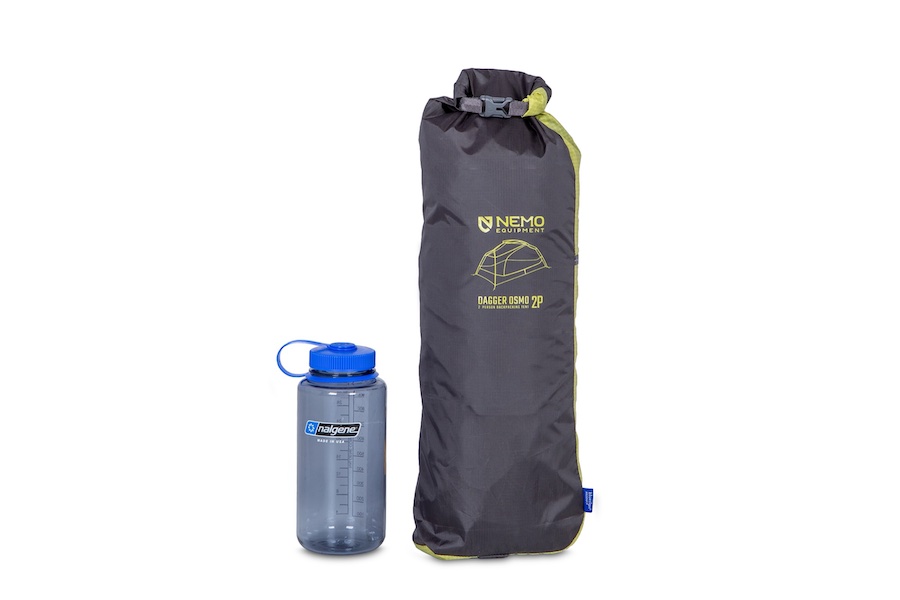
© 2025 NEMO
© 2025 NEMO


More News from bluesign technologies ag

More News on Sustainability

#Sustainability

Inside the Making at Ecomondo 2026: Textile supply chain calls for transparency and measurable sustainability

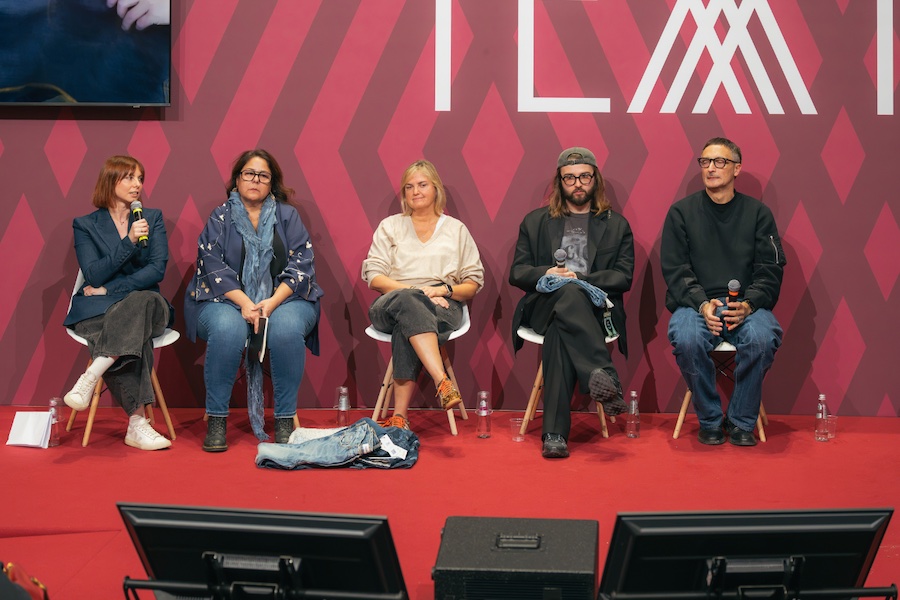
Transparency, verifiable environmental claims and closer cooperation across the textile value chain were the central themes of the “Inside the Making: The Power of the Process” panel at Ecomondo 2026 in Rimini. Representatives from denim and sportswear manufacturing, textile finishing, digital printing and branding discussed how technological innovation and supply chain collaboration can help companies meet new European regulatory requirements while making sustainability economically viable.

#Recycling / Circular Economy

H&M Foundation highlights economic barriers to scaling circular textile systems

Discussions at Textile Exchange 2026 underline the need for coordinated investment, reliable material flows and a fair distribution of costs and risks across the textile recycling value chain.

#Recycled Fibers

C&A and Zalando join Altag® Fiber Club to accelerate adoption of agricultural waste-based fibres

Fashion for Good and AltMat announced today that C&A and Zalando have joined the Altag® Fiber Club as its first brand signatories, marking a critical commercial milestone in the journey to mainstream adoption of next-generation fibres derived from agricultural waste.

#Industry 4.0 / Digitalization

Jeanologia and BCome connect factory data with Life Cycle Assessment and Digital Product Passports

A new white paper by EIM by Jeanologia and BCome demonstrates how primary environmental data from denim finishing processes can be integrated into a garment's Life Cycle Assessment (LCA) and prepared for use in a Digital Product Passport (DPP). A comparative case study highlights significant improvements at the production stage while also showing how these translate into the environmental performance of the finished garment.

Latest News

#India ITME 2026

India’s textile industry: Current position, growth targets and industrial development

With ambitious export targets, major investments in manufacturing infrastructure and new international trade agreements, India is pursuing a comprehensive development strategy for its textile and apparel industry. An overview of the industry’s current position, government initiatives, progress achieved and challenges ahead.

#Weaving

“A complex design is only useful if the machine can reproduce it consistently”

Andreas Schnabel, Head of R&D for Technical Weaving Systems at Stäubli, discusses how 3D weaving can create textile reinforcements tailored to the loads within a composite component, where near-net-shape weaving can reduce processing steps and material waste, and what it takes to produce complex structures reliably and economically. He also explains how manufacturers can adapt Stäubli’s modular TF weaving platforms to new applications and how the company’s centre of excellence in Bayreuth supports the transition from research to industrial production.

#India ITME 2026

India ITME 2026: Textile technology meets India's investment ambitions

With ambitious growth targets, government incentive programmes and industrial development initiatives already underway, India is preparing for the next stage of its textile transformation. Against this backdrop, the 12th India ITME, taking place in Greater Noida from 4 to 9 December 2026, arrives at a particularly important moment for machinery manufacturers and textile producers alike.

#ITMA Asia + CITME 2026

ITMA ASIA + CITME 2026: Shanghai prepares for a record edition

With record demand for exhibition space, a strong presence of international technology suppliers and growing interest in automation and intelligent manufacturing, ITMA ASIA + CITME 2026 will provide an important overview of technological developments in the world’s largest textile producing region.

TOP