[pageLogInLogOut]

#Sustainability

Lenzing remains a sustainability champion and prepares for the European Green Deal­­

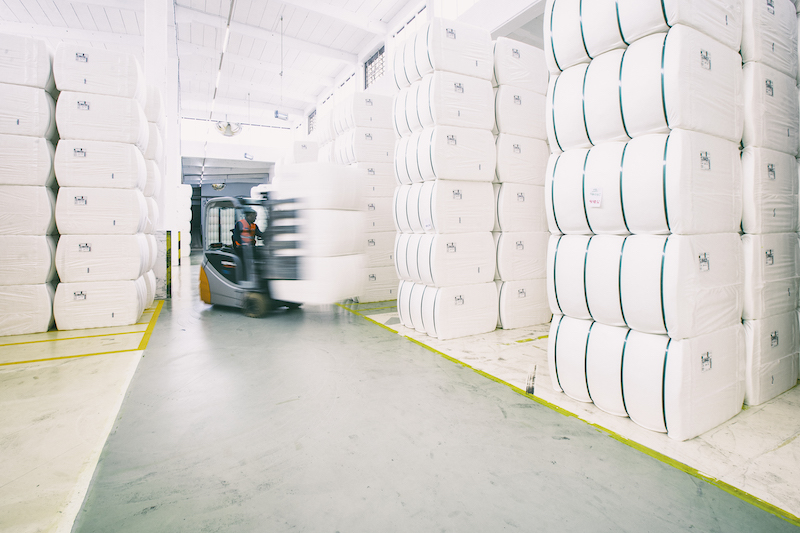
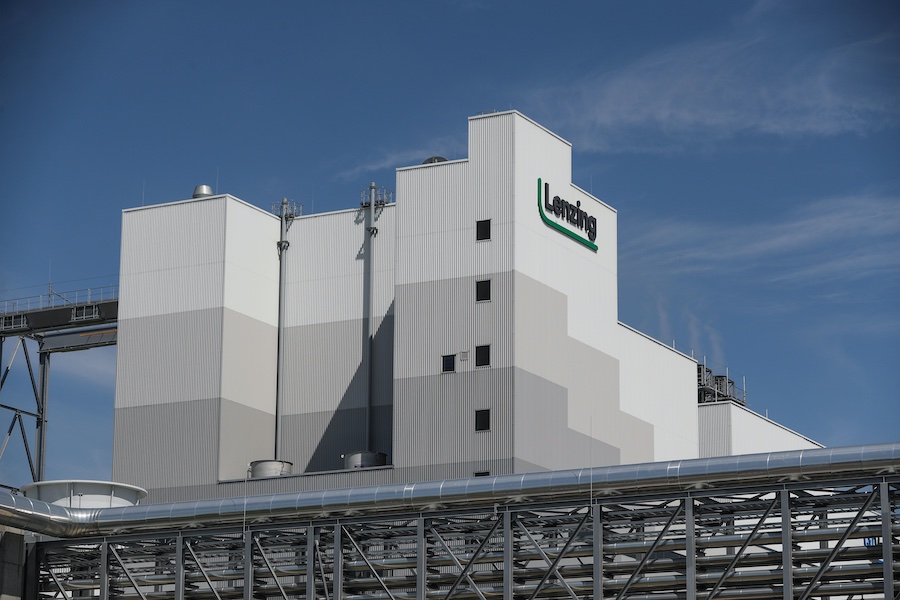
LENZING™ Viscose produktion in Lenzing - bale warehouse © Lenzing AG/Christian Leopold
The Lenzing Group, a leading global producer of regenerated cellulosic fibers for the textile and nonwovens industries, has published a combined annual and sustainability report for the first time, reaffirming the strategic importance of social and environmental responsibility for the company. The report on the 2023 financial year was once again prepared in digital form and is now available at reports.lenzing.com: With the title “Ready to join?”, Lenzing would like to extend an invitation to all customers and partners to join forces to renew the textile and nonwovens industries and bring about positive change.

“This annual and sustainability report is also an invitation to find answers together. Lenzing is working tirelessly to make the industries in which it operates even more sustainable and to drive the transformation of the textile business model from linear to circular. For this transformation to be successful, further efforts by the entire industry and a policy designed to ensure a level playing field for sustainability pioneers are needed,” says Stephan Sielaff, CEO of the Lenzing Group. “I wish you an informative read. Let our innovative projects inspire you, let us rethink structures and processes and work together to bring about positive change!”

Striving towards net-zero

Lenzing has invested more than EUR 200 mn in recent years to modernize its existing production sites in China and Indonesia. The conversion measures, which were aimed at upgrading capacities for ecologically responsible specialty fibers and at the same time significantly reducing specific emissions, were successfully implemented in 2023. Lenzing reached an important strategic milestone in the reporting year with the certification of the LENZING™ ECOVERO™ and VEOCEL™ branded specialty viscose produced at the Indonesian site by the internationally recognized EU Ecolabel[1].

Lenzing also made further progress in achieving its sustainability and climate targets. For example, the company reduced its absolute greenhouse gas emissions by 19 percent (scope 1, 2 and 3; compared to the base year 2021) and its specific sulfur emissions to air by 58 percent (compared to the base year 2014).

To align its commitment to fighting climate change with the goals of the Paris Agreement to limit the man-made global temperature increase to 1.5 degrees Celsius, Lenzing recently updated its climate targets. The Science Based Targets Initiative (SBTi), the most respected organization in the field of climate-related target setting, has reviewed and confirmed this target improvement.

Lenzing is the first producer of regenerated cellulosic fibers with a scientifically confirmed net-zero target. By 2030, Lenzing aims to reduce its direct emissions from the production of its fiber and pulp plants (scope 1) and its emissions from purchased energy (scope 2) by 42 percent and its indirect emissions along the value chain (scope 3) by 25 percent, starting from 2021. This corresponds to an absolute reduction of 1,100,000 tons (instead of the previously targeted 700,000 tons).[2]

Transformation to a circular economy

In line with the “Better Growth” strategy, Lenzing is also driving forward the topic of recycling in order to accelerate the transformation of the textile and nonwovens industries from a linear to a circular economy model. Lenzing has been proactively developing and promoting innovation in the field for years to provide economically viable and scalable solutions to the global textile waste problem. Since 2021, Lenzing has been working with the Swedish pulp producer Södra to jointly develop new processes for recycling used textiles on an industrial scale. The project was supported with an EU grant of EUR 10 mn in the reporting year as part of the LIFE 2022 program.

With the expansion of its REFIBRA™ technology to include LENZING™ ECOVERO™ fibers, Lenzing also set new standards in product development in the textile industry. The new viscose fibers with REFIBRA™ technology contain up to 20 percent post-consumer textile waste, which is obtained from cellulose-rich materials or polyester-cotton blends. With the successful development and scaling of production, LENZING™ ECOVERO™ fibers with REFIBRA™ technology are now available to customers worldwide.

“Champion of sustainability”

In 2023, Lenzing has once again been recognized by the most renowned rating agencies and organizations for its performance in the field of sustainability and its high level of transparency in reporting. For the third year in a row, Lenzing received a place on the annual “A-List” in all categories of the global non-profit environmental organization CDP. This makes Lenzing one of only 10 companies worldwide to receive a triple “A” – out of over 21,000 companies assessed. Lenzing was also once again awarded platinum status in the EcoVadis CSR rating. This puts Lenzing in the top one percent of companies rated by EcoVadis worldwide. MSCI awarded Lenzing an “AA” rating for the third time in a row, placing the company among the top eight percent of rated companies in its peer group.

Fit for the Green Deal

With regard to the Green Deal, Lenzing is making a significant positive contribution to the EU targets with the measures it has taken and, thus, proactively mitigating supply chain risks for customers and risks for other stakeholders. With its scientifically recognized and confirmed net-zero target (scope 1, 2 and 3), Lenzing actively supports climate protection measures. Lenzing has also taken the first steps to meet the future requirements of the planned EU supply chain law (Corporate Sustainability Due Diligence Directive, CSDDD) by starting to carry out an impact analysis and the assessment of suppliers by EcoVadis or the Together for Sustainability audit.

The certifications by the Higg Facility Environmental Module (FEM), the Higg Facility Social and Labor Module (FSLM) and the ZDHC Foundation are also proof of Lenzing’s leading position in the area of transparency in production and management; seven production sites of the Lenzing Group were assessed by the independent Higg Facility Environmental Module (FEM) and achieved excellent results in 2023.

As a sustainability pioneer, Lenzing also supports the draft Green Claims Directive with the aim of curbing greenwashing and better enabling consumers to make informed purchasing decisions based on reliable environmental information about the products they buy. In its sustainability reporting for 2022 and 2023, Lenzing also took into account core elements of the new European Sustainability Reporting Standards (ESRS).

The sustainability report and the consolidated non-financial statement of the Lenzing Group are part of the annual report for the first time in 2023, prepared in accordance with the standards of the Global Reporting Initiative (GRI) and the Austrian Sustainability and Diversity Improvement Act (NaDiVeG) and audited by KPMG Austria GmbH Wirtschaftsprüfungs- und Steuerberatungsgesellschaft.

[1] The EU Ecolabel is recognized by all Member States of the European Union as well as Norway, Liechtenstein and Iceland. Introduced in 1992 by an EU regulation (Regulation (EEC) No. 880/92), the voluntary label has gradually developed into a reference point for consumers who want to contribute to a lower environmental impact by purchasing more environmentally friendly products and services.

[2] The climate targets of the Lenzing Group approved by SBTi are absolute reduction targets starting from the base year 2021; in contrast to the previous intensity-based, relative climate targets starting from the base year 2017.

More News from Lenzing

#Nonwovens

VEOCEL™ Lyocell production expands to Asia – Launching a new chapter for nonwovens in the region

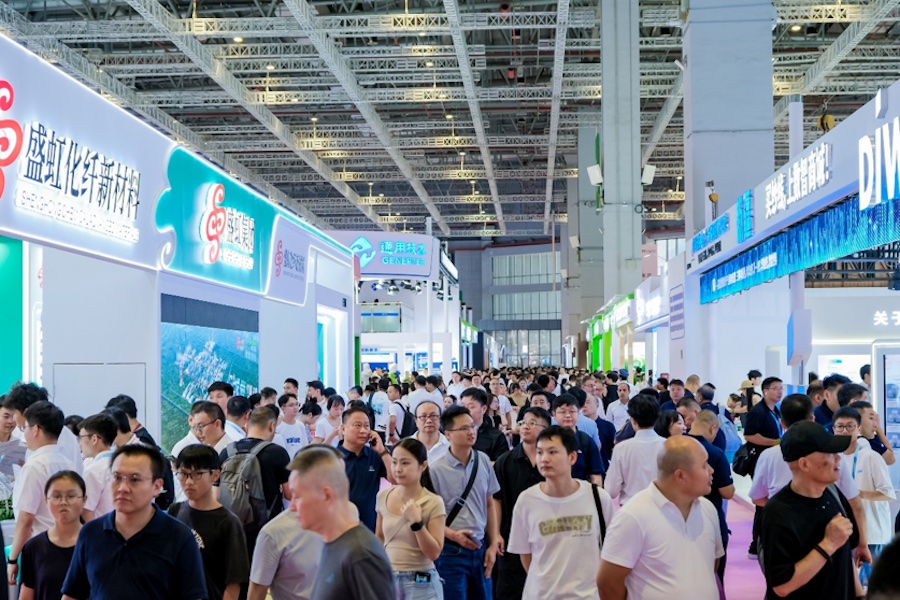
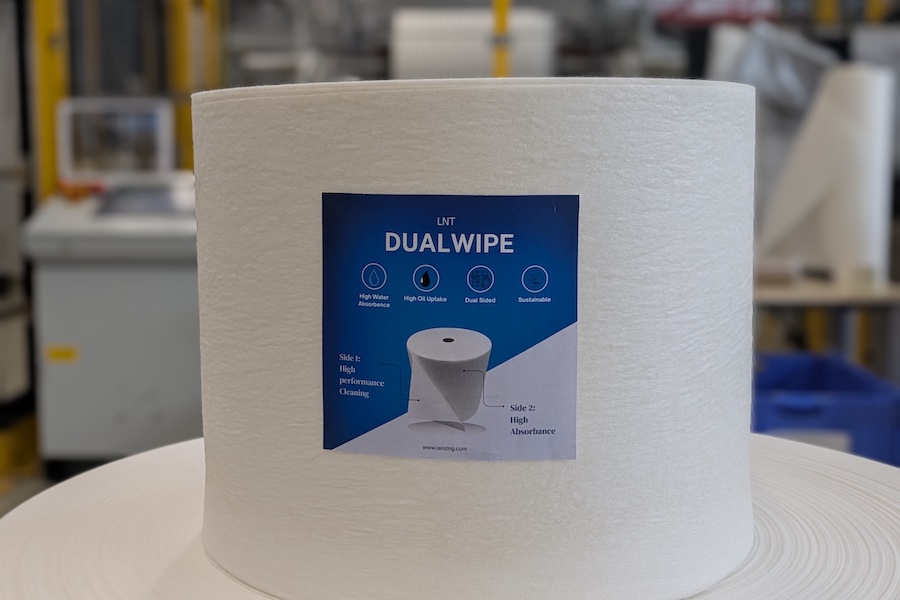
VEOCEL™, Lenzing's flagship specialty nonwovens brand, expands production at its Thai plant in Prachinburi. This is the first-ever production of its nonwoven-grade lyocell fibers in Asia. Built in 2022 with a 100,000-ton annual production capacity, the facility - previously focused on fibers for textile applications - now can directly meet the demand for VEOCEL™’s biodegradable¹, wood-based lyocell fibers for nonwovens products. These fibers are an essential ingredient for high-quality nonwovens products, ranging from baby wipes to facial sheet masks and everyday personal hygiene items.

#Man-Made Fibers

Lenzing advances its transformation: Higher EBITDA, stronger free cash flow and more than EUR 200 million in cost savings

The business performance of the Lenzing Group in 2025 was affected particularly in the second half of the year by external factors such as international tariff measures, subdued demand and declining market prices. As a result, revenue decreased slightly by 2.3 percent to EUR 2.6 billion, primarily due to lower fiber sales volumes and lower prices for fibers and pulp, which were further negatively impacted by currency developments. Nevertheless, thanks to the comprehensive Performance Program, Lenzing was able to improve its operating performance and key financial indicators compared with the previous year.

#Man-Made Fibers

“Lead Transformation – Generate Impact”: Lenzing presents its 2025 Annual and Sustainability Report

The Lenzing Group has published its 2025 Annual and Sustainability Report, entitled LEAD TRANSFORMATION – GENERATE IMPACT. The report shows how Lenzing is actively shaping change in the industry and making a lasting impact: economically, ecologically, and socially. Lenzing is consistently focused on the future: with targeted investments in premiumization, excellence, innovation, and sustainability, the company is strengthening its position as a leading provider of sustainable, cellulose-based premium fibers. The combined report is available in digital format.

#Raw Materials

Lenzing Group positions bio‑based materials as a strategic asset for Europe’s economic security

The Lenzing Group, a leading supplier of regenerated cellulose fibers for the textile and nonwovens industries, hosted a high‑level roundtable in Brussels to discuss how bio‑based materials can strengthen Europe’s economic security and support the shift toward a fossil‑free future. Organized in cooperation with Euractiv, the event brought together representatives of the European Commission, the UK Mission to the EU, academia, civil society, and industry.

More News on Sustainability

#Sustainability

Practical toolkit to drive coordinated climate action launched

An open-access workshop toolkit enables brands, suppliers, policymakers and investors across the textile industry to apply the System Map in their own work, identifying leverage points to halve emissions and enable a just transition.

#Raw Materials

Textile Exchange publishes cotton Life Cycle Assessment study to strengthen impact data

Textile Exchange has published the first in a series of seven Life Cycle Assessment (LCA) studies designed to improve the quality and robustness of environmental impact data for raw material production across the fashion, textile, and apparel industry. The first LCA study focuses on cotton and addresses critical data gaps and methodology variability through new high-quality data across key producing countries. The study includes organic, regenerative, recycled, and country averages for conventional cotton production systems, providing a clearer picture of the associated environmental impact.

#Sustainability

Experts publish APAC policy priorities

Cascale today announced the publication of its APAC Policy Priorities Paper, developed by the Asia-Pacific (APAC) Policy Member Expert Team (MET) to identify key regional sustainability challenges and provide practical, aligned recommendations for policymakers and industry stakeholders across Asia-Pacific.

#Sustainability

GOTS version 8.0 released: advanced supply chain accountability, from fibre to finished product

Global Standard is pleased to announce the release of GOTS Version 8.0, the latest update to the world's leading processing standard for organic textiles. The updated Standard strengthens requirements for air emissions and waste management, as well as criteria for product safety. It introduces new provisions on circularity, microfibre management and updates in residue testing. Version 8.0 also elevates due diligence obligations and formalises governance requirements, including ESG disclosure, anti-corruption policies and conflict-of-interest safeguards, to support credible, responsible business conduct.

Latest News

#Techtextil 2026

LineONE – Smart performance, smart investment at Techtextil 2026

At Techtextil 2026 in Frankfurt (April 21–24, Hall 12, Booth C79), AUTEFA Solutions will present its LineONE concepts for cost-efficient nonwoven production. As a full-line supplier for nonwoven production lines, AUTEFA Solutions covers the entire process chain – from fibre opening through to web bonding. With its LineONE line concepts, the company combines proven technologies into well-balanced, cost-efficient turnkey solutions. These concepts are designed for capacity expansions, modernisation projects and new production lines, offering robust design and high flexibility for applications such as filtration, geotextiles and automotive.

#Europe

EU and Australia strengthen relations with Security and Defence Partnership and Trade Agreement

The EU and Australia have today announced the adoption of a groundbreaking Security and Defence Partnership. They have also concluded negotiations for an ambitious and balanced free trade agreement (FTA) and agreed to launch formal negotiations for the association of Australia to Horizon Europe, the world's largest funding programme for research and innovation. With these steps, the EU and Australia are delivering mutually beneficial outcomes and further reinforcing their already close relations in a time of geopolitical uncertainty.

#Technical Textiles

DuPont introduces Tyvek® APX™ 400 protective coverall, setting a new benchmark for extreme breathability

DuPont (NYSE:DD) announced the launch of the Tyvek® APX™ 400 protective coverall, the first in a new generation of extremely breathable disposable chemical protection garments. Manufactured using DuPont™ Tyvek® APX™ groundbreaking fabric, the new garment combines 360° protection and durability with extreme breathability, taking worker comfort and safety to a whole new level.

#Spinning

Graf at EXINTEX – Strengthening presence in Latin America

Graf successfully participated in EXINTEX, one of the leading textile exhibitions in Latin America, together with its local agent Eurotecnica. The exhibition provided an excellent platform to engage with customers, partners and industry experts across the region.

TOP