[pageLogInLogOut]

#Sustainability

PFI confirms: water-based technology from Trans-Textil and Covestro is free of animal components

High technical, ecological and ethical standards in an extremely individual product design are the basic idea of AQUAIR®, which is now supplemented by the "100% Vegan" seal. The standard of the Pirmasens Testing and Research Institute (PFI) is awarded if the product, its ingredients and the manufacturing process are verifiably vegan and not of animal origin. Compliance with the criteria is checked by the institute, confirmed by laboratory tests if necessary and monitored regularly.
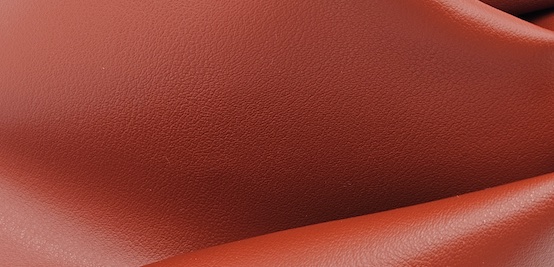
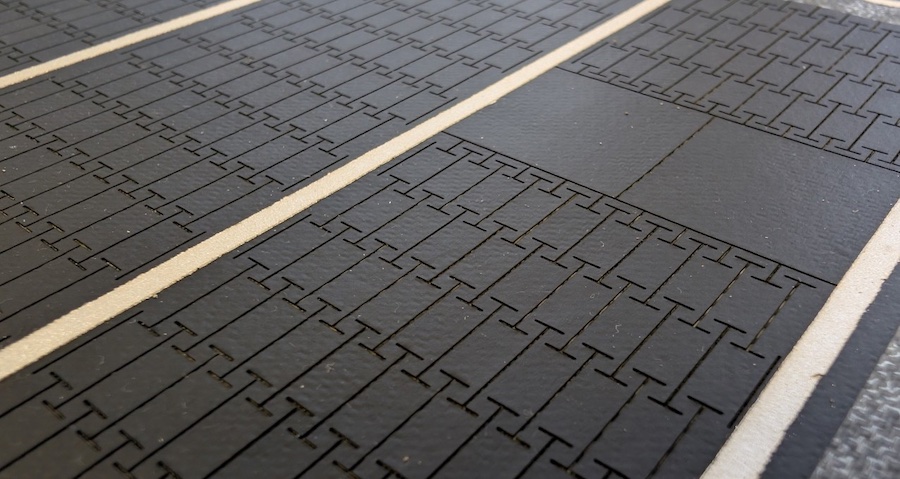
The color and grain of the synthetic layer can be easily customized, which allows for great design freedom when used in shoe components, sportswear, bags, furniture and many other products. © Trans-Textil © Covestro


+ Breathable, water-based AQUAIR® synthetics from Trans-Textil now bear the "100% Vegan" certification mark from German PFI Institute

+ No animal components or animal products are used in the product as a whole, as well as in all components and manufacturing steps

+ Highly flexible product structure in terms of design, textile components and membrane systems

+ The water-vapor-permeable, microporous structure of AQUAIR® is based on waterborne formulation components from Covestro

"The vegan idea fits perfectly into the overall concept of AQUAIR® and is a logical further development for us," says Matthias Krings, Managing Director of Trans-Textil GmbH. Performance and responsible product design in all steps form the basis of the highly breathable overall system. The starting point is the synthetic layer, which can be individually designed in terms of color and grain.

"The microporous PU system is based on our aqueous and more sustainable INSQIN® technology, with which the production of coated textiles also requires up to 95 percent less water and 50 percent less energy compared to conventional production processes," explains Dr. Torsten Pohl, Head of Global Textile Coatings at Covestro. In combination with the technologies from Trans-Textil, this results in unique properties with a wearing comfort and functionalities that raise the standard of synthetics to a new level and are now also verifiably vegan according to the PFI standard.


Breathable, water-based AQUAIR® textile systems from Trans-Textil are based on Covestro's aqueous INSQIN® technology and have been awarded the "100% Vegan" seal by the Pirmasens Testing and Research Institute. © Trans-Textil
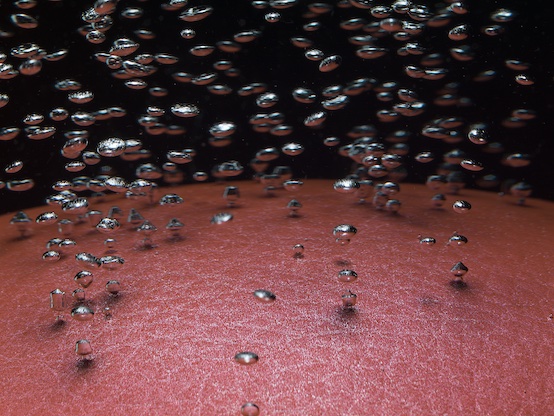
In addition to textile substrates, the test seal also included waterproof, breathable Topaz membrane systems based on polyurethane (PU) and polyester (PES), so that there is a great deal of creative freedom in product design with regard to structure, coloring and technical properties. The PU hotmelt systems used to manufacture the multi-layer composite products, which are applied at Trans-Textil using the high-quality and durable Point-in-Point® lamination technology, have also been vegan tested. Water-repellent properties are already integrated in AQUAIR® and no additives need to be added which are currently often viewed critically. All components and process steps are also tested according to Standard 100 by OEKO-TEX® for processing without harmful ingredients.

In a regional and responsibly designed supply chain, breathable synthetic products "Made in Germany" are created with AQUAIR® for the design of shoe components, leisure, sports and outdoor clothing, bags and accessories as well as for use in functional upholstery and furniture – even for small series or samples. The production as roll goods is the basis for an optimal use of material in the manufacture. If required, compatible Topaz tapes are available for seam sealing, which are also based on water-based formulation components.

The color and grain of the synthetic layer can be easily customized, which allows for great design freedom when used in shoe components, sportswear, bags, furniture and many other products. © Trans-Textil

Breathable, water-based AQUAIR® textile systems from Trans-Textil are based on Covestro's aqueous INSQIN® technology and have been awarded the "100% Vegan" seal by the Pirmasens Testing and Research Institute. © Trans-Textil
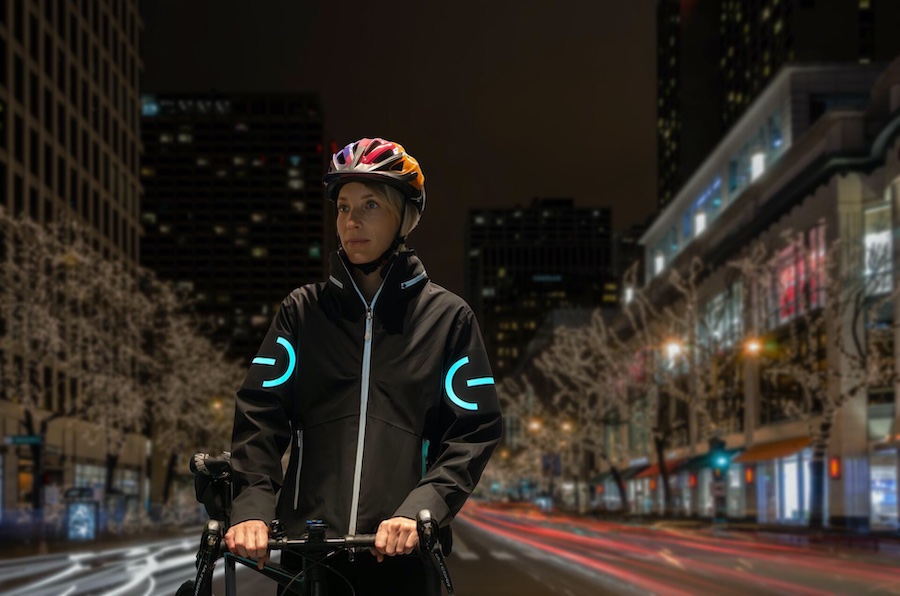
Breathable, water-based AQUAIR® textile systems from Trans-Textil are based on Covestro's aqueous INSQIN® technology and have been awarded the
Breathable, water-based AQUAIR® textile systems from Trans-Textil are based on Covestro's aqueous INSQIN® technology and have been awarded the "100% Vegan" seal by the Pirmasens Testing and Research Institute. © Trans-Texti


More News from Covestro AG

#Smart Textiles

Covestro, FILK Freiberg, and OUT e.V. develop flexible, conductive polymer smart textile system

As the smart textiles market continues to grow across healthcare, personal protection, sportswear, and automotive applications, developers are seeking new ways to integrate electronic functionality directly into textiles, without the rigidity and complexity of conventional wiring. To address this challenge, FILK Freiberg Institute, an independent research institution with expertise in polymer coatings for textile applications, collaborated with Optotransmitter-Umweltschutz-Technologie (OUT) e.V. The joint project, funded under the German Industrielle Gemeinschaftsforschung (IGF) program of the Bundesministerium für Wirtschaft und Energie (BMWE), focused on developing flexible, conductive polymer surfaces for next-generation smart textiles.

#Techtextil 2026

Covestro to exhibit solutions for a more sustainable and productive textile industry at Techtextil 2026

Covestro will present a broad portfolio of material innovations for textile coatings, adhesive films and thermoplastic polyurethanes (TPUs) at Techtextil 2026 (Hall 11.0, Booth C79). The exhibits will demonstrate how advanced solutions can enhance durability, recyclability and manufacturing efficiency across applications such as automotive, infrastructure, protective apparel and sportswear. A particular focus will be on more sustainable coating technologies, including antimicrobial systems based on INSQIN® in combination with AGXX from Heraeus Precious Metals, as well as the integration of Pontacol® thermoplastic adhesive films into Covestro’s offering.

#Technical Textiles

Covestro showcases monomaterial concept in autonomous SUE People Mover

UE | STUDIOS has unveiled the fully autonomous electric minibus “Self-driving Urban E-Shuttle” (SUE), placing strong emphasis on sustainable material design. Developed within a project funded by the Federal Ministry for Economic Affairs and Energy (BMWE) and the European Union, the vehicle will begin public road testing this year. At the core of the concept is the consistent use of recyclable monomaterials to improve circularity at end of life.

#Textile chemistry

Covestro and Heraeus Precious Metals collaborate to enable safer, more sustainable antimicrobial textile coatings

Laboratory tests reveal that AGXX antimicrobial surface technology from Heraeus Precious Metals is fully compatible with Impranil® PU dispersions which are part of the waterborne INSQIN® textile coating technology from Covestro, paving the way for more sustainable antimicrobial textile coatings. This discovery comes at a key moment for the textile coatings industry. As the sharing economy continues to grow, more people are coming into regular contact with high-use surfaces, creating ideal conditions for bacteria, viruses, and other microorganisms to thrive.

More News on Sustainability

#Sustainability

Textile Exchange unveils agenda for 2026 conference in Vancouver

Textile Exchange has released the agenda for its 2026 Conference, which will take place from October 12–16 in Vancouver, Canada. Under the theme “The Implementation Era,” the event will focus on translating sustainability commitments into practical action and scaling solutions across businesses, supply systems, and landscapes.

#Associations

Textile PRO Forum calls for greater harmonisation of textile EPR systems across Europe

The Textile PRO Forum has published a new analysis highlighting the need for greater harmonisation of textile Extended Producer Responsibility systems across Europe. The document, Toward harmonised Textile EPR Systems in Europe: analysis and recommendations, presents the results of work carried out by Workstream 1 of the Textile PRO Forum, led by Dr. Eng. Viola Corbellini, Strategic Development and Innovation Expert at Erion Textiles, and Eng. Luca Campadello, General Director at Erion Textiles. The workstream focused on reducing administrative burden for textile producers by identifying areas where procedures could be better aligned across countries.

#Associations

Results of the 38th ITMF Global Textile Industry Survey

The global textile industry appears to be turning a corner, but this is more likely a fragile and possibly temporary improvement than the start of a durable recovery. According to the 38th ITMF Global Textile Industry Survey, conducted worldwide during the second half of May 2026, business sentiment, order intake, order backlogs and capacity utilization all improved versus March — yet every indicator remains weak by historical standards, and rising costs cast doubt on how long the upturn can last.

#Sustainability

Closing the Footwear Loop reveals challenges and opportunities for circular footwear

The footwear industry faces one of the most complex circularity challenges in the fashion sector. A new Phase 1 report from the Fashion for Good initiative Closing the Footwear Loop, developed together with Circle Economy, provides new insights into the composition, condition and recycling potential of post-consumer footwear waste.

Latest News

#Research & Development

GenuTrace client advisory: Is your cotton supply chain UFLPA ready?

U.S. Customs and Border Protection has released updated operational guidance (CBP Publication No. 5560-0526) expanding its forced labor enforcement framework. The guidance supersedes the original 2022 UFLPA Operational Guidance and now covers all forced labor enforcement authorities — UFLPA, CAATSA, and WROs/Findings — in a single unified document. For cotton importers, the enforcement posture has not softened. It has become more structured, more documented, and more demanding. Learn more about UFLPA.

#Carpets

DOMOTEX Hannover 2028 off to a strong start with expanded portfolio

Preparations for DOMOTEX 2028 are already gaining strong momentum. Following its successful repositioning as the Home of Flooring & Interior Finishing, around 100 international manufacturers have already secured their place during the initial registration phase.

#Knitting & Hosiery

STOLL: Agreement signed for the divestiture of selected assets

In early 2025, KARL MAYER announced its strategic decision to focus on its core business areas of WARP KNITTING, WARP PREPARATION, and TECHNICAL TEXTILES. As part of this move, the flat knitting machine business under the STOLL brand was discontinued and the production site in Reutlingen was closed in October 2025.

#Research & Development

TERNAfil wins first place at PitchMiUp Night 2026 in Minden

The RWTH spin-off TERNAfil has developed MAXCarbon, a new high-performance hybrid fibre that combines the mechanical performance of carbon with the temperature and corrosion resistance of ceramic materials. For this development, TERNAfil was awarded first prize at the PitchMiUp Night in Minden on 21 May 2026.

TOP