[pageLogInLogOut]

#Sustainability

SABIC highlights its innovative actions to combat climate change at Saudi Green Initiative Forum

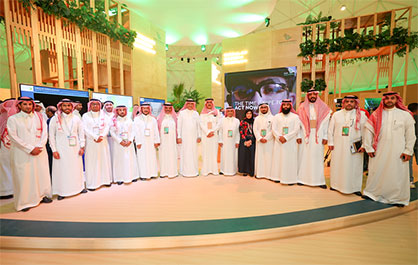
SABIC, a global leader in diversified chemicals, highlighted its innovative actions supporting the Kingdom’s ambition to realize circularity in alignment with the Saudi Green Initiative (SGI) during its participation at the second editions of the SGI Forum and Middle East Green Initiative (MGI) Summit in tandem with the 27th United Nations climate change conference (COP27) in Sharm El-Sheikh, Egypt, from November 7 to 18.

SABIC presented best practices in the circular carbon economy, climate change, renewable energy, recycling, combating desertification at the two green forums.

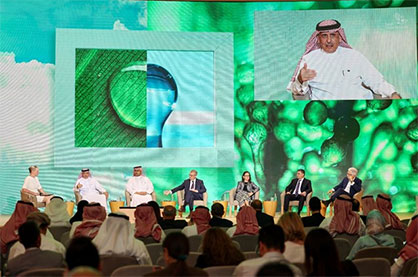
This year’s SGI Forum under the theme, ‘From ambition to action,’ brought together global leaders, CEO, investors, experts, and academics to collaborate toward collective and concrete actions for climate change, reverse land degradation, protect marine life and preserve biodiversity.
© 2022 SABIC
© 2022 SABIC


Addressing a panel discussion, Abdulrahman Al-Fageeh, SABIC CEO (A), said, “We’ve taken concrete actions to combat climate change through our innovative technologies. SABIC has made significant progress toward net-zero emissions.. In 2021, we achieved a 10% reduction in our carbon emissions (Scope 1&2) compared to 2018 baseline. That’s halfway to our interim 2030 target.

As part of the SGI Forum, SABIC emphasized its commitment with various initiatives.

SABIC will work with the Alliance to End Plastic Waste and other partners to conduct baseline studies of the Red Sea and Arabian Gulf as a prelude to address plastic marine pollution there. The intention is not only to clean up existing plastic waste locations but also to prevent any more plastic waste from reaching those bodies of water.

For the circular economy, a cooperative project was carried out between SABIC, Diryah Governance and King Saud University. The Diriyah Palm Waste Recycle project is helping the community of Diriyah turn palm waste into more valuable products rather than burning it. The project has helped in achieving the values of Diriyah Health city. SABIC is now exploring upscaling this successful concept into other areas of the kingdom.

Leveraging its previous success in building and operating the world’s largest CO2 purification and liquefaction plant of its kind, SABIC kicked off a study to capture two million tons of CO2 from its assets in Jubail as part of the Kingdom’s carbon capture, utilization and storage program that will be operational by 2027.


SABIC, Aramco, and Saudi Aramco Total Refining and Petrochemical Company (SATORP) have completed ISCC plus certification. This achievement is a great milestone toward creating Circular Economy in KSA in which Mixed Plastic Waste is being utilized to produce circular polymers product in KSA and the Middle East. This process is considered as the first in kind in the region.

Tree-plantation project with the National Center for Vegetation Cover. SABIC intends to plant 5 million native trees in four national parks in the Kingdom. The trees will stop desertification, help restore biodiversity and even remove some CO2 from the atmosphere as they grow.
© 2022 SABIC
© 2022 SABIC


SABIC, which is a member of the Kingdom’s Energy and Climate Change as well as Environment committees, displayed a model of its CO2 capture and utilization plant and showcased an ocean plastic mouse, the exterior shell of which contains 20% recycled ocean plastic, a unique case of collaboration with Microsoft.

20221113-SABIC highlights its innovative actions to combat climate change at Saudi Green Initiative Forum 2



More News from SABIC

More News on Sustainability

#Sustainability

Ying McGuire becomes new CEO of Cascale

Cascale today announced the appointment of Ying McGuire as Chief Executive Officer, effective June 1, 2026.

#Sustainability

VAUDE eliminates PFAS from all products

PFAS (per- and polyfluoroalkyl substances) are now detectable worldwide – in drinking water, soil and the human body. These so-called “forever chemicals” are considered hazardous to health and potentially carcinogenic, as they do not break down and remain in the environment permanently. Despite these risks, PFAS are still used in a wide range of products. More than 15 years ago, VAUDE made a strategic decision to gradually eliminate PFAS from all product categories.

#Sustainability

OEKO-TEX® chooses TextileGenesis to advance digital traceability for organic cotton

OEKO-TEX® today announced a full collaboration with TextileGenesis, a Lectra company, to digitally trace and authenticate organic cotton, strengthening fraud prevention across the supply chain. This announcement follows a successful pilot and brings together OEKO-TEX®’s certification expertise and closed testing system with TextileGenesis’ digital traceability platform to deliver a secure, end-to-end solution for managing certified organic cotton flows.

#Europe

ICAC to support European Commission on pending PEF legislation

The International Cotton Advisory Committee (ICAC) is proud to announce that it has been included as a member of the European Commission’s Technical Advisory Board (TAB) on the Product Environmental Footprint methodology. The Commission developed the Product Environmental Footprint (PEF) to assess and communicate the life cycle environmental performance of products and organizations.

Latest News

#Recycling / Circular Economy

Circulose restarts commercial-scale production at Ortviken plant in Sundsvall

Circulose today announced the restart of its commercial-scale production plant at Ortviken in Sundsvall, Sweden, marking a significant step in scaling next-generation materials for the global fashion industry. The company plans to resume production of CIRCULOSE®, a recycled pulp made entirely from discarded cotton textiles, in the fourth quarter of 2026.

#Textiles & Apparel / Garment

VIATT 2026 to debut German Pavilion, strengthening European participation alongside key Asian textile hubs

Vietnam’s textile and garment sector continues to be a major contributor to the country’s economic growth, with export revenues expected to reach USD 46 billion in 2025, a 5.6% increase from 2024 . From 26 – 28 February, the Vietnam International Trade Fair for Apparel, Textiles and Textile Technologies (VIATT) is set to contribute to economic growth opportunities by accelerating digital transformation and green transition across the entire textile value chain. The upcoming edition will respond to the rising demand for advanced technologies and sustainable materials with the introduction of the German Pavilion, alongside strong exhibitor participation from key Asian sectors, as well as several high-profile fringe events.

#Technical Textiles

Sustainable, lightweight, and sound absorbing: Polyester-based front trunk solution for BEVs

As car manufacturers look to further reduce their carbon footprint, Autoneum has developed an innovative front trunk solution for battery electric vehicles (BEVs), made entirely from polyester-based textile. The Ultra-Silent Frunk offers significant weight reduction, improved acoustic and thermal insulation, and uses up to 70 percent recycled material, supporting sustainable and efficient vehicle design. Autoneum, global technology leader in acoustic and thermal management for vehicles, has already received orders for the new frunk from three major OEMs in Asia and Europe to be built in three BEV models. Series production for two BEVs has been underway in China and Germany since last year.

#Raw Materials

Modern testing methods for raw cotton

The 38th International Cotton Conference Bremen will take place from 25 to 27 March 2026 at the Bremen Parliament. This conference has traditionally stood for in-depth expertise and international exchange. The program will focus on technical innovations, market trends, and regulatory frameworks across the entire value chain – from agriculture to the circular economy. With high-profile speakers, the conference is regarded as the key meeting point for the global cotton industry. Today’s focus: Cotton quality and testing methods.

TOP



