[pageLogInLogOut]

#Sustainability

NDC Green by Nastrificio di Cassano

100% sustainability lives in the smallest detail, starting with the label, the only element that can tell the story of responsibility. This is exactly why, to be a truly credible 'ambassador', the label or tag must itself be responsible. This is why Nastrificio di Cassanohas created NDC Green, the premium, Made in Italy and fully traceable range that guarantees the highest quality standards while respecting the planet.

Responsible and certified labels and tags give voice to sustainability while respecting the environment

"Sustainability is not a whim or a fashion. But the only solution and the first priority that the contemporary consumer demands when, before buying a garment, he immediately checks its label." Comments Lorenzo Ferraris, R&D of Nastrificio di Cassano. "We have always continued to experiment and innovate in order to give voice, value, credibility and coherence to the most important talking detail of a garment". 
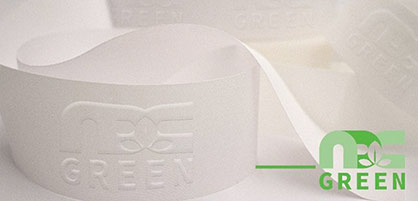
© 2021 NDC Green
© 2021 NDC Green


NDC Green comprises 4 categories, all with influential international certifications that attest to Nastrificio di Cassano's responsible imprinting. Many new sustainability values are woven into the collection. Particular attention is given to end-of-life, but also to the choice of natural and high-tech materials with a low environmental impact. A wide choice that speaks of responsible innovation, beauty and functionality: characteristics that have led C.L.A.S.S. to integrate NDC Green into its Material Hub which "contains a selection of fibres, materials and fabrics that share a DNA linked to research that since 2007 has been raising the bar of standards in order to offer innovations in step with the demands of the contemporary consumer" says Giusy Bettoni CEO of C.L.A.S.S.


NDC Green includes:

• LABìO ECO-SOFT®: made using compostable and biodegradable ingredients (as attested by TUV Austria), this product boasts performances and is resistant up to 10 domestic washings at 30°. The reference is produced with fifteen times less water consumption than cotton production and the resins used are GOTS certified. 

• LABìO HANGreen is the smart solution for the creation of hard tags, hangtags, shopping bags and garment covers and, as LABIO ECO-SOFT® range, it made with  compostable and biodegradable ingredients as certified by TUV Austria and the resin is compostable, too. These peculiarities make this product unique.

• ACETATE NAIA™, the 'smart satin' that respects forests and oceans, is the NAIA™ single-ingredient solution produced by Eastman: the 100% traceable, compostable and biodegradable cellulose yarn in both soil and sea respects the natural growth rate of forests.

• RECYCLED POLYESTER: is made from post-consumer yarn recycled from GRS-certified PET bottles. Available in both satin and resinated taffeta versions, it guarantees excellent printability for an elegant and sophisticated look.


"With NDC Green labels and tags, the sustainability of a garment is communicated by a truly responsible element. Not a promise, but a reality, printed and spun in full respect of people and the planet." Comments Filippo Decio, sales manager of Nastrificio di Cassano.



More News from TEXDATA International

#Techtextil 2026

Performance Apparels: Functional textiles drive innovation at Techtextil 2026

From high-performance fibres and advanced membranes to smart textiles and sustainable material concepts – functional apparel is becoming one of the most dynamic innovation fields in technical textiles. At Techtextil 2026, exhibitors demonstrate how new materials, finishing technologies and digital functions are shaping the next generation of protective, workwear and outdoor systems.

#Texprocess 2026

Texprocess 2026: Automation, digitalisation and AI reshape textile processing

Investment decisions in textile processing have become increasingly complex. Rising energy prices, labour shortages and geopolitical uncertainties are forcing companies to prioritise technologies that deliver measurable improvements in efficiency and process stability. This applies not only to apparel production, but also to the processing of technical textiles and high-performance materials. Modernisation projects are therefore being evaluated more selectively – but the pressure to upgrade production systems continues to grow. Texprocess 2026 reflects this tension between cautious investment behaviour and increasing technological demand.

#Techtextil 2026

Textile Chemicals & Dyes: Innovation in Textile Chemistry moves into focus at Techtextil 2026

From PFAS-free finishes and water-saving dyeing technologies to advanced coatings and recycling-compatible formulations, innovation in textile chemistry is accelerating across the industry. Reflecting this development, Techtextil 2026 introduces Textile Chemicals & Dyes as a dedicated product segment, highlighting the growing role of chemical solutions in shaping the next generation of technical textiles.

#Recycling / Circular Economy

textile.4U publishes special edition “Top 100 Textile Recycling Companies 2025”

With a comprehensive 176-page special edition, textile.4U is dedicating its latest issue entirely to one of the most dynamic and influential topics in today’s textile industry: textile recycling. The new issue, published exclusively in high-quality print, presents the Top 100 textile recycling companies researched and selected by TexData – organizations that already play a key role in the transition to circular textiles or are expected to have a significant impact in the near future.

More News on Sustainability

#Sustainability

Practical toolkit to drive coordinated climate action launched

An open-access workshop toolkit enables brands, suppliers, policymakers and investors across the textile industry to apply the System Map in their own work, identifying leverage points to halve emissions and enable a just transition.

#Raw Materials

Textile Exchange publishes cotton Life Cycle Assessment study to strengthen impact data

Textile Exchange has published the first in a series of seven Life Cycle Assessment (LCA) studies designed to improve the quality and robustness of environmental impact data for raw material production across the fashion, textile, and apparel industry. The first LCA study focuses on cotton and addresses critical data gaps and methodology variability through new high-quality data across key producing countries. The study includes organic, regenerative, recycled, and country averages for conventional cotton production systems, providing a clearer picture of the associated environmental impact.

#Sustainability

Experts publish APAC policy priorities

Cascale today announced the publication of its APAC Policy Priorities Paper, developed by the Asia-Pacific (APAC) Policy Member Expert Team (MET) to identify key regional sustainability challenges and provide practical, aligned recommendations for policymakers and industry stakeholders across Asia-Pacific.

#Sustainability

GOTS version 8.0 released: advanced supply chain accountability, from fibre to finished product

Global Standard is pleased to announce the release of GOTS Version 8.0, the latest update to the world's leading processing standard for organic textiles. The updated Standard strengthens requirements for air emissions and waste management, as well as criteria for product safety. It introduces new provisions on circularity, microfibre management and updates in residue testing. Version 8.0 also elevates due diligence obligations and formalises governance requirements, including ESG disclosure, anti-corruption policies and conflict-of-interest safeguards, to support credible, responsible business conduct.

Latest News

#Recycling / Circular Economy

ABB and Syre partner to explore technologies for industrial-scale textile recycling

ABB has signed a Memorandum of Understanding (MoU) with Swedish textile impact company Syre to jointly explore technologies to support the development of Syre’s first textile-to-textile recycling plant in Vietnam. The agreement establishes a framework for collaboration to investigate how ABB’s automation, electrification and digital technologies could contribute to safe, efficient and scalable operations. It will also explore how these capabilities could further optimize process and quality control performance as Syre advances its ambition to produce circular polyester at industrial scale.

#Techtextil 2026

From Nature Performance to Circular Economy: Techtextil 2026 focuses on the future market for technical textiles

Alternative materials and recycling technologies are one of the most important future segments and drivers of innovation in technical textiles. Sustainability goals and regulatory requirements increase their relevance, while advances in performance and economic viability enhance their market competitiveness. Taking place from 21 to 24 April 2026, Techtextil reflects this key industry trend with a growing number of specialised exhibitors. With the new “Nature Performance” label, the leading global trade fair bundles relevant market offerings and facilitates access to new solutions – from natural fibres and yarns to bio-based materials and circular approaches.

#Research & Development

Textile cascade filter for removing microplastics from wastewater

Microplastics are now found almost everywhere, even in remote regions of Antarctica. They enter the human body through the food chain. Studies indicate that microplastics may have negative effects on the human health.

#Textile processing

Jeanologia showcases the future of product development

Jeanologia is showcasing how software is transforming product development in the fashion industry at PI Apparel Europe: The Fashion Technology Show, taking place on March 30–31 in London.

TOP