[pageLogInLogOut]

#Sustainability

Lenzing welcomes clear positioning of the EU Commission in the fight against plastic waste
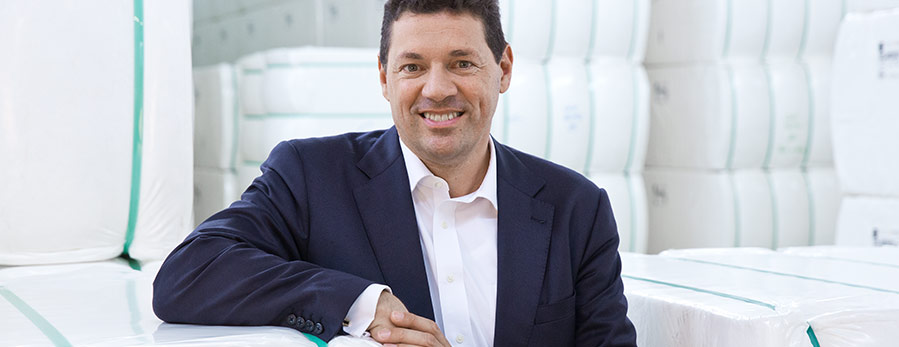
CCO Robert van de Kerkhof © 2021 Lenzing
The Lenzing Group, the globally leading supplier of sustainably produced specialty fibers, welcomes the issuance of the guidelines for the implementation of the Single-Use Plastics Directive (EU) 2019/904, which took effect on June 05, 2019[1]. In these guidelines, the EU Commission specifies which products fall within the scope of the directive, thus providing clarity in the joint fight of the EU member states against environmental pollution from plastic waste. Lenzing’s wood-based, biodegradable cellulosic fibers such as those of the VEOCEL™ brand comprise a sustainable and innovative solution to this man-made problem.
  • Guidelines of the EU Commission to implement the Single-Use Plastics Directive have been published
  • Uniform labelling obligation for wipes and feminine hygiene products containing plastics as of July 03, 2021
  • Lenzing’s wood-based, biodegradable VEOCEL™ branded fibers as a sustainable alternative to plastic

“Pollution of the environment – especially marine pollution – is one of the biggest problems of our time. For this reason, we welcome the measures taken by the EU to reduce certain single-use plastic products and the transition to closed-loop models”, says Robert van de Kerkhof, Member of the Managing Board of the Lenzing Group. “Lenzing has been investing in the development of sustainable and innovative solutions for the textile and nonwovens industry for many years and will also continue in the future to intensively work on achieving systemic change towards a circular economy”, van de Kerkhof adds.

Lenzing’s ambitious sustainability targets make it a trailblazer in manufacturing industry, especially the fiber segment. Lenzing’s considerable investments in developing sustainable innovations and implementing climate objectives focusing on carbon neutrality not only strengthen the company’s market position and increase shareholder value but also continuously create new jobs.

Uniform labelling rules for some single-use plastic products

The Commission implementing regulation (EU) 2020/2151 applying to the Single-Use Plastics Directive stipulate uniform labelling requirements for some of the single-use plastic products on the packaging or the product itself starting on July 03, 2021. They encompass feminine hygiene products and wet wipes for personal and household care containing plastic.  

© 2021 Lenzing
© 2021 Lenzing


“The issue of hygiene is becoming increasingly important and is especially the order of the day in the light of the prevailing epidemic conditions”, states Jürgen Eizinger, Vice President Global Nonwovens Business at Lenzing. “The Single-Use Plastics Directive enables consumers to make a more informed purchase decision. That is why we welcome these implementation guidelines which now provide enhanced clarity. Lenzing‘s VEOCEL™ fibers already offer a natural solution today for the problem of global plastic waste, and the company is continually expanding its capacities for wood-based specialty fibers as a means of promoting the development of sustainable wipes and hygiene products“, Jürgen Eizinger adds.


Consumers want sustainable hygiene products

Even before the implementation of the Single-Use Plastics Directive, Lenzing already gives consumers clear guidance in their purchasing decisions. Products bearing the VEOCEL™ brand logo on their packaging are produced in line with stringent certification criteria. As a consequence, consumers can be assured that the products contain biodegradable, cellulosic materials.

Jürgen Eizinger © 2021 Lenzing


A Marketagent survey carried out in German-speaking Europe in October 2019[2] concluded that nine out of ten consumers would immediately change their purchasing behavior for wipes if they found out that their current product contains plastic. This would seem to imply that new market dynamics will emerge once the labelling rules for single-use plastic products takes effect. According to a Smithers Report[3], about 500,000 tons of petroleum-based fibers are used each year for the production of wipes.  

© 2021 Lenzing
© 2021 Lenzing


#ItsInOurHands – the initiative for enhanced awareness and transparency

On the basis of its environmental initiative #ItsInOurHands, Lenzing has been supporting a movement since the end of 2019 in collaboration with its partners to create enhanced awareness and transparency for materials used in wet wipes. An online platform as well as a dedicated community strive to increase awareness on the part of producers and consumers and thus push ahead with the development of sustainable alternatives (more information at https://itsinourhands.com).

More News from Lenzing

#Man-Made Fibers

Lenzing invests EUR 15 mn to strengthen position in the hygiene market

The Lenzing AG is investing approximately EUR 15 mn to expand its production capacity for premium viscose fibers at its site in Lenzing, Austria. This strategic investment is part of the recently announced investment program of EUR 100 mn in total to secure the long-term competitiveness of Lenzing’s Austrian production sites. The capacity expansion reinforces the company’s commitment to providing sustainable solutions to the global hygiene market. It also strengthens the company's role as a trusted provider of high-quality fibers for feminine care applications.

#Man-Made Fibers

Lenzing AG: Stable revenue and improved EBITDA despite market headwinds

In the first nine months of 2025, Lenzing AG recorded revenue growth and higher EBITDA, but a market-driven volatile third quarter. This performance reflects the effects of ongoing market volatility, tariffs and geopolitical uncertainties. Nevertheless, the medium to long-term outlook remains positive.

#Man-Made Fibers

Lenzing confirmed as global leader in Canopy sustainability ranking

Lenzing AG has once again taken first place in this year's Hot Button Report published by the Canadian non-profit organization Canopy. With 34.5 out of 40 points and no known risk of sourcing from ancient and endangered forests, Lenzing remains one of the most sustainable companies in regenerated cellulose fiber production – setting a benchmark for responsible business practices in the textile and nonwovens industries.

#Man-Made Fibers

Lenzing AG refines strategy and strengthens competitiveness for a challenging environment

Lenzing AG, a leading provider of regenerated cellulosic fibers, refined its strategy to strengthen its global positioning and competitiveness. With this step, the company responds to the ongoing challenges in the global textile and nonwovens markets as well as geopolitical changes. Cornerstones of the refined strategy include focusing on high-performance fibers, enhancing operational efficiency and asset footprint optimization, which should further unlock the company’s full value creation potential.

More News on Sustainability

#Research & Development

The region of renewable raw materials: Central German Alliance for Bioplastics

The development of sustainable plastic solutions is rapidly gaining importance in light of global environ- mental pollution, dwindling fossil resources and ambitious climate protection targets. As part of the re- gional alliance RUBIO, which brings together 18 partners from central Germany and the Berlin-Branden- burg area, the bio-based and biodegradable plastic polybutylene succinate (PBS) was comprehensively investigated, starting with the raw material, through the manufacturing process, to industrial application.

#Textile chemistry

Archroma funds development of sustainable textile laboratory at Mumbai’s Institute of Chemical Technology

Archroma, a global leader in specialty chemicals focused on sustainable solutions, has supported the Institute of Chemical Technology (ICT), Mumbai, India in the renovation and development of a sustainable laboratory facility as part of its Corporate Social Responsibility (CSR) program.

#Sustainability

Peak Sustainability Ventures & Arvind launch India’s first industrial-scale cotton-stalk torrefaction project, decarbonizing textile manufacturing in Gujarat

Arvind Limited, one of India’s leading textile-to-retail conglomerates, and Peak Sustainability Ventures, a Mumbai-based global climate investment firm, have entered into a partnership to build a large-scale cotton stalk torrefaction plant in Gujarat, with a capacity of 40,000+ tonnes per year, to accelerate Arvind’s decarbonization goals and promote torrefaction at scale in India.

#Sustainability

Textile Exchange evolves its membership structure to unlock the next stage of collective action for climate and nature

Textile Exchange is excited to announce that it is evolving its membership structure to a more action-oriented, impact-driven model designed to provide clearly defined pathways that help organizations respond to the climate and nature crisis.

Latest News

#Recycling / Circular Economy

Advanced Recycling Conference 2025 fuels innovation across key waste streams

The Advanced Recycling Conference (ARC) 2025 brought together nearly 220 experts from 28 countries to spotlight pioneering advancements and foster industry collaboration in recycling across diverse waste streams including plastics, textiles, automotive and other materials.

#Dyeing, Drying, Finishing

Navis TubeTex announces U.S. partnership with Icomatex

Navis TubeTex, a global leader in advanced dyeing and finishing machinery solutions, is pleased to announce a new partnership with Icomatex (www.icomatex.com), a respected European manufacturer of high-quality stenters and textile finishing equipment. Under this agreement, Navis TubeTex will exclusively represent the Icomatex stenter line in the United States.

#Recycling / Circular Economy

ADVANSA launches ADVA®tex: A new step toward textile-to-textile recycling

ADVANSA has introduced ADVA®tex, a new filling fibre made entirely from recycled pre-consumer textile waste, positioning the material as a significant step forward in textile-to-textile (T2T) recycling. The fibre is designed for use in duvets, pillows, mattresses, and furniture applications and is available in three versions.

#Knitting & Hosiery

KARL MAYER celebrates 35 years of EL pattern drive

KARL MAYER is celebrating an anniversary this year: on 30 November 1990, the first warp knitting machine with electronic guide bar control, the KS 4 EL, was delivered – another milestone for patterning. As early as 1980, the SU gearbox with the MRS42SU had initiated the transition from mechanical chains to digital data.

TOP