[pageLogInLogOut]

#Spinning

Trützschler Card Clothing expands its site in Neubulach
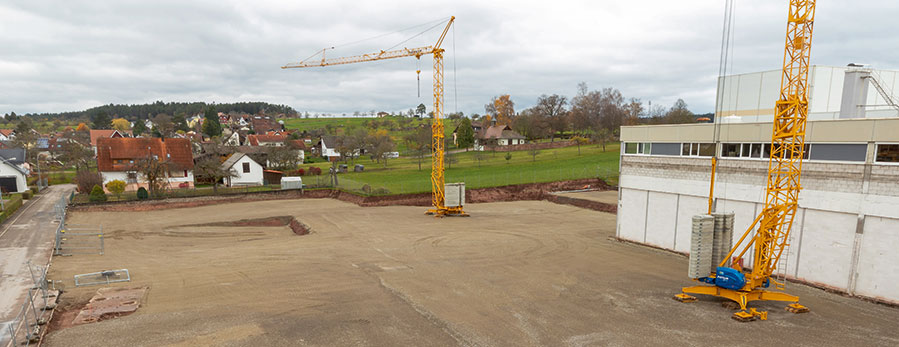
The new building will be erected on this area. © 2022 Trützschler
Trützschler Card Clothing (TCC), technology leader in the manufacture of high-performance card clothings for textile yarn processing, is expanding its site in Neubulach, Germany. With the twelve-million-euro investment, the supplier for the international textile machinery industry is expanding its production, warehouse and office capacities. A groundbreaking ceremony will take place during the coming winter.

Green growth: The technology leader for card clothing is creating additional jobs / Company focuses on climate neutrality for site expansion

The move into the new building is planned for 2024. TCC will also expand the range of services and the production intensity at the site, while optimizing the process flows. Trützschler intends to recruit the additional employees required within a short timeframe by hiring new staff and offering apprenticeships at the Neubulach site. TCC employs more than 130 people in Germany, with a further 220 people employed worldwide at locations in Brazil, China, India, Mexico, Turkey and the USA.

Strengthening the site

"By expanding our business here in Neubulach, we are strengthening our presence in this area and our leading global market position too," says Managing Director Peter Gäbler. The Trützschler Group SE is also investing in India to build a new site with over 100,000 square meters for the Spinning, Card Clothing and Nonwovens business units. "It is important to be close to the customer worldwide because our foreign companies make a significant contribution to the success of the Group," says Gäbler.

TCC achieved another record sales result in 2021. Demand for the technology components for carding fibers in spinning mills and for carding in nonwovens production has increased significantly. The steel sawtooth wires, which are wound onto coils and produced for customers around the globe, eventually get worn down by use in production processes – so it is necessary to replace them regularly. For this reason, further growth is expected in 2022 and beyond.


The new building will expand the warehouse and logistics area by 600 square meters, to make a total area of 2,800 square meters. In the optimized cube of the new hall, a modern warehouse system will double the storage capacity. There will also be a fully automated warehouse for coils for sawtooth wires. During the construction phase, logistics and shipping will be temporarily outsourced to Pforzheim-Büchenbronn.

Good integration into the region

Overall, the production area will be expanded from 4,000 to 5,400 square meters. This will enable the process flows to be optimized. The office space will be increased to 1,000 square meters. An additional level of the building will provide modern workplaces for administration and sales.

The new building will also improve access and exit routes for truck traffic. This will provide considerable relief for the local neighborhood in terms of noise emissions and other factors. Good integration into the region is very important to Trützschler. All contracts for planning, construction and air conditioning technology have been awarded to local companies.

In the future, TCC will operate its production facility in Neubulach in a climate-neutral manner. This will contribute important progress toward achieving the ambitious climate goals of the Trützschler Group. The new production facility will meet the highest requirements for energy efficiency and climate protection. Heating is provided by process heat recovery and geothermal energy. In addition, the company produces green electricity via its own solar panels.
More News from Truetzschler GmbH & Co. KG

#Spinning

Ibrahim Fibres and Trützschler: A strong partnership enters its next phase with the TC 30Si

For more than two decades, Ibrahim Fibres and Trützschler have grown side by side, driven by a shared ambition to continuously improve spinning performance, strengthen technology leadership and set new benchmarks in the textile industry. Today, Ibrahim Fibres is a leading yarn and polyester staple fiber manufacturer in Pakistan. The company operates the largest number of Trützschler cards in the country, with more than 200 machines running across its mills in Faisalabad, and plays an important role in one of Asia’s largest textile industries.

#ITM 2026

Trützschler’s Integrated Draw Frame IDF 3: Unlocking the full potential of short fiber processing

Spinning mills worldwide are looking for solutions that combine higher productivity, stable quality and shorter processes, especially when processing short fibers. Trützschler’s integrated draw frame IDF 3 has proven to be a powerful answer to these requirements. Evaluations from several customer trials in Türkiye under real production conditions highlight the strong performance of the IDF 3, particularly when combined with the next-generation card TC 30i.

#ITM 2026

Experience Trützschler’s leading fiber processing technologies at ITM 2026

From June 9 to 13, the Trützschler Group will present its latest machinery, service expertise and digital solutions at ITM 2026 in Istanbul, Türkiye. Visitors are invited to explore innovations across Spinning, Card Clothing, and Nonwovens at Hall 7, Booth 714A at the Tüyap Fair Convention and Congress Center. They can experience modern fiber processing with Trützschler!

#Spinning

Perfect quality through collaboration: Machinery from Trützschler, Toyota and Murata at Zirve Tekstil

In today’s textile industry, excellence is not achieved by chance – it’s the result of deliberate decisions, technical expertise, and the courage to go beyond conventional paths. The Turkish company Zirve Tekstil has done just that: by combining the best technologies from Trützschler, Toyota and Murata, they’ve created a production setup that delivers outstanding yarn quality – recognized worldwide.

More News on Spinning

#Spinning

Object Carpet tests production of rPET BCF yarn on Neumag BCF line

In a joint project with Object Carpet GmbH, Denkendorf; the Institute for Textile Technology (ITA), Augsburg; and Next Generation Recyclingmaschinen GmbH (NGR), Feldkirchen, Austria, Barmag investigated the processing of recycled polyester for BCF yarn. The goal was to evaluate the fundamental suitability of 100% recycled carpet material for reuse in carpet yarn production to create a closed-loop system in carpet manufacturing. To date, commercial rPET BCF processes have been based solely on rPET from bottle pellets.

#Spinning

New spinning package with two-step filtration for recycled yarns and more

At the ITM in Istanbul, BB Engineering unveiled its new, patented ValuePack spinning package for the first time, which features a two-stage filtration system. This is particularly beneficial for re-cycling processes. Until now, spinning packs have used either metal powder (“sand”) or filter candles as filter media. Both options are suitable for differ-ent applications, and each has its own specific advantages and dis-advantages.

#Research & Development

GenuTrace client advisory: Is your cotton supply chain UFLPA ready?

U.S. Customs and Border Protection has released updated operational guidance (CBP Publication No. 5560-0526) expanding its forced labor enforcement framework. The guidance supersedes the original 2022 UFLPA Operational Guidance and now covers all forced labor enforcement authorities — UFLPA, CAATSA, and WROs/Findings — in a single unified document. For cotton importers, the enforcement posture has not softened. It has become more structured, more documented, and more demanding. Learn more about UFLPA.

#Spinning

"We will become a recycling powerhouse"

The textile industry is now in its fourth consecutive year of crisis, while automation, artificial intelligence and recycling are reshaping the rules of the game. In this interview, Rieter CEO Thomas Oetterli discusses the first signs of a market recovery, reflects on his first three years at the helm of the company, explains the integration of Barmag, outlines Rieter’s vision of the fully automated spinning mill and highlights the strategic importance of recycling. In doing so, he explains why the new Rieter Group aims to play a leading role in transforming the textile value chain into a circular economy.

Latest News

#Recycling / Circular Economy

Ence and ShareTex begin initial testing of the ATENEA innovation project to promote textile recycling in Spain

Ence and ShareTex are making progress on the Atenea R&D project, which aims to develop a complete value chain for textile recycling in Spain. Specifically, the goal of the ATENEA project—which is funded by the Center for Technological Development and Innovation (CDTI)—is to connect all the necessary stages for the recovery of textile waste, from collection and management, through recycling and transformation into new raw materials, to their incorporation into new textile products.

#Recycling / Circular Economy

DePoly Inaugurates its Showcase Plant in Monthey Switzerland

What if used plastic bottles, PET packaging material and polyester textiles could become raw materials just as high performing as virgin resources? That is the ambition of DePoly, a circular materials company based in Sion, Switzerland which inaugurated its Showcase Plant in Monthey on July 6th & 7th. The first depolymerization facility of its kind and scale in Switzerland, this industrial Showcase Plant represents a major milestone in the company's growth and its journey toward commercialization.

#Recycling / Circular Economy

Commission clarifies rules on plastic bottles recycling

The European Commission today adopted new rules on recycling of single-use plastic beverage bottles made primarily of polyethylene terephthalate (PET bottles). These rules establish, for the first time, a methodology to calculate, verify and report chemically recycled content. This is part of the Commission’s December 2025 plastics package.

#Sustainability

Global Standards establishes new non-profit foundation to strengthen governance

Global Standards gGmbH, the nonprofit organisation behind the globally recognised Global Organic Textile Standard (GOTS), announced a new governance structure designed to support its long-term mission and reinforce organisational autonomy of its Voluntary Sustainability Standards and programmes.

TOP