[pageLogInLogOut]
TRÜTZSCHLER SPINNING - FROM WASTE TO VALUE

#Spinning

The new Pre-Cleaner CL-X: Higher productivity and lower energy consumption
© 2021 Truetzschler
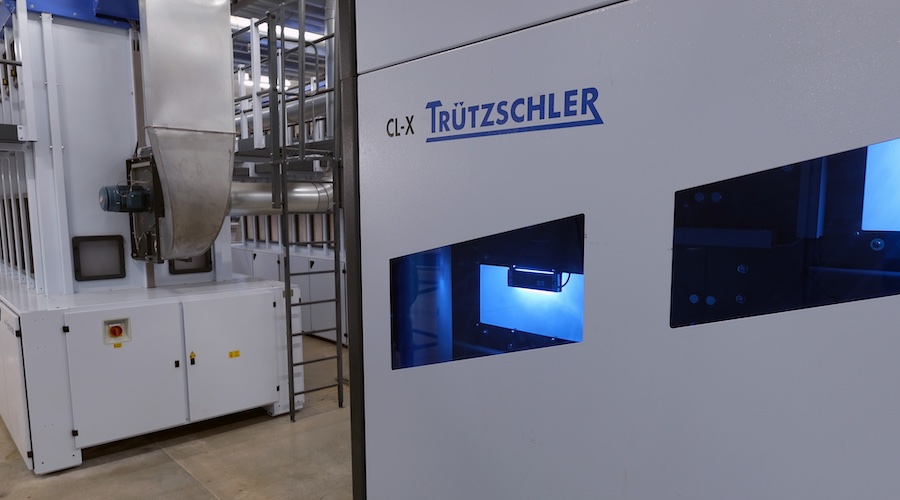
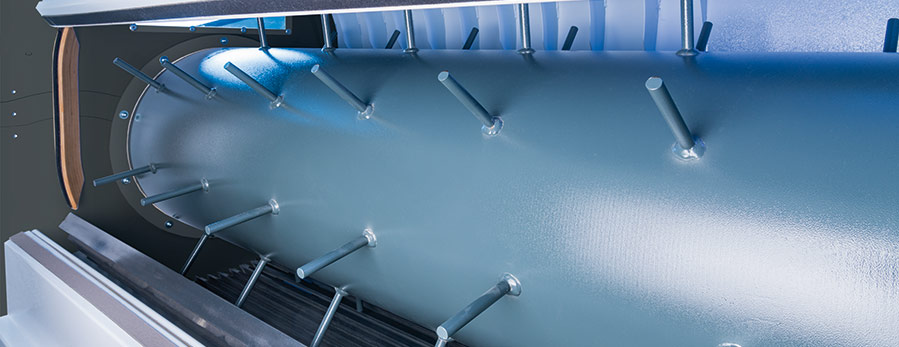
Double the production rate, with lower energy consumption per kilogram of fiber material – that might sound like a contradiction, but the new Trützschler pre-cleaner CL-X makes it possible. It gently and reliably removes coarse contaminants like leaf debris, stalks or seeds from cotton with minimum loss of good fibers. The pre-cleaner CL-X provides more efficiency and lays the foundation for a high-quality end-product before the cotton is further processed in mixers and fine cleaners.

The new CL-X especially meets the urgent demand for lower energy consumption. Energy efficiency is not only important for environmental and regulatory reasons. Due to rising energy prices, it is becoming an increasingly decisive factor for the competitiveness of spinning mills.

"During the development process, our main focus was on optimizing the fiber air flows. This is the area where we achieved the breakthrough. By forcing the air flow over two rolls, we have found a solution that allows lower power consumption at the opening rolls,” says Robert Többen, Head of Mechanical Engineering at Trützschler. “The fact that this flow is in the form of a spiral is also reflected in the name CL-X: The ‘X’ comes from the Greek word for spiral, Helix.”

In comparison with the current benchmark, the CL-X saves up to 30 % energy (see chart 1). In addition to the optimized flow, an integrated air separator contributes to reducing the transport air by ensuring that only excess air has to be removed, rather than all of the air. Less exhaust air means less energy consumption.

© 2021 Truetzschler
© 2021 Truetzschler


The CL-X also provides significantly increased productivity. At a maximum of 1,600 kilograms per hour, the production rate from one CL-X corresponds to the rate achieved by two CL-P models. This gives customers the flexibility to operate at high or low productivity rates with one machine.

On top of this, the new CL-X is characterized by its excellent cleaning results. Trials conducted at a Turkish customer have shown that it reached a nearly three times better cleaning efficiency compared to the benchmark (US cotton, see chart 2). The improved grid geometry enables better separation and gentler tuft handling. Furthermore, a 2.60 m long cleaning section provides a maximum degree of opening and cleaning tufts.

© 2021 Truetzschler
© 2021 Truetzschler


The lot management system enables direct, automated coordination with the Bale Opener BO-P. The speeds of the opening rollers and the position of the grid bars – and thus the intensity of the cleaning – are automatically adjusted to the changing material fed (lot). 

© 2021 Truetzschler
© 2021 Truetzschler


Due to the stepless and individual adjustment of grid devices for each opening roller, the machine can react to a wide variety of impurities. A 10 % higher speed of the second opening roller causes different speeds along the grids, while different sizes of waste can also be separated.

The WASTECONTROL waste sensor is now also integrated into the CL-X and makes sure that waste is reliably separated during production, which avoids unnecessary loss of valuable good fibers. The operator automatically receives a recommendation for the ideal setting via the machine's display and can implement it with just a few clicks.

© 2021 Truetzschler
© 2021 Truetzschler


The CL-X is the perfect and sustainable solution to meet today's demand for productivity, cleaning and energy efficiency. 

© 2021 Truetzschler
© 2021 Truetzschler


CL-X features at one glance

• Continuous production of 1,600 kilograms per hour for present blow room configuration.

• 30% energy saving compared to the current benchmark.

• Integrated WASTECONTROL for automatic adjustment recommendation of waste excretion to avoid unnecessary fiber loss.

• 2.60 m long cleaning section.

• New and improved grid geometry for better separation and gentle tuft treatment.

• Material draft due to 10 % higher speed of second opening roller for reliable and consistent fiber transport.

• Optimal cleaning level and minimal fiber loss due to individual and stepless grid adjustment for each opening roller by motor.

• Gentle tuft treatment with adjustable opening roller speed.

• Synchronized lot management (automatic lot change for up to three lots).

• Connection possibility for a waste box (for waste analysis).

• Lower cost of ownership.


More News from Truetzschler GmbH & Co. KG

#ITM 2026

Trützschler’s Integrated Draw Frame IDF 3: Unlocking the full potential of short fiber processing

Spinning mills worldwide are looking for solutions that combine higher productivity, stable quality and shorter processes, especially when processing short fibers. Trützschler’s integrated draw frame IDF 3 has proven to be a powerful answer to these requirements. Evaluations from several customer trials in Türkiye under real production conditions highlight the strong performance of the IDF 3, particularly when combined with the next-generation card TC 30i.

#ITM 2026

Experience Trützschler’s leading fiber processing technologies at ITM 2026

From June 9 to 13, the Trützschler Group will present its latest machinery, service expertise and digital solutions at ITM 2026 in Istanbul, Türkiye. Visitors are invited to explore innovations across Spinning, Card Clothing, and Nonwovens at Hall 7, Booth 714A at the Tüyap Fair Convention and Congress Center. They can experience modern fiber processing with Trützschler!

#Spinning

Perfect quality through collaboration: Machinery from Trützschler, Toyota and Murata at Zirve Tekstil

In today’s textile industry, excellence is not achieved by chance – it’s the result of deliberate decisions, technical expertise, and the courage to go beyond conventional paths. The Turkish company Zirve Tekstil has done just that: by combining the best technologies from Trützschler, Toyota and Murata, they’ve created a production setup that delivers outstanding yarn quality – recognized worldwide.

#Spinning

Details matter: How Trützschler cylinder wires boost efficiency in Pakistan’s spinning sector

Pakistan’s textile industry, especially its spinning sector, is the backbone of the national economy and a vibrant hub of innovation. Today’s spinning mills face growing demands for efficiency, quality, and sustainability. From the serene northern valleys to the vibrant port city of Karachi in the south, mills like Suraj Cotton Mills, Liberty, and Nishat Chunian are turning to advanced solutions.

More News on Spinning

#Spinning

New spinning package with two-step filtration for recycled yarns and more

At the ITM in Istanbul, BB Engineering unveiled its new, patented ValuePack spinning package for the first time, which features a two-stage filtration system. This is particularly beneficial for re-cycling processes. Until now, spinning packs have used either metal powder (“sand”) or filter candles as filter media. Both options are suitable for differ-ent applications, and each has its own specific advantages and dis-advantages.

#Research & Development

GenuTrace client advisory: Is your cotton supply chain UFLPA ready?

U.S. Customs and Border Protection has released updated operational guidance (CBP Publication No. 5560-0526) expanding its forced labor enforcement framework. The guidance supersedes the original 2022 UFLPA Operational Guidance and now covers all forced labor enforcement authorities — UFLPA, CAATSA, and WROs/Findings — in a single unified document. For cotton importers, the enforcement posture has not softened. It has become more structured, more documented, and more demanding. Learn more about UFLPA.

#Spinning

"We will become a recycling powerhouse"

The textile industry is now in its fourth consecutive year of crisis, while automation, artificial intelligence and recycling are reshaping the rules of the game. In this interview, Rieter CEO Thomas Oetterli discusses the first signs of a market recovery, reflects on his first three years at the helm of the company, explains the integration of Barmag, outlines Rieter’s vision of the fully automated spinning mill and highlights the strategic importance of recycling. In doing so, he explains why the new Rieter Group aims to play a leading role in transforming the textile value chain into a circular economy.

#Spinning

Barmag and Hitech Automation enter into partnership for an auto-doff system for texturing machines

Barmag (Suzhou) Technology Co., Ltd. and Hitech Automation Solutions PVT LTD. of Surat, India, have agreed to an exclusive partnership to jointly market Hitech’s Doffmatic automation solution for Barmag’s proven manual eFK texturing machines. In many texturing facilities, manual doffing processes remain heavily operator-dependent – resulting in issues such as increased scrap, inconsistent quality, and limited productivity.

Latest News

#ITMA 2027

ITMA 2027 gains strong momentum

In line with the theme "Co-creating the future of textiles", ITMA continues to strengthen its support for start-ups, recognising their role in driving innovation and shaping the future of textile and garment manufacturing. Through the Start-Up Valley, emerging companies gain access to a global marketplace where they can connect with industry leaders, potential partners, investors and customers.

#ITM 2026

Positive market signals for KARL MAYER at ITM 2026

KARL MAYER is pleased with its participation as an exhibitor at ITM 2026. Faced with the challenges of rising domestic costs and fierce competition from low-priced Asian markets, the industry leader had traveled to Istanbul with mixed feelings – yet still draws a really positive conclusion.

#Associations

Mongolia: Workshop on Italian textile technologies kicks off in Ulaanbaatar

The workshop dedicated to Italian textile technologies will kick off in Ulaanbaatar from 21 to 23 June 2026. Focused on the most advanced innovative solutions for the textile industry, the initiative will bring together 13 Italian textile machinery manufacturers, confirming the growing interest in strengthening industrial cooperation between the two countries and highlighting Mongolia’s strategic importance for Italian textile machinery producers.

#Recycling / Circular Economy

The textile industry in transition

Recycling, traceability, eco-design and digitalisation are among the key future challenges facing the European textile industry. The Erasmus+ project Skills4Circularity, involving 21 partners from twelve countries, is investigating the skills required to address these challenges. As the German industry partner, the Industry Association for Finishing – Yarns – Fabrics – Technical Textiles (IVGT) is bringing the industry’s perspective to the project.

TOP