[pageLogInLogOut]

#Software

natific presents digital color matching at the Performance Days
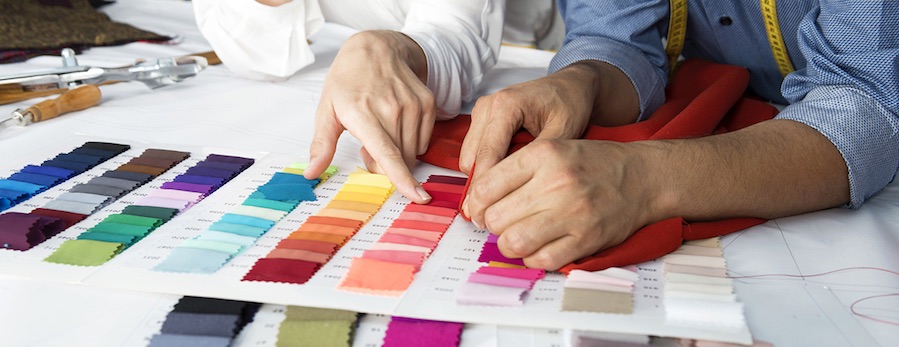
Good bye to traditional color matching – thanks to natific digital Color Systems (c) 2019 natific
Everyone is talking about the climate – and that goes for the textile industry, too. As digitalization advances and new technologies emerge, the product development process is becoming more and more sustainable. Color matching is the only step that is often still a manual, time consuming process. Digital solutions offer tremendous optimization potential, with high 1st-Hit-Ratios that reduce production lead times by up to 6 weeks.

In addition, CO2 emissions can be significantly reduced because digitalization helps to match colors more accurately and precisely, rendering post-production color adjustments obsolete. It also eliminates the need to ship physical lap dips and production strike-offs by costly couriers. natific will be providing more information on its color solutions at the Performance Days trade fair at Messe München, Hall C1, Booth Q 20.

“There are very clear advantages: In addition to greater sustainability and shorter production times, it is the uniform color values within a collection that speak most in favor of switching to digital color matching,” says Christoph Bergmann, Senior Partner of Switzerland-based natific AG. “But it does require everyone in the entire supply chain to rethink their practices.”

Once companies decide to digitalize their color matching processes, natific offers them not only expert software solutions, but also extensive support and training for the transition. Today, 9 of the top 20 US-based brands work with natific systems. Three of the world’s largest sportswear suppliers — namely adidas, Nike and Under Armour — are among natific’s customers. 

natific ColorWarehouse – Real-time color management system

In order to provide customers with a platform for monitoring color production in real-time, natific developed its ColorWarehouse. This industry-first B2B software solution ensures high precision and reproducible color results for both brands and suppliers. All color data from the supply chain are transferred to a cloud-based system for central information management. Designers no longer need to send physical color samples or make visual assessments. In addition, there are fewer surprises when colors are off-shade or show metamerism. Dye houses actually self-approve colors when they are within tolerance. Key performance indicators (KPIs) can be benchmarked across different mills, services tracked and monitored, and quality issues minimized. Development cycles are shortened by an average of four to six weeks while color quality is elevated.


Beyond production monitoring functionalities, the system enables strategic supply chain management. Solid indicators help identify key performers and facilitate decision-making that supports supply chain optimization. 

ASAP – the analysis tool for generation 2.0 color managers

Another innovative product from natific AG is ASAP, a B2B platform for digital and physical color development that helps brands and affiliated suppliers efficiently achieve the greatest possible color accuracy. Based on a brand’s color standards, the system tracks key indicators for digital and physical color matching as well as for evaluating a supplier’s quality and delivery performance. This gives retailers and brands reliable information about whether and by when suppliers can execute a desired colorway, print or pattern. Suppliers, on the other hand, can optimize their dye formulas and reduce or completely eliminate lengthy lab dipping processes by using digital color approvals. In short, ASAP tells customers very clearly how accurately a supplier can produce a given color for a given material before going into production.

Fully integrated for precise color results

In contrast to traditional platforms that solely provide digital color data to suppliers, ASAP works by enabling a two-way interactive exchange between brands and their suppliers. The platform’s ability to seamlessly integrate into existing IT infrastructures, such as Product Lifecycle Management (PLM) or Enterprise Resource Planning (ERP), ensures smooth communication. Traditional data management based on the exhange of emails and Excel sheets can be eliminated. ASAP is the perfect way for textile and apparel companies to start digitizing their colors and create sustainable color processes for the future.

Performance Days

natific’s portfolio of product and services will be showcased at the Performance Days event on November 13 and 14 in Hall C.1, Booth Q 20. Christoph Bergmann will be giving in-depth presentations of the natific systems (ColorWarehouse, ASAP and WhiteWarehouse) and services, using a number of real-life case studies. 


More News from TEXDATA International

#ITM 2026

ITM 2026: The new geography of textile production

New production hubs are emerging across North Africa and Central Asia, while Türkiye is accelerating its transformation toward higher-value, technology-driven and more sustainable textile manufacturing.

#Research & Development

“Production is a product”

From technical textiles and AI-driven robotics to the limitations of textile circularity: Professor Dr Thomas Gries looks back on more than two decades of development at ITA Aachen. In the interview, he explains why production technology remains a decisive success factor, discusses international collaborations and innovation ecosystems, and shares his views on the transformation of production landscapes and the challenges facing an increasingly regulated industry.

#Knitting & Hosiery

“We need to move away from the price trap and return to a value-driven mindset.”

With its new Textile Innovation Center, KARL MAYER is sending a strong signal for innovation, collaboration, and the future of textile applications. In this interview, Karl Josef Mayer discusses new opportunities in warp knitting, the processing of staple fibres, recycling, the changing role of machinery manufacturers, and why the textile industry must once again focus more strongly on the value of textiles. by Oliver Schmidt

#Associations

“Innovation, resilience and international experience remain the great strengths of the Swiss textile machinery industry”

Geopolitical uncertainty, growing competitive pressure from China, new free trade agreements and the shift towards a circular economy are currently reshaping the global textile industry. In this interview, Cornelia Buchwalder discusses the current mood within the Swiss textile machinery sector, the industry’s distinctive innovative strength, new market opportunities in India and Asia, and the technological trends that could shape the upcoming trade fair cycle leading up to ITMA 2027.

More News on Software

#Texprocess 2026

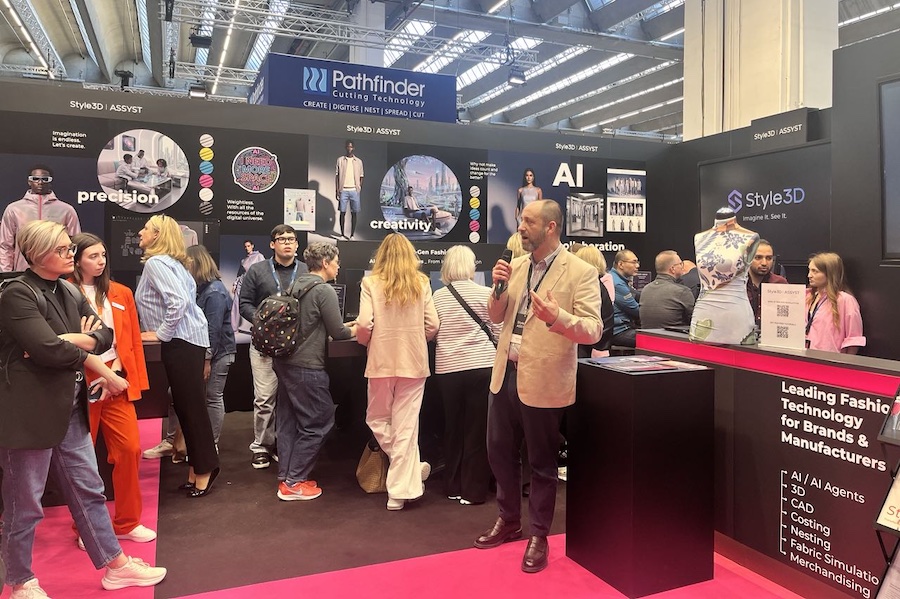
Texprocess 2026: Style3D | ASSYST showcases AI, 3D, 2D and automation and meets strong industry response

Four days, countless discussions and a clear signal from the industry: the future of fashion is digital and AI-driven. At Texprocess 2026, Style3D | ASSYST demonstrated how AI, 3D and automation are already fundamentally transforming processes from design to production.

#Software

Coats Digital appoints Himanshu Mehrotra as Managing Director to lead next phase of cloud and AI-driven innovation

Coats Digital is delighted to announce the appointment of Himanshu Mehrotra as Managing Director to lead the company’s strategic direction, innovation agenda, and global growth as it accelerates the development of its cloud-native, AI-powered software solutions for the global apparel and footwear supply chain.

#Software

Tunicotex Group boosts OTDP to 85%, cuts planning time by 25% & expands production capacity by 40%

Coats Digital is delighted to announce that following the implementation of FastReactPlan, leading Tunisian premium knitwear manufacturer, Tunicotex Group, has significantly improved its on-time delivery performance from 75% to 85%, reduced planning time by 25%, minimised delays and penalty costs, and unlocked 40% additional capacity to take on more customer orders and support sustained business growth.

#Industry 4.0 / Digitalization

Suzhou Tianyuan boosts costing accuracy to 98% with Coats Digital’s GSDCost

Coats Digital is delighted to announce that Suzhou Tianyuan Garments Co., Ltd., a leading manufacturer of high-quality sportswear and functional apparel for global brands such as Adidas, FILA, ANTA, and The North Face, has achieved remarkable productivity and cost management improvements following the implementation of Coats Digital’s award-winning method-time-cost optimisation solution, GSDCost.

Latest News

#Textile processing

Pathfinder expands into Mexico to support growth across Latin America

Pathfinder Australia Pty Ltd, a global manufacturer of advanced cutting room technology for the textile and related industries, today announced the launch of Tecnología de Corte Pathfinder, S. de R.L. de C.V., its new Mexico-based subsidiary.

#Yarn & Fiber

R-Evenge chooses Q-NOVA® yarn by Fulgar for its line of technical socks dedicated to wellness

Q-NOVA®, Fulgar’s sustainable polyamide 6.6 yarn, has been selected by R-Evenge for the development of its collection of technical socks dedicated to wellness, fitness, and water-based activities.

#Technical Textiles

FILTREX™ India 2026 to bring global filtration leaders together in New Delhi

EDANA, the voice of nonwovens, in partnership with the Business Coordination House (BCH), will welcome filtration professionals from across the world to FILTREX™ India 2026, taking place on 7–8 October 2026 at the Eros Hotel, New Delhi.

#Spinning

Ibrahim Fibres and Trützschler: A strong partnership enters its next phase with the TC 30Si

For more than two decades, Ibrahim Fibres and Trützschler have grown side by side, driven by a shared ambition to continuously improve spinning performance, strengthen technology leadership and set new benchmarks in the textile industry. Today, Ibrahim Fibres is a leading yarn and polyester staple fiber manufacturer in Pakistan. The company operates the largest number of Trützschler cards in the country, with more than 200 machines running across its mills in Faisalabad, and plays an important role in one of Asia’s largest textile industries.

TOP