[pageLogInLogOut]

#Software

Fashion on demand by Lectra and Balsan technology takes uniform making to the next level

(c) 2019 Lectra
To meet new challenges in the professional garment market and preserve over a century of savoir-faire, Balsan chose Lectra to modernize its production tools.

The challenge

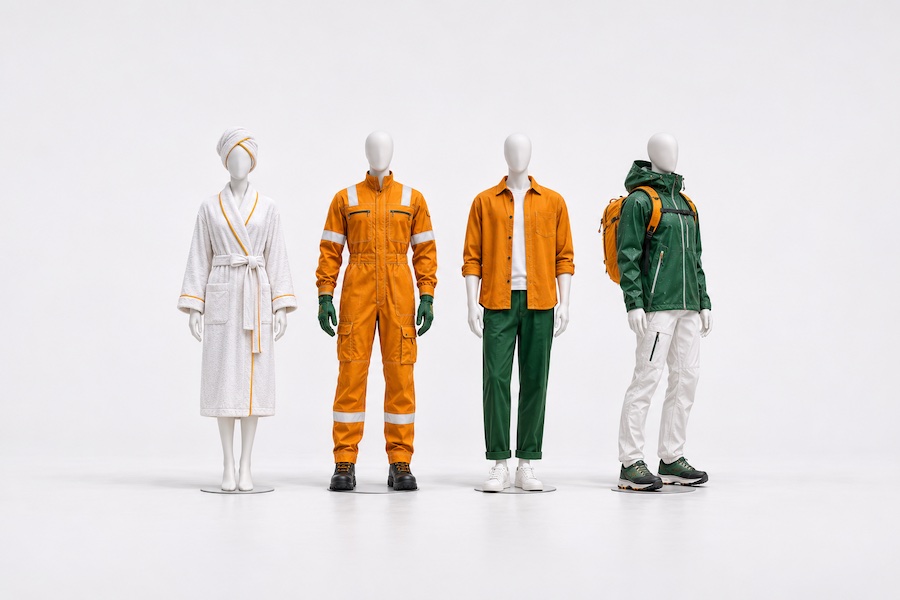
A Groupe Marck company, Balsan designs and manufactures corporate and ceremonial clothing, tailored and customized uniforms, and personal protective equipment and clothing for the public and private sector which comply with international standards. The biggest challenge is to meet the new expectations of customers who seek increasing levels of customization with ever-shorter time-to-market deadlines. The professional garment sector is subject to the same pressures as pre?t-a?-porter, and Balsan’s challenge was to produce customized clothing more quickly using intelligent manufacturing methods.

Lectra's response

Balsan was a pilot partner for the Fashion On Demand by Lectra solution. This alliance allowed Groupe Marck to take a new approach, involving not only the use of Fashion On Demand by Lectra’s connected cutter, but upstream software solutions as well, which are con gured based on the company’s needs to best match its work methods while updating and accelerating the production process.

Results

“Using a measurement chart, Fashion On Demand by Lectra allowed us to generate well-adapted and customized patterns with which to produce our garments. The solution also provides extensive exibility: we can send the model to the cutter, select the cutting orders and even group them by fabric, and detect defects and launch re-cuts when necessary. This improves overall performance and delivers estimated productivity gains of 7%”.

Stephane Quiniou, Industrial and Quality Director, Groupe Marck

Created in 1850, Balsan is a key player in professional garment making.

Balsan took up a two-fold challenge: update its manufacturing tools while maintaining a large part of its clothing production in France to capitalize on the group’s traditional savoir-faire, and meet 21st century challenges.

“Working together with Lectra, we’ve been able to optimize the Fashion on Demand by Lectra solution so that it meets our requirements perfectly. The next step is to go even further by connecting our ERP and production sites, so that once orders are received, the machine generates the customized uniform patterns and sends the cutting orders to the necessary workshops.”

Stephane Quiniou, Industrial and Quality Director, Groupe Marck


Producing for professionals: customization and very tight deadlines

The professional garment sector is highly diverse, in terms of clothing types and the materials used. The crafting techniques and ergonomics required for a Republican Guard uniform are completely di erent to those used for personal protective clothing.

Previously, we had to take an individualized and time-consuming approach for each order. Patterns that required several hours of adjustments to each customer are now processed automatically once our patternmakers receive the data. Ste?phane Quiniou, Industrial and Quality Director at Groupe Marck, describes the modernization process: “Lectra’s new solution allowed us to be far more reactive, far more exible, and to adapt more quickly to speci c requests from customers”.

Multi-site management: greater agility to prepare for the future

Balsan’s activities are spread over several sites in France and abroad, so the need for a multi-site approach was evident when designing a plan to modernize production tools, explained the Industrial and Quality Director.

“We install machines at di erent sites and would like to pilot them from our central o ce. Our goal is to standardize cutting orders and production across all of our sites. With a simple click, the cutting order created in Calais launches a speci c action at our site in Cha?teauroux. Being able to assign production to a speci c production line with the resources and immediate availability needed to meet a customer’s deadlines is key”.

Data security and respect for the environment: meeting new challenges

Implementing an automated solution relies on Cloud power to digitally process data, but the production of military uniforms or protective clothing involves information that is not only sensitive but also con dential. Before it began working with Lectra, Balsan asked for vigorous guarantees concerning data protection and the secure exchange of information to ensure the con dentiality of patterns. Lectra worked hand in hand with Balsan’s IT services to satisfy the professional garment- making specialist’s requirements.

Tomorrow’s challenges aren't only technical – they are environmental as well, and we cannot modernize without taking such considerations into account. “With Fashion On Demand by Lectra’s new cutting line, we discovered an energy-e cient cutter that removes the need for traditional accessories such as paper and plastic film, allowing us to reduce our carbon footprint”, says Ste?phane Quiniou.

More News from Lectra Deutschland GmbH

#Industry 4.0 / Digitalization

Lectra launches Apogy with agentic AI for fashion product development

Lectra has launched Apogy, a new cloud-based solution for fashion product development that combines product data, collaborative workflows and agentic artificial intelligence. The platform is designed to connect the different stakeholders and processes between initial design and production while using AI agents to automate tasks and support decision-making throughout the development cycle.

#Textile processing

Lectra strengthens its partnership with Caron Technology

Lectra announces the strengthening of its industrial alliance with Caron Technology, an Italian company founded in 1993 and specializing in preparation systems operating before the cutting process. This new milestone reflects the strength of a trusted relationship that has grown between the two companies over nearly two decades.

#Industry 4.0 / Digitalization

Mango joins TextileGenesis pioneering traceability solution, a Lectra company, for a transparent value chain

Mango, one of the leading international fashion groups, has joined TextileGenesis, the pioneering traceability solution for the fashion and textile industries, to trace their natural and animal fibers, synthetics, man-made cellulosic fibers and leather. TextileGenesis, a Lectra company, offers a complete and secure cutting-edge technology with its six-dimensional (6D) offering and unique “fiber forwards” approach. Mango, has long been committed to maintaining a fully transparent supply chain, and TextileGenesis will reinforce this commitment.

#Textiles & Apparel / Garment

New Retviews study by Lectra: the luxury market in 2025, between margin protection strategies and new iconic pieces

After more than a decade of uninterrupted growth, the luxury fashion market is now experiencing a more pronounced slowdown. Global luxury goods sales have fallen from €369 billion in 2023 to €364 billion in 2024 (according to Bain & Co.), exposing the vulnerabilities of a model long supported by aggressive price increases.

More News on Software

#Industry 4.0 / Digitalization

White House reduces production planning time by up to 80% with Coats Digital’s FastReactPlan

Indian garment manufacturer White House has reduced its production planning cycle by 60–80% following the implementation of Coats Digital’s FastReactPlan software. The integrated planning solution provides greater visibility across production, capacity and material requirements while supporting faster decision-making and improved delivery performance.

#Software

UNIFEQ Europe adopts Coats Digital’s GSDCost and AI-powered GSDQuest to support rapid growth

Coats Digital is pleased to announce that rapidly growing Polish defence and uniform manufacturer UNIFEQ Europe Sp. z o.o. has invested in its award-winning GSDCost solution together with its AI-powered GSDQuest platform to establish a consistent approach to garment costing, improve sewing-floor productivity and accelerate labour costing for tenders and new products.

#Industry 4.0 / Digitalization

Orient Rongheng connects production planning across China and Bangladesh with FastReactPlan

Chinese apparel manufacturer Orient Rongheng is implementing Coats Digital’s FastReactPlan to digitalize production planning across its manufacturing operations in China and Bangladesh. The project aims to connect capacity, materials and order planning across multiple factories while integrating these processes with the company’s existing ERP and Manufacturing Execution System (MES).

#Industry 4.0 / Digitalization

Coats Digital launches AI-powered GSD RealMotion for motion analysis

Coats Digital has launched GSD RealMotion, an AI-powered solution designed to provide apparel manufacturers with greater visibility into factory-floor operations. By analysing shop-floor video and applying Coats Digital’s GSD methodology, the solution turns video recordings into structured, motion-by-motion method studies.

Latest News

#Digital Printing

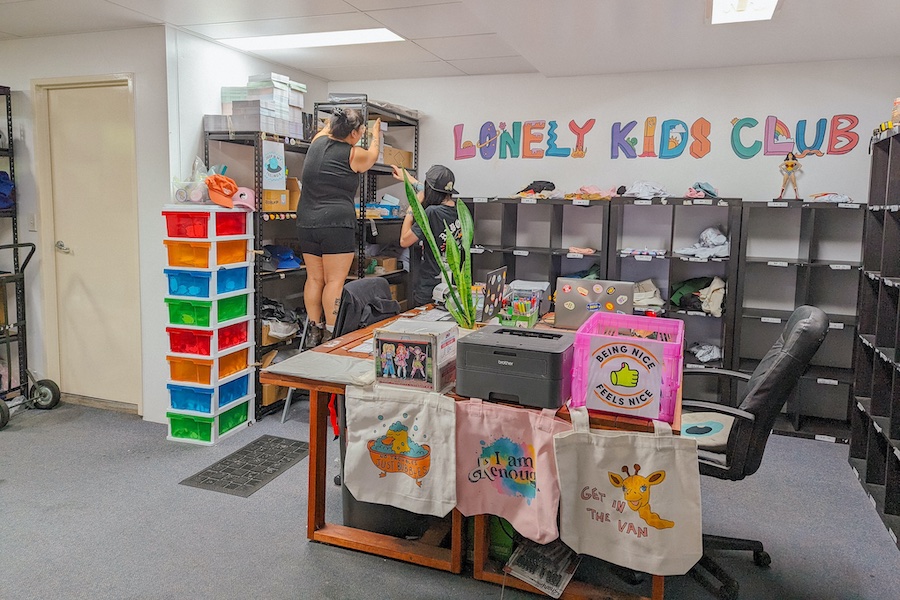
From a bedroom startup to 3,000 designs: How Lonely Kids Club built its business with DTG printing

Founded in Sydney in 2011, independent clothing label Lonely Kids Club has grown from a bedroom startup into a business offering around 3,000 graphic T-shirt designs. With its own production studio, direct-to-garment printing and a demand-driven manufacturing model, the company demonstrates how smaller apparel brands can combine creative independence with flexible production – while navigating the everyday challenges of quality control, workflow efficiency and sustainability.

#Recycled Fibers

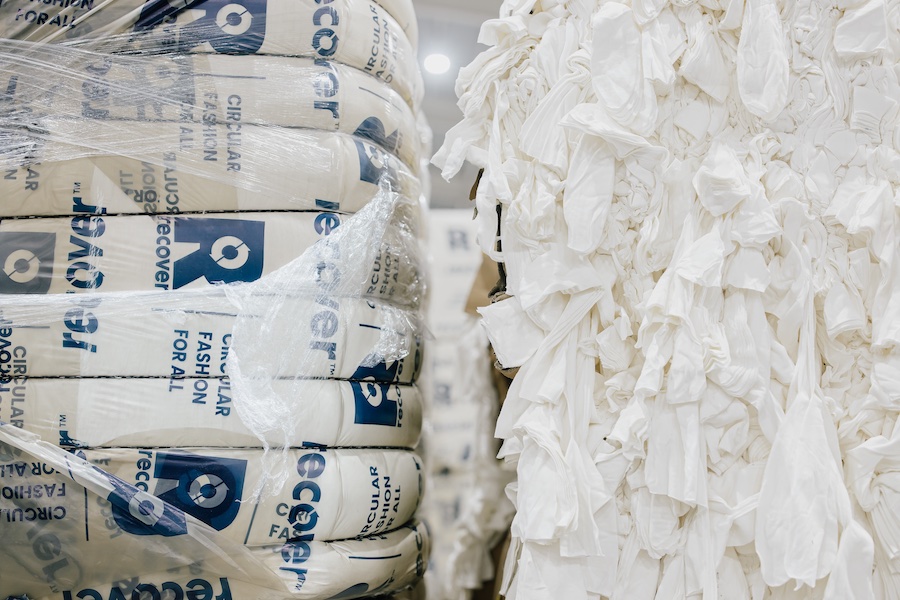
Recover and SUPIMA partner to develop recycled Pima cotton fibers and yarns

Recover and SUPIMA have partnered to turn waste from SUPIMA cotton production into a new line of recycled fibers and yarns. The collaboration will explore how recycled American-grown Pima cotton can be used in a wider range of yarns and garments for the premium market.

#India ITME 2026

India’s textile industry: Current position, growth targets and industrial development

With ambitious export targets, major investments in manufacturing infrastructure and new international trade agreements, India is pursuing a comprehensive development strategy for its textile and apparel industry. An overview of the industry’s current position, government initiatives, progress achieved and challenges ahead.

#Weaving

“A complex design is only useful if the machine can reproduce it consistently”

Andreas Schnabel, Head of R&D for Technical Weaving Systems at Stäubli, discusses how 3D weaving can create textile reinforcements tailored to the loads within a composite component, where near-net-shape weaving can reduce processing steps and material waste, and what it takes to produce complex structures reliably and economically. He also explains how manufacturers can adapt Stäubli’s modular TF weaving platforms to new applications and how the company’s centre of excellence in Bayreuth supports the transition from research to industrial production.

TOP