[pageLogInLogOut]

#Research & Development

CARL: First successful flight of a full composite rocket "made in Aachen" at EuRoC 2020
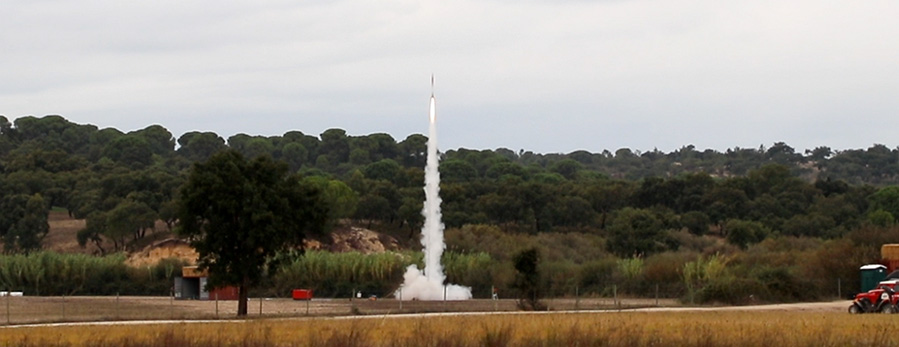
CARL launch© 2020 ITA Aachen / Space Team Aachen
Space Team Aachen receives Newcomer Award for good performance and short development time of CARL.

Space Team Aachen successfully launched its first high-performance CARL rocket EuRoC 2020 in Ponte de Sor, Portugal, on 24 October 2020

The EuRoC – European Rocketry Challenge is an inter-university competition which is similar to the well-known Spaceport America Cup (SA Cup). It was organised and hosted for the first time by the Portuguese Space Agency. 11 teams took part. The Space Team Aachen with the CARL rocket was one of four teams able to launch a technically functional rocket before the deadline. CARL consists of a full composite body designed and developed by students from Aachen. With a payload of 2530 grams and a top speed of approximately 0.57 Mach (196 metres per second), CARL reached the planned flight altitude of 1960 metres. The entire system was designed, manufactured and launched in less than a year.

Descent after main parachute is triggered © 2020 ITA Aachen / Space Team Aachen


This was driven forward by innovative technologies from the two RWTH institutes Institute for Structural Mechanics and Lightweight Design, short SLA, and Institut für Textiltechnik of RWTH Aachen University (ITA). The rocket body tubes and the rocket nose cone were manufactured using multi-supply filament winding technology. Tailored fibre placement was used to produce unique interchangeable fins. They are unique because detachable connections were integrated into the composite material during the manufacturing process.

Thanks to the successfully implemented parachute recovery system, CARL landed on the ground without damage and is now ready for a new challenge. Space Team Aachen plans to participate in the SA Cup 2021 and to develop hybrid rocket systems in Aachen, Germany.


More News from Institut für Textiltechnik of RWTH Aachen University (ITA)

#Research & Development

ITA has developed a washable digital smart jacket with real-time feedback and an AI-powered app for rehabilitation

As part of the PhysioTaix research project, the Institut für Textiltechnik (ITA) of RWTH Aachen University is developing a digital smart jacket with integrated sensors. The jacket is washable and reusable; it tracks movements during rehabilitation exercises in real time and transmits the data to an app.

#Recycling / Circular Economy

2. RETRAKT EU Conference - „Join the Circle“: Turning challenges of the textile sector into chances

On 19 November 2026, the second RETRAKT EU Conference – “Join the Circle” will take place in Brussels. The event, which focuses on the transformation of the textile sector towards a circular economy, will be held under the motto: “Turning Challenges in the Textile Sector into Chances.”

#Research & Development

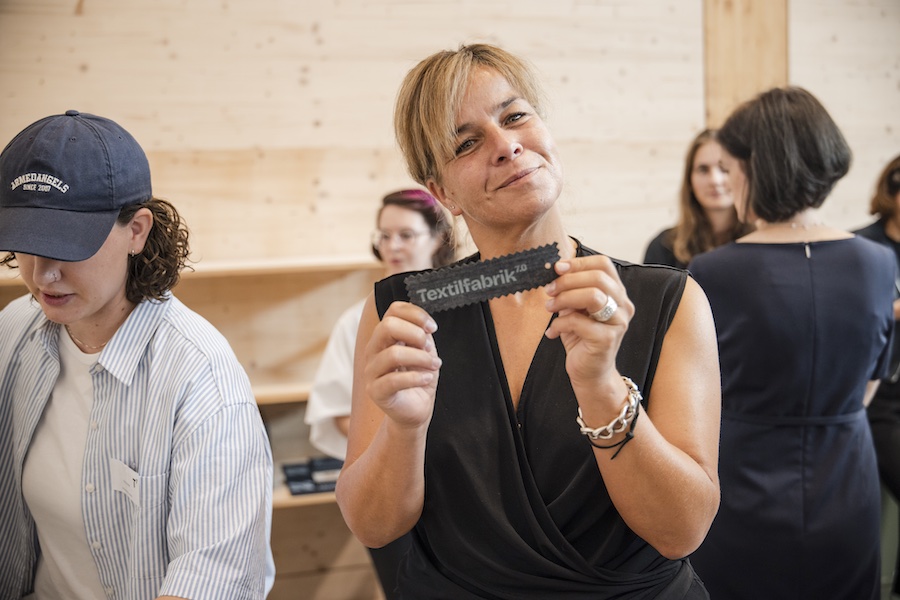
From smart jackets to laser technology: Mona Neubaur explores Textile Factory 7.0

As part of her summer tour, North Rhine-Westphalia’s Minister for Economic Affairs and Climate Action, Mona Neubaur, visited Textilfabrik 7.0 in Mönchengladbach to experience the project’s innovations first-hand. Under the motto “smart and clean”, the visit focused on innovative technologies and sustainable alternatives for textile production - from smart jackets to the decolourisation of textiles using fungal cultures.

#Research & Development

Networking Day 2026: Industry stakeholders unite around textile recycling

In 2026, the Industry Research Group (IRG) Polymer Recycling once again brought together some of the key stakeholders in textile recycling for its annual Networking Day. This year, the event took place at EREMA’s premises in Ansfelden, Austria. It brought together key players from across the textile recycling value chain for a day of structured exchange and in-depth discussions.

More News on Research & Development

#Research & Development

Reducing development times for technical textiles by accelerated thermo-oxidative aging in a high-pressure autoclave

Synthetic polymers used in technical textiles can be effectively protected against degradation caused by heat, oxygen, and water through the use of stabilizer systems. This enables service lives of several decades, extending to more than 50 years. As the use of durable technical textiles continues to grow, so does the demand for reliable methods to predict their service life within economically feasible testing periods. For the first time the German Institutes of Textile and Fiber Research Denkendorf (DITF) developed methods for robust service life prediction for textiles in an IGF research project.

#Research & Development

ADD-ITC 2026 highlights strong industry participation

The Aachen-Dresden-Denkendorf International Textile Conference (ADD-ITC) 2026 will place a strong focus on the exchange between textile research and industry when it takes place on November 26–27, 2026, at the International Congress Center Dresden. According to the preliminary conference program, more than two-thirds of all presentations will be contributed by companies or jointly presented by industry and research institutions.

#Research & Development

Novel flame-retardant and recyclable fiber-reinforced composite

Airplanes and passenger trains must meet strict safety requirements, including fire safety standards. This calls for materials that are flame-retardant, lightweight, robust, and scalable. Empa researchers, in collaboration with their industry partner Elantas, have now succeeded for the first time in making such a material – a composite – fully recyclable.

#Research & Development

MELANGE starts with a co-creative design workshop at Aalto University to shape the visual identity of this new project transforming colouration in textiles

Over the next three years, MELANGE will lower the environmental impact of interior textile production by moving colour design to the beginning of the manufacturing process. This Horizon Europe project officially started on 1 August 2026, and will be publicly launched on 27 August 2026.

Latest News

TOP