#Recycling / Circular Economy
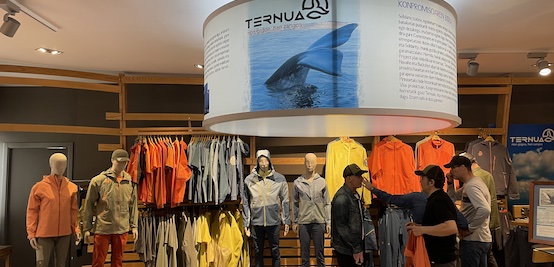
Ternua makes progress in circularity with a 50% mono-material fw 2025-2026 collection
Their commitment to minimizing the impact of their business on the environment has led them to a design where all their garments have water-repellent treatments free of substances that are toxic for the environment, all the down is recycled, the wool is recycled and responsibly sourced, the cotton is organic, recycled or regenerative, and 90% of the polyester and polyamide is recycled. It’s a collection with a lot of differences between the more technical outdoor ranges and the urban line. It’s well thought out and has very interesting new products that are an addition to an ongoing series of garments that have been very successful in previous seasons, and that show that technicity, style and responsible design can go hand in hand.
There are new products in the Adrenalite and Trekking collections in the technical outdoor lines. In terms of color, there have been some changes. Less bright colors have been chosen, but there are touches of stronger color on the ribbing, liners and zippers that give them a technical look, while keeping the mix & matchability among garments. In the Adrenalite line, designed for intense aerobic activities in the mountains, the SPIKE HYBRID JKTand EHUN MILAK JKT should be highlighted. The latter was designed in collaboration with people who participated in the Ehun Milak mountain race. All the Adrenalite clothing is characterized by its light weight, compactibility, multi-functionality and carefully considered technical details. In the Trekking line, the range of jackets with synthetic filling is now mono-material, thanks to the use of Primaloft Gold Luxe and technical polyester textiles. Among them we can highlight the BIONIC VEST, BIONIC HOOD and JAKSAM models, which come in different thicknesses to deal with different temperatures. In general, new colors have been used. And improvements have been made to some garments like a hood, pockets, or the same weight in jacket filling, etc. The hard work done by the brand in these more technical outdoor lines deserves recognition. Especially in the third layers, where they have striven for functionality and circularity at all times.

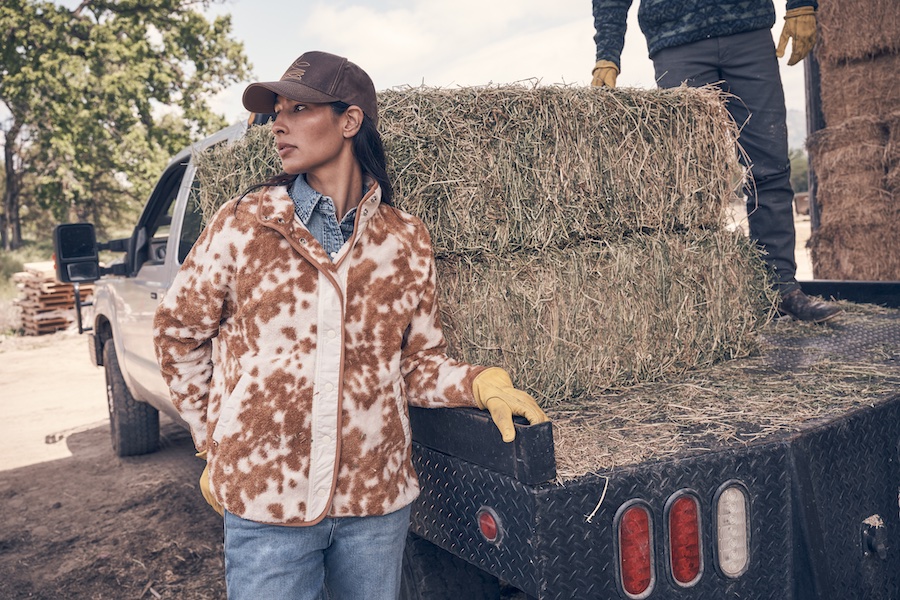
In the more urban line, New Earth Spirit, the clever redesign of the garments already presented in previous collections and the more earthy colors used are refreshing. Like always, in their eagerness to find new environmentally friendly solutions, Ternua has applied touches of innovations through low-impact textiles and technology. An example of that is the INNU LOW IMPACT collection of fleeces, where 15% fewer colorants, 22% less electricity for heating and cooling, 50% less thermal energy to create steam and 60% less water than conventional dying were used in the dying process. Or the STONEY sweatshirts that have Delta Fremo technology which, thanks to the 4 layer (2 exterior and 2 interior) construction of the textile, heat is trapped to keep the body warm, provide volume and, in addition, it loses fewer microfibers when washed. In the BALENA collection, the section with outside coats, which use Primaloft Silver Insulation and are mono-material the 133 g thickness variant is used, and the Balena COAT for women. On the other hand, the LATXA WOOL jacket that has filling made from recycled wool from the latxa sheep, which is native to the Basque Country, is being presented with a new design with flap pockets outside on the breast and a more cottony outer textile. Likewise, the TRITON jackets, with a modern look, have new color combinations that are definitely going to be popular with young people.
Ternua is presenting their 2025-2026 Fall-Winter collection at ISPO, specifically at stand A2.306.