[pageLogInLogOut]

#Recycling / Circular Economy

Rieter and Recover: Cooperation in the field of recycling
© 2023 Rieter
International governments and downstream consumers call for greater cooperation in the textile industry for a circular economy. It is becoming more significant to make a combined effort with other major stakeholders in different areas to respond to the increasing demand for transition.

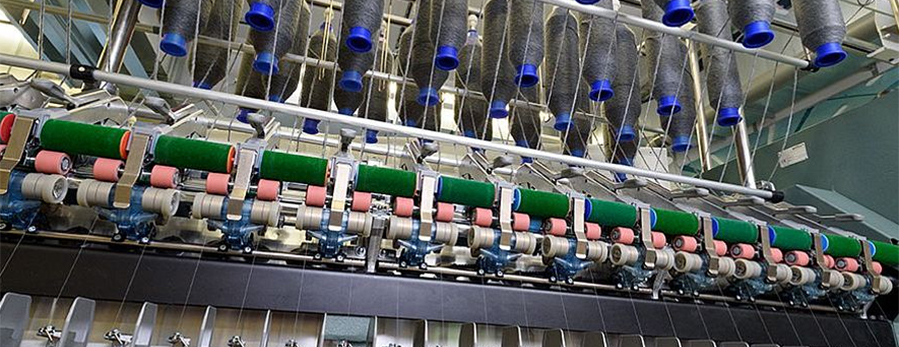
Rieter and Recover agreed to join hands for technological advancements and research projects in the field of recycling. Both parties will work together to conduct trials and initiatives with various recycled raw materials and blends to build a solid foundation for textile circularity.

Rieter has high competence in customized spinning systems for staple fibers including recycled materials and Recover has developed its expertise in processing and applying high-quality recycled fibers. Both parties are expected to create synergies by improving the processing of pre-and post-consumer recycling materials.
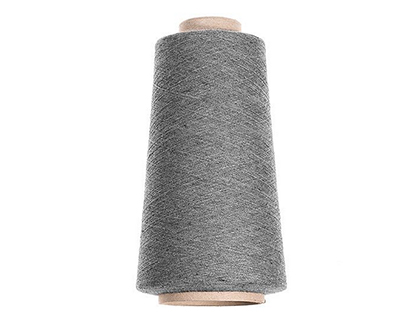
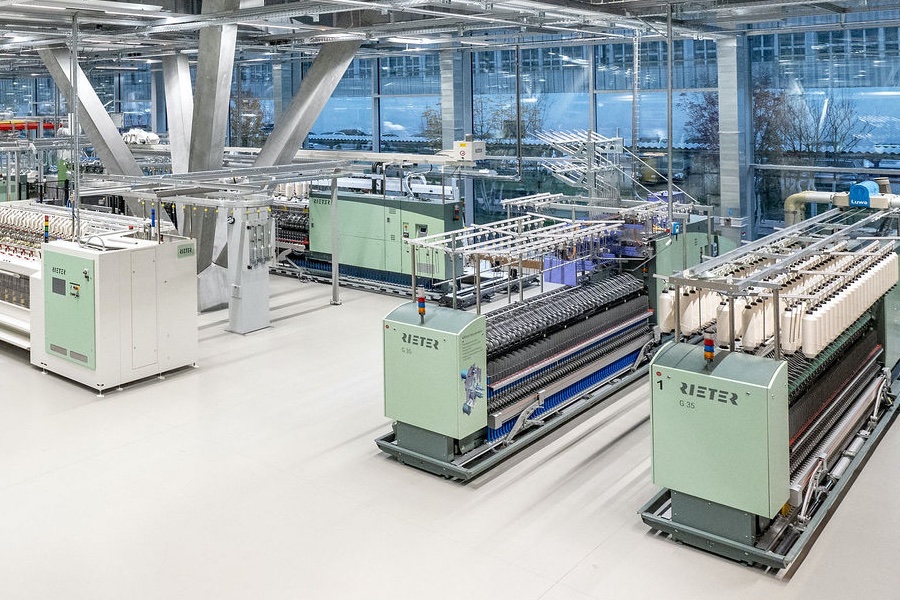
In a trial, high-quality yarn was produced with recycled material from Recover with Rieter ring spinning machines. © 2023 Rieter


Recover™ and Rieter partner to reshape sustainable textiles

This joint cooperation is betting on ambitious research that hopes to increase the availability, applicability and use of recycled textiles as raw materials.

Agents of change: investing in the future of recycled fibers

Potential new blends

Rieter and Recover™ have joined hands to develop technological advancements and research projects in the field of recycling. Both parties are working together to conduct trials and initiatives with various recycled raw materials and blends to build a solid foundation for textile circularity.

Specifically, they are working to amplify Recover's catalogue of blends, Recover announced in the press release. The challenges lie in mechanically recycling diverse fabrics without sacrificing the integrity of the resulting fiber.

New horizons for post-consumer textile waste

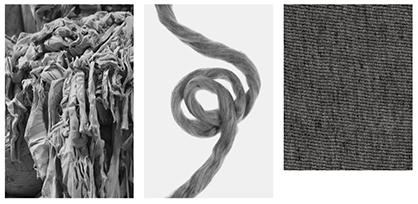
Most of the textile waste Recover currently recycles is either post-industrial or pre-consumer as both are easier to sort – by composition and by color. Post-consumer waste, on the other hand, is more challenging as pieces’ composition varies widely (from 100% cotton to cotton/polyester blends and rayon).
© 2023 Rieter
© 2023 Rieter


With Rieter, Recover hopes to change that. They’re working side by side to be able to scale the recycling of post-consumer textiles and still produce the highest-quality recycled fiber.


Rieter has high competence in customized spinning systems for staple fibers including recycled materials and Recover™ has developed its expertise in processing and applying high-quality recycled fibers. Both parties are expected to create synergies by improving the processing of pre-and post-consumer recycling materials and to extending the scope of use of recycled fibers with improved processes and machines.

Improved traceability

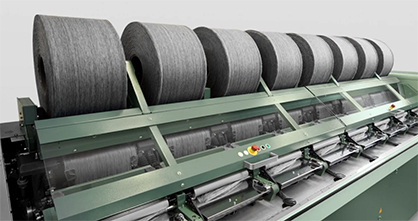
Rieter and Recover™ are collaborating with 3rd parties such as universities to verify how much recycled fiber is left in the yarn when applying new processes. This collaboration is expected to help the textile industry enhance the competence of verifying real recycled material usage.
© 2023 Rieter
© 2023 Rieter


Promising alliances for a promising future

"We’re excited to see where this cooperative research takes us. We’re thrilled to continue working alongside Rieter as we work towards a circular textiles future", Recover said in a statement.



More News from Rieter Textile Systems

#Spinning

Rieter advances strategic repositioning amid market volatility

Rieter successfully completed the acquisition of Barmag on February 2, 2026, and reached an important milestone in the company’s repositioning. Barmag will be integrated into the Rieter Group as the “Man-Made Fiber” Division. With this strategically transformative acquisition, Rieter is expanding its core business beyond the short-staple fiber business in a targeted way. This positions Rieter as the global market leader along the entire value chain for natural and man-made fibers. In addition, as a complete systems supplier, Rieter is further strengthening its technological leadership in the areas of automation and digitization.

#Spinning

Rieter responds to higher raw material prices

Global political and economic developments have been leading to rising raw material and energy costs for some time. The textile machinery industry is also affected by this trend. Rieter machines and components consist to a large extent of steel, copper, aluminum and electronics. These materials in particular have seen higher demand and higher prices in recent months.

#Spinning

Rieter completes acquisition of Barmag

Rieter has successfully completed the acquisition of Barmag as of February 2, 2026. This strategically important acquisition makes Rieter the world’s leading system provider for natural and synthetic fibers.

#Spinning

Rieter adjusts group structure in preparation for Barmag integration

The planned acquisition of the “Barmag” Division of OC Oerlikon will create the leading system provider worldwide for natural and man-made fibers. Rieter is confident it will receive all regulatory approvals to complete the acquisition in the fourth quarter of 2025. The Rieter Group is therefore adjusting its Group structure as of January 1, 2026, to take this acquisition into account and to be able to provide an even more agile response to market challenges.

More News on Recycling / Circular Economy

#Recycling / Circular Economy

AI Circular Economy Conference 2026 fuels innovation at the intersection of AI and Circular Economy

The AI Circular Economy Conference 2026, organised by nova-Institute, brought together 116 participants from 15 countries in Cologne and online to explore the transformation of the chemical and materials industry supported and accelerated by artificial intelligence. During the two-day event, leading experts from industry, research, start-ups and the investment community discussed how AI can maximise the potential of renewable carbon creating efficient circular value chains. The conference featured 24 presentations and multiple panel discussions, highlighting the growing convergence of digital technologies and circular material systems. It demonstrated how artificial intelligence is progressing from the experimental stage to real industrial implementation within the circular economy.

#Recycled_Fibers

Circ deepens access to recycled fibers with Xinxiang Bailu Chemical Fiber Co., Ltd. partnership agreement

Circ®, a global leader in textile‑to‑textile recycling, today announced a new partnership agreement with Xinxiang Bailu Chemical Fiber Co., a Canopy Dark Green Shirt producer and one of the world’s leading producers of viscose filament. The agreement marks a significant step in Circ’s continued expansion in China and strengthens its position within the country’s rapidly evolving circular textile ecosystem; further supporting Circ’s ability to supply recycled fibers near existing fashion supply chains.

#Recycled_Fibers

Worn Again Technologies unveils the Accelerator

Worn Again Technologies unveils the Accelerator, the next major step towards commercialising its pioneering Textile-to-Fibre recycling process and proving the technical and economic feasibility of polycotton recycling.

#Recycling / Circular Economy

Textile‑to‑textile recycling leader Circulose joins Spinnova’s ecosystem to accelerate technology scale‑up

Textile‑to‑textile recycling leader Circulose joins Spinnova’s ecosystem (consortium) to help advance the scale‑up of Spinnova’s technology. Spinnova has actively sought partners to accelerate commercial scale‑up, and Circulose, as a key player in textile recycling, strengthens the ecosystem by providing a raw material that is in high demand across the industry.

Latest News

#Techtextil 2026

DIENES at Techtextil 2026: Flexible pilot lines for bio-based fiber development

The growing relevance of bio-based materials in technical textiles is accompanied by increasing demands for reproducibility, high-quality data, and scalable process routes. Especially when working with cellulose and its derivatives, chitosan, lignin-based approaches, or bio-based PAN as a carbon-fiber precursor, R&D teams face variable feedstock quality, tighter process windows, and the need for reliable comparability across trials. This calls for flexible, data-driven experimental setups that can be reconfigured efficiently when recipes, solvents, and raw-material batches change.

#Texprocess 2026

Gunold showcases embroidery product range and services at Texprocess

At Texprocess 2026, GUNOLD will present numerous hands-on examples related to embroidery in Hall 8, Booth E20. The focus is on creative embroidery designs as well as the extensive product range of threads, nonwovens, and accessories for embroidery and embellishment. “Trade visitors can once again look forward to many new and creative embroidery designs. Of course, we will also showcase the matching products required to bring these ideas to life,” announces Marketing Manager Stephan Gunold.

#Nonwovens

EDANA and more than 70 industry organisations call for consistent exemptions in EU packaging regulation

EDANA, together with more than 70 industry associations and organisations, has issued a joint statement commenting on the European Commission’s Delegated Act under Article 29 of the Packaging and Packaging Waste Regulation (PPWR).

#Raw Materials

A Powerful Opening: Global thought leaders launch the International Cotton Conference Bremen

The International Cotton Conference Bremen will open on 25 March 2026 in the Parliament building of the Free Hanseatic City of Bremen with a keynote session of exceptional calibre. Distinguished international experts will set the stage for the conference by offering incisive perspectives on the most pressing challenges and the defining trends shaping the future of the global cotton trade. Their insights will span a broad spectrum — from geopolitically driven disruptions affecting global supply chains to the opportunities emerging from innovation-led agriculture capable of supporting a growing world population. Together, these opening keynotes will frame the dialogue of the conference, highlighting both the complexity of today’s market environment and the pathways toward a resilient and forward-looking cotton sector.

TOP