[pageLogInLogOut]

#Recycling / Circular Economy

HeiQ and Renewcell partner-up to replace polyester and nylon with HeiQ AeoniQ yarn manufactured from Circulose® pulp
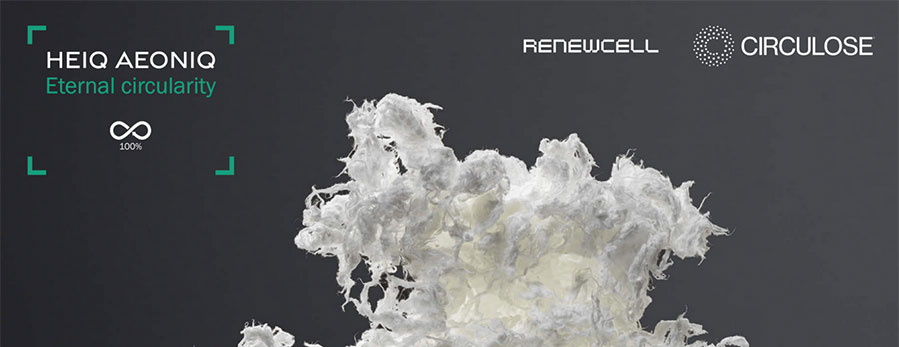
© 2022 HeiQ
Prioritizing the replacement of environmentally polluting polyester in textiles has led to Swedish Renewcell and Swiss HeiQ signing a strategic partnership to manufacture circular HeiQ AeoniQ cellulose filament yarn from textile-to-textile recycled CIRCULOSE® pulp supplied by Renewcell. This partnership enables the incorporation of recycled raw materials in the most modern, climate positive and environmentally friendly yarn production process to enable 100% circularity in the textile industry.

Capitalizing on their shared vision of a circular and bio-based textile industry, HeiQ and Renewcell have joined forces to commercialize 100% circular and biobased high-tenacity filament yarns as a viable replacement for fossil-based fibers like nylon and polyester at scale. Promising results in initial tests using Circulose® as a feedstock for production of HeiQ AeoniQ yarn create an opportunity to for collaboration between the partners in their effort to lead the current textile industry transformation, positioning both companies and Europe as a pioneer region incorporating recycled raw materials in the most modern and environmentally friendly yarn production processes that allow true circularity in the textile industry.

Circulose® – a Circular Cellulose

Circulose® is a branded dissolving pulp product that Renewcell makes from 100% textile waste, such as worn-out jeans and production scraps. Dissolving pulp cellulose is what the textile industry uses to make viscose, lyocell, modal, acetate other types of regenerated fibers (also called ‘man-made cellulosic fibers’). The only difference with Circulose® is that it’s made from textile waste instead of wood. Cellulose is the most abundant organic polymer in the world. It’s what makes up the cell walls of most plants and trees. The purest cellulose found in nature is cotton.

Patrik Lundström, CEO of Renewcell says: “Our 100% recycled textile pulp, Circulose®, was born of the idea to do something better than dump or burn the millions of tonnes of waste this industry creates every year, while also decreasing the need for new high impact virgin materials. Over the last years two years, we have successfully proven the applicability of Circulose® as a direct substitute to virgin cotton and wood as a raw material in fashion. The challenge of how to use Circulose® as a direct substitute for oil in high tenacity perfomance fabrics has remained, until now. Our partnership with HeiQ, a company that fully shares our vision, utilizes Circulose® as a feedstock for the game changing HeiQ AeoniQ yarn and positions us both for a massive breakthrough in the right disruptive direction for the global textile industry. 100% textile-to-textile recycled, bio-based, biodegradable and with the physical performance of polyester and nylon – a Circulose® HeiQ AeoniQ Yarn will excite any brand interested in climate and environment.”


HeiQ AeoniQ cellulosic yarn made of climate positive raw materials

“This latest strategic partnership with Renewcell is further proof of how circularity motivated suppliers to the textile industry can collaborate and be the movers and shakers that drive the transformation of the industry to becoming more environmentally friendly. With Circulose as one source of feedstock for our HeiQ AeoniQ we will be rescuing tons of textiles from ending up in landfills and preserving our trees and forests. We eagerly anticipate uniting our ingredient branding expertise to jointly convince brands of the huge advantages of replacing all synthetic, fossil-fuel based textiles and how embracing circularity is both in their interests as well as those of their customers and the planet,” says Carlo Centonze, co-founder and CEO of HeiQ.

HeiQ AeoniQ yarns (Aeon: striving for eternal circularity) are made out of cellulosic biopolymers that during growth bind carbon from the atmosphere while generating oxygen. This high-performance yarn is positioned to potentially substitute synthetic filament yarns which constitute over 60% of global annual textile output of 108 million metric tons. Further, when compared to conventional cellulosic products, HeiQ AeoniQ yarns do not draw on arable land, pesticides or fertilizer in their production.

HeiQ AeoniQ yarns are designed for cradle-to-cradle circularity and can be recycled repeatedly while maintaining consistent fiber quality. The manufacturing process is expected to consume 99% less water than cotton yarns and HeiQ AeoniQ is designed to offer comparable performance properties to polyester, nylon and conventional regenerated cellulose yarns.

More News from HeiQ Materials AG

#Textile chemistry

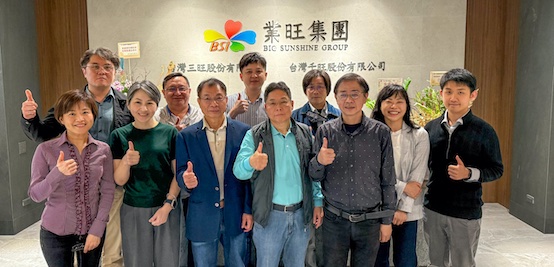
HEIQ expands in ASIA with BIG SUNSHINE as key partner

HeiQ, a global leader in materials and textile innovation, is strengthening its presence in Asia by onboarding BIG SUNSHINE CO., LTD. as a key full-service partner in the region. This collaboration aims to further improve HeiQ’s overall service capabilities in Taiwan and across the wider Asian region, furthering its vision of global expansion and footprint in Asia.

#Textile processing

HeiQ announces return to private company structure

HeiQ, a leading innovator in materials technology, announced its decision to return to private company structure from the London Stock Exchange as part of a strategic move to focus resources, streamline operations, and accelerate growth, effective November 19, 2024 (LSE:HEIQ). HeiQ shares will continue trading on the JP Jenkins securities or a similar matching platform from November 20, 2024.

#Denim

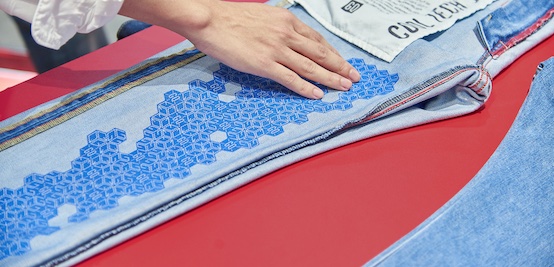
HeiQ and GQ Apparel bring biobased cooling to denim in Thailand

HeiQ, a global leader in textile and materials innovation, proudly announces a strategic cooperation with GQ Apparel, a premier Thailand-based tech apparel brand. GQ Apparel enhances it denim offering with HeiQ’s advanced cooling solution, marking a significant milestone in the Southeast Asian market.

#Textile chemistry

HeiQ expands application of HeiQ Allergen tech to upholstery fabric through collaboration with CULP

HeiQ partners with Culp to apply HeiQ Allergen Tech, a 100% biobased* solution that reduces allergens on textiles, onto interior upholstery fabric. HeiQ announces the extended application of HeiQ Allergen Tech to bring the benefits of this biobased textile technology to the interior upholstered furniture market, marking a unique launch into this segment.

More News on Recycling / Circular Economy

#Spinning

"We will become a recycling powerhouse"

The textile industry is now in its fourth consecutive year of crisis, while automation, artificial intelligence and recycling are reshaping the rules of the game. In this interview, Rieter CEO Thomas Oetterli discusses the first signs of a market recovery, reflects on his first three years at the helm of the company, explains the integration of Barmag, outlines Rieter’s vision of the fully automated spinning mill and highlights the strategic importance of recycling. In doing so, he explains why the new Rieter Group aims to play a leading role in transforming the textile value chain into a circular economy.

#Recycling / Circular Economy

Countdown to Textiles Recycling Expo 2026: Brussels prepares for Europe’s textile recycling gathering

With only two weeks remaining until the start of the second edition of the Textiles Recycling Expo 2026, preparations are entering the final phase. The exhibition and conference, dedicated exclusively to textile recycling and circularity, will take place on 24–25 June 2026 at Brussels Expo and is expected to attract stakeholders from across the textile recycling value chain.

#Recycled Fibers

Indorama Ventures enables brands to scale circular textiles through proven, traceable supply chains

Indorama Ventures, a global leader in recycled polyester staple fibers and filament yarns, will exhibit at Textiles Recycling Expo in Brussels on June 24–25. At the event, the company will show how brands and textile manufacturers can build traceable, circular textile supply chains by working with proven partners who deliver recycled materials on an industrial scale.

#Recycled Fibers

RECOVER™ launches Recover™ Yarns to accelerate recycled cotton uptake

Recover™, a leading materials science company and one of the world’s largest producers of recycled cotton fiber, today announces the launch of Recover™ Yarns, a curated portfolio of ready-to-use yarn solutions designed to accelerate the adoption of recycled cotton across the apparel supply chain.

Latest News

#

TERNAfil wins first place at PitchMiUp Night 2026 in Minden

The RWTH spin-off TERNAfil has developed MAXCarbon, a new high-performance hybrid fibre that combines the mechanical performance of carbon with the temperature and corrosion resistance of ceramic materials. For this development, TERNAfil was awarded first prize at the PitchMiUp Night in Minden on 21 May 2026.

#Nonwovens

Lenzing Group highlights scalable, bio-based nonwovens solutions at leading global industry fairs

From CIDPEX in China to Techtextil in Frankfurt and INDEX in Geneva, the Lenzing Group showcases ready-for-market, bio-based nonwoven solutions and receives industry recognition for LENZING™ Nonwoven Technology.

#Research & Development

Carbon-ceramic hybrid fibre proves its worth – NRW Minister for Science Mona Neubaur congratulates ITA start-up TERNAfil

MAXCarbon technology, a novel carbon-ceramic hybrid fibre developed by ITA spin-off TERNAfil, secured third place at the HIGH-TECH.NRW Demo Day on the TÜV NORD campus in Essen. The technology combines the strength of carbon fibres with the temperature and corrosion resistance of ceramic materials. Mona Neubaur, Minister for Science in North Rhine-Westphalia, congratulated the team on their success and on winning prize money of 4,000 euros.

#

DTF vs DTG Printing - The technologies shaping today’s custom merchandise market

From sportswear to branded tote bags, custom merchandise continues to grow in popularity across sectors, driving print shops to cater to short runs, personalisation, and rapid turnaround. As print providers look to this market, two printing technologies often stand out: Direct‑to‑Film (DTF) and Direct‑to‑Garment (DTG). Each offers its own benefits, and understanding these differences helps determine the most suitable production method for print service providers.

TOP