[pageLogInLogOut]

#Recycling / Circular Economy

Teijin Frontier develops new chemical recycling technology for polyester fibers

(c) 2022 Teijin
Teijin Frontier Co., Ltd., the Teijin Group's fibers and products converting company, announced today that it has developed a recycling technology using a new depolymerization catalyst to recycle colored polyester fibers without losing the quality of polyester fibers made from petroleum-derived raw materials. The new technology also lowers environmental load compared to conventional recycling.

The technology produces recycled materials equivalent to petroleum-derived polyester raw materials. Using a new depolymerization catalyst for the conventional bis (2-hydroxyethyl) terephthalate (BHET) method, spent polyester is chemically decomposed and purified back into BHET intermediate raw material before being repolymerized into polyester. The production process is simpler than using dimethyl terephthalate (DMT) and ethylene glycol in a transesterification reaction, so recycling is achieved with less energy consumption. Also, the new technology reuses resources such as wastewater, waste liquid and depolymerization catalysts.

Teijin Frontier will launch a pilot facility at its Matsuyama Plant this month and proceed with verification tests. It also will continue developing recycling technologies to improve the quality of recycled polyester raw materials and reduce environmental load. Aiming to realize a sustainable value chain for a circular economy, Teijin Frontier is working to establish a mechanism for sustainable fiber-to-fiber recycling of polyester in cooperation with partner companies and consortiums both in Japan and global.


Compared to material recycling, which melts and molds used products including polyethylene terephthalate (PET) bottles, DMT-based chemical recycling results in less deterioration of quality due to recycling, but its energy consumption is high. The BHET method is often used when recycling from colorless and transparent PET bottles as new PET bottles, and also its energy consumption is lower compared to the DMT method, but there were difficulties in producing high-quality recycled polyester raw material because foreign substances, such as dyes used for colored polyester fibers, could not be completely removed, resulting in discolored recycled raw material.

Teijin Frontier, guided by its THINK ECO® environmental initiative, is striving to improve its environmental value, including through eco-friendly plant management and the development of greener materials and products for applications ranging from clothing to industrial materials.


More News from Teijin Aramid

#Yarn & Fiber

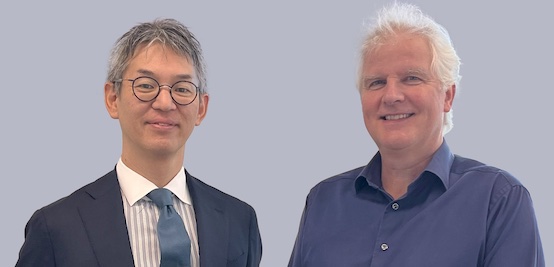
Teijin Aramid: Taiichi Machida to succeed Peter ter Horst as CEO

Peter ter Horst will step down as Chief Executive Officer at the end of 2025, after 19 years of dedicated service. Effective October 1, 2025, Taiichi Machida will take over as CEO.

#Yarn & Fiber

Teijin announces availability of DPP-compliant products aligned with Europe’s ESPR Environmental Regulation

Teijin Limited announced today that it has started rolling out initiatives to enable aramid fibers and carbon fibers to be accompanied by Digital Product Passport (DPP) technology, which enhances supply chain transparency by verifying the origins of materials and supporting sustainability claims. The company is using the supply chain traceability system from Netherlands-based Circularise B.V., in which Teijin has invested since November 2024, to develop DPPs for each product.

#Composites

Teijin Carbon showcases new eco-friendly Tenax Next™ R2S 513 6mm short carbon fiber at JEC World 2025

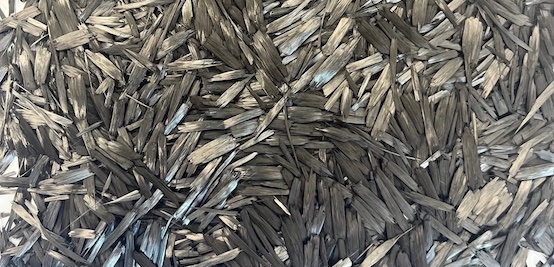
Teijin Carbon, a leading manufacturer of carbon fiber products, is presenting its latest development in sustainable materials at JEC World 2025 (hall 6, G22). New Tenax Next™ R2S 513 6mm is a short carbon fiber product in rice-shaped form for reinforcing thermoplastic compounds that not only offers exceptional performance characteristics but also reinforces the company’s commitment to environmental responsibility and circularity.

#Recycling / Circular Economy

Teijin to invest in Circularise B.V. and adopt its supply chain traceability platform to promote the Circular Economy

Teijin Limited announced today that it will invest in Circularise B.V., a company based in The Hague, Netherlands, which develops product traceability management systems using blockchain technology. Teijin will also implement Circularise’s software to improve visibility into its global supply chain. Circularise’s proprietary “Smart Questioning”(*) solution, which utilizes Zero-Knowledge Proof (ZKP) technology, provides both anonymity and transparency to ensure a highly reliable product traceability system.

More News on Recycling / Circular Economy

#Europe

New EU rules to stop the destruction of unsold clothes and shoes

The European Commission today (Feb 9) adopted new measures under the Ecodesign for Sustainable Products Regulation (ESPR) to prevent the destruction of unsold apparel, clothing, accessories and footwear.

#Recycling / Circular Economy

Sahil Kaushik appointed CEO of Infinited Fiber as the company advances a phased path to commercial scale

Infinited Fiber has appointed Sahil Kaushik as Chief Executive Officer. Kaushik has served as Acting CEO alongside his role as Chief Operating Officer and will continue to oversee operations until a new COO is appointed.

#Recycling / Circular Economy

trinamiX with new management

BASF is examining strategic options for its subsidiary trinamiX GmbH. trinamiX specializes in biometric imaging and mobile material analysis. These activities are not part of BASF’s core business, on which the company is focusing as part of the implementation of its new strategy.

#Recycling / Circular Economy

Reju announces site selection for first U.S. industrial sized facility regeneration hub in Rochester, New York

Reju, the textile-to-textile regeneration company, today announced it has selected the site for its first U.S.-based industrial facility marking a significant milestone in its efforts to scale globally. This future Regeneration Hub will be in Rochester, New York, reinforcing Reju’s commitment to the adoption of circular textile system across key regions worldwide.

Latest News

#Sustainability

Ying McGuire becomes new CEO of Cascale

Cascale today announced the appointment of Ying McGuire as Chief Executive Officer, effective June 1, 2026.

#Technical Textiles

Sustainable, lightweight, and sound absorbing: Polyester-based front trunk solution for BEVs

As car manufacturers look to further reduce their carbon footprint, Autoneum has developed an innovative front trunk solution for battery electric vehicles (BEVs), made entirely from polyester-based textile. The Ultra-Silent Frunk offers significant weight reduction, improved acoustic and thermal insulation, and uses up to 70 percent recycled material, supporting sustainable and efficient vehicle design. Autoneum, global technology leader in acoustic and thermal management for vehicles, has already received orders for the new frunk from three major OEMs in Asia and Europe to be built in three BEV models. Series production for two BEVs has been underway in China and Germany since last year.

#Raw Materials

Modern testing methods for raw cotton

The 38th International Cotton Conference Bremen will take place from 25 to 27 March 2026 at the Bremen Parliament. This conference has traditionally stood for in-depth expertise and international exchange. The program will focus on technical innovations, market trends, and regulatory frameworks across the entire value chain – from agriculture to the circular economy. With high-profile speakers, the conference is regarded as the key meeting point for the global cotton industry. Today’s focus: Cotton quality and testing methods.

#Spinning

Rieter responds to higher raw material prices

Global political and economic developments have been leading to rising raw material and energy costs for some time. The textile machinery industry is also affected by this trend. Rieter machines and components consist to a large extent of steel, copper, aluminum and electronics. These materials in particular have seen higher demand and higher prices in recent months.

TOP