[pageLogInLogOut]

#Recycling / Circular Economy

Renewcell named to Fast Company’s annual list
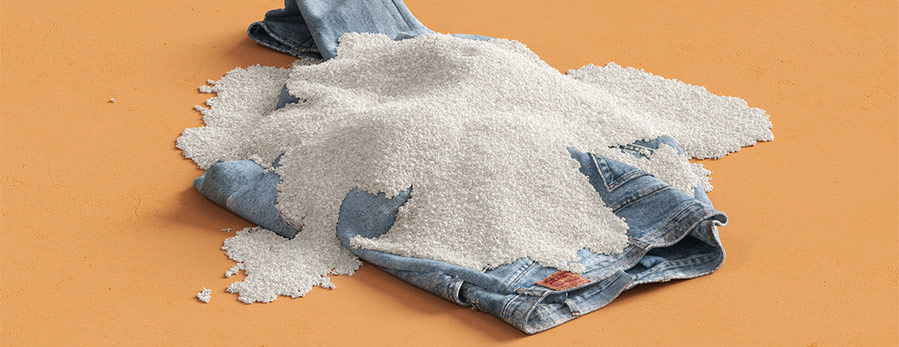
© 2021 Renewcell
Renewcell has been named to Fast Company’s prestigious annual list of the World’s Most Innovative Companies for 2021.

Renewcell, a fast growing Swedish textile-to-textile recycler, among top-ranked in the Style category.

The list honors the businesses that have not only found a way to be resilient in the past year, but also turned those challenges into impact-making processes. These companies did more than survive, they thrived—making an impact on their industries and culture as a whole. This year’s MIC list features 463 businesses from 29 countries.

This recognition is the result of hard work on the part of a group of visionary innovators, a world-class team and investors that see the promise of circular fashion innovation. We’re as determined as we’ve ever been to lead the shift to circularity in fashion says Patrik Lundström, CEO of Renewcell.


Over the course of 2020, Renewcell reached several milestones on its way to commercialization of it’s patented process for chemical recycling of discarded cotton textiles. The company launched its groundbreaking recycled material Circulose® in retail for the first time together with first H&M and Levi’s, respectively. In November 2020, Renewcell also became a publicly listed company through a siccessful IPO on Nasdaq First North Premier Growth Market, raising equity to finance its next, full scale textile recycling plant in Sundsvall, Sweden.

Fast Company’s editors and writers sought out the most groundbreaking businesses across the globe and industries. They also judged nominations received through their application process.? ?The World’s Most Innovative Companies is Fast Company’s signature franchise and one of its most highly anticipated editorial efforts of the year. It provides both a snapshot and a road map for the future of innovation across the most dynamic sectors of the economy.



More News from TEXDATA International

#ITM 2026

ITM 2026: The new geography of textile production

New production hubs are emerging across North Africa and Central Asia, while Türkiye is accelerating its transformation toward higher-value, technology-driven and more sustainable textile manufacturing.

#Research & Development

“Production is a product”

From technical textiles and AI-driven robotics to the limitations of textile circularity: Professor Dr Thomas Gries looks back on more than two decades of development at ITA Aachen. In the interview, he explains why production technology remains a decisive success factor, discusses international collaborations and innovation ecosystems, and shares his views on the transformation of production landscapes and the challenges facing an increasingly regulated industry.

#Knitting & Hosiery

“We need to move away from the price trap and return to a value-driven mindset.”

With its new Textile Innovation Center, KARL MAYER is sending a strong signal for innovation, collaboration, and the future of textile applications. In this interview, Karl Josef Mayer discusses new opportunities in warp knitting, the processing of staple fibres, recycling, the changing role of machinery manufacturers, and why the textile industry must once again focus more strongly on the value of textiles. by Oliver Schmidt

#Associations

“Innovation, resilience and international experience remain the great strengths of the Swiss textile machinery industry”

Geopolitical uncertainty, growing competitive pressure from China, new free trade agreements and the shift towards a circular economy are currently reshaping the global textile industry. In this interview, Cornelia Buchwalder discusses the current mood within the Swiss textile machinery sector, the industry’s distinctive innovative strength, new market opportunities in India and Asia, and the technological trends that could shape the upcoming trade fair cycle leading up to ITMA 2027.

More News on Recycling / Circular Economy

#Recycling / Circular Economy

Industrial scale meets verified governance: RE&UP is now B Corp™ certified

RE&UP, the circular-tech transforming global textile waste into high-volume Next-Gen materials, has officially become a Certified B Corporation™. The milestone establishes the industrial recycler among a select group of manufacturing infrastructure providers verified as meeting B Lab Standards for social and environmental performance, transparency, and accountability.

#Recycled Fibers

Recover™ and Ünteks Group partner to scale recycled cotton in knitwear

Recover(TM), a global producer of low‐impact, high‐quality recycled cotton fiber, announces a new partnership with Ünteks Group, a vertically integrated textile manufacturer based in Turkey. The collaboration focuses on the development of circular knit fabrics and garments, combining Recover’s recycled cotton fiber with Ünteks Group’s integrated capabilities across knitting, dyeing, printing, and garment production.

#Research & Development

ALADIN paves the way for circular and demand-driven textile production in Europe

Textile production can be organized sustainably by utilizing short supply chains and preventing overproduction. This can already be achieved today by intelligently connecting and efficiently utilizing existing infrastructure. At the same time, production becomes circular when innovative technologies and materials are used that enable high-quality recycling. The ALADIN research project, launched in May 2026 and co-funded with five million euros under the EU Horizon Europe program, is creating the conditions for this.

#Recycling / Circular Economy

Ence and ShareTex begin initial testing of the ATENEA innovation project to promote textile recycling in Spain

Ence and ShareTex are making progress on the Atenea R&D project, which aims to develop a complete value chain for textile recycling in Spain. Specifically, the goal of the ATENEA project—which is funded by the Center for Technological Development and Innovation (CDTI)—is to connect all the necessary stages for the recovery of textile waste, from collection and management, through recycling and transformation into new raw materials, to their incorporation into new textile products.

Latest News

TOP