[pageLogInLogOut]

#Recycling / Circular Economy

EU Research Project

European research project addresses textile waste through integrated recycling technologies
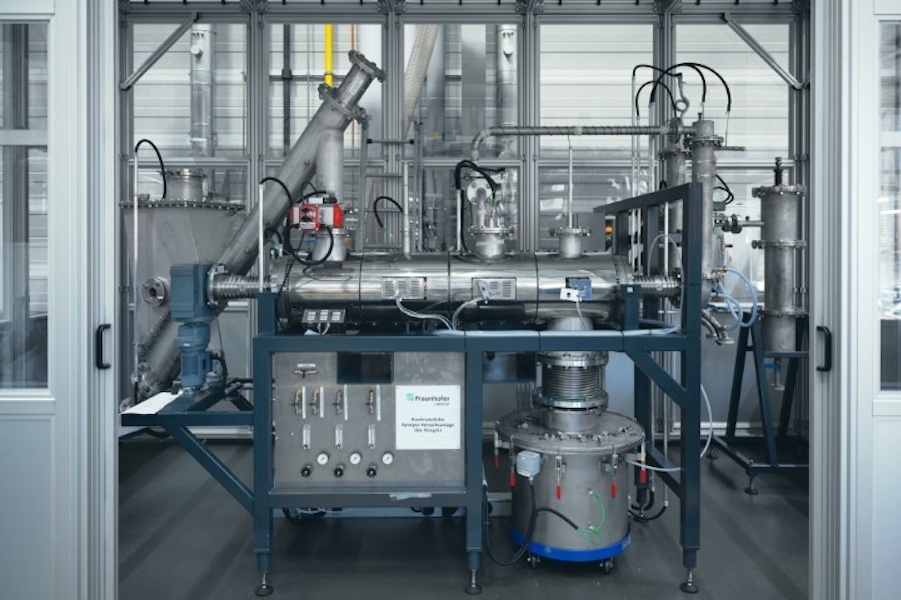
Pyrolysis research reactor for the chemical recycling of plastic-containing textiles at Fraunhofer UMSICHT in Sulzbach-Rosenberg
A major European research initiative coordinated by Fraunhofer UMSICHT has been launched to develop integrated solutions for textile waste recycling. The AUTOLOOP project aims to create a comprehensive system that could process 1.24 million tonnes of textile waste annually by 2050, whilst potentially creating over 130,000 green jobs across the EU. This project aims to develop, test and integrate automated sorting, tracing, and closed-loop recycling technologies for polyester-based textiles (NRT), addressing the pressing challenge of textile waste management.


Europe's textile and clothing industry employs 1.3 million people and generates around 170 billion EUR annually. However, it produces 10.9 million tonnes of post-consumer textile waste each year, with less than 1% currently recycled through closed-loop processes back into new textiles.

»The textile industry is at a critical juncture,« explains Dr. Thomas Fehn, Coordinator of AUTOLOOP from Fraunhofer UMSICHT. »This project represents a paradigm shift from waste to resource, transforming discarded clothing into valuable raw materials for new garments.«
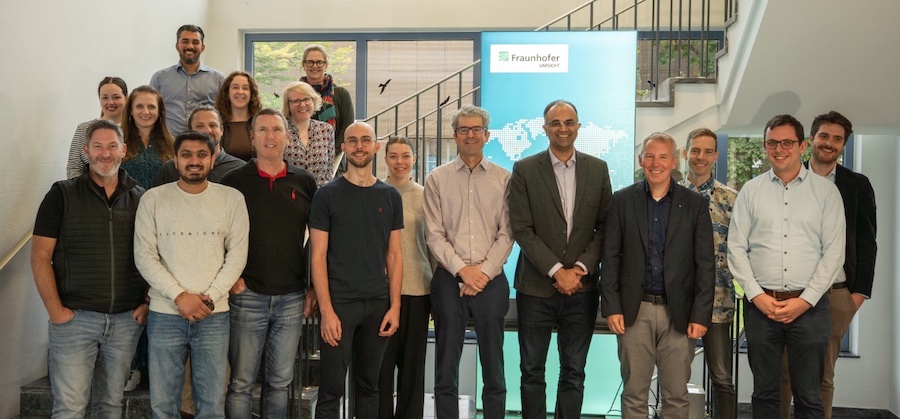
The project partners of the Autoloop Project at the kick-off meeting in Oct 2025 at Fraunhofer UMSICHT in Sulzbach-Rosenberg © 2025 Fraunhofer UMSCHAU


Technological approaches and work packages

AUTOLOOP comprises several key technological innovations for the complete recycling of polyester-based (PET-based) textiles, which are being further developed and validated by the project partners:

  • AI-Powered Sorting: ZORITEX's artificial intelligence system identifies over 15 different fibre types and their blends using hyperspectral near-infrared technology. This automated approach could increase sorting throughput tenfold whilst reducing costs by 50-75%
  • Chemical-Free Recycling: AALTO's Ioncell® process uses innovative ionic liquid solvents to extract cellulose fibres from textile blends, achieving over 95% recycling rates without harmful chemicals.
  • Advanced Synthetic Recovery: The ReSyn technology developed by Fraunhofer UMSICHT and SKZ breaks down synthetic fibres into high-purity building blocks for creating new materials, working efficiently even with contaminated textiles.
  • Smart Fibre Tracking: TLX's IntegriTEX® technology embeds invisible identifiers in fibres, enabling contactless detection and complete supply chain transparency.
  • Digital Integration: TEXROAD's cloud-based Data Hub standardises information management across the entire recycling process, ensuring compliance with emerging regulations like the Digital Product Passport.

Projected outcomes by 2050

If successfully scaled, AUTOLOOP's integrated approach could:

  • Recycle 1.24 million tonnes of textile waste annually
  • Achieve 96% material recovery rates
  • Create over 130,000 new green jobs across the EU
  • Reduce municipal waste management costs (currently 60-110 EUR per tonne)
  • Significantly decrease the textile industry's reliance on virgin materials
The chemical recycling of synthetic fibres (PET) into new basic chemicals is a technological building block being researched in the AUTOLOOP project © 2025 Fraunhofer UMSCHAU


A truly European effort

The project brings together 14 partners from seven countries, combining research institutions with industrial partners. Key organisations include ZORITEX (UK), AALTO University (Finland), Fraunhofer UMSICHT (Germany), TLX (Germany), and TEXROAD (Netherlands), along with additional partners across Europe. Additional partners include, ELT (UK), TRASBORG (Denmark), VTT (Finland), SKZ (Germany), S4L (UK), LEEDS (UK), NORION (Denmark), TEMASOL (Switzerland), and LGI (France). 

Looking ahead

As European regulations on waste management continue to develop and demand for sustainable textiles grows, AUTOLOOP provides a research foundation for advancing circular economy principles within the textile industry. The project demonstrates how advanced recycling technologies can be integrated to create efficient systems for processing textile waste, supporting the transition from linear to circular production models. AUTOLOOP has received funding from the European Union's Horizon2020 research & innovation programme under grant agreement No 101181624.
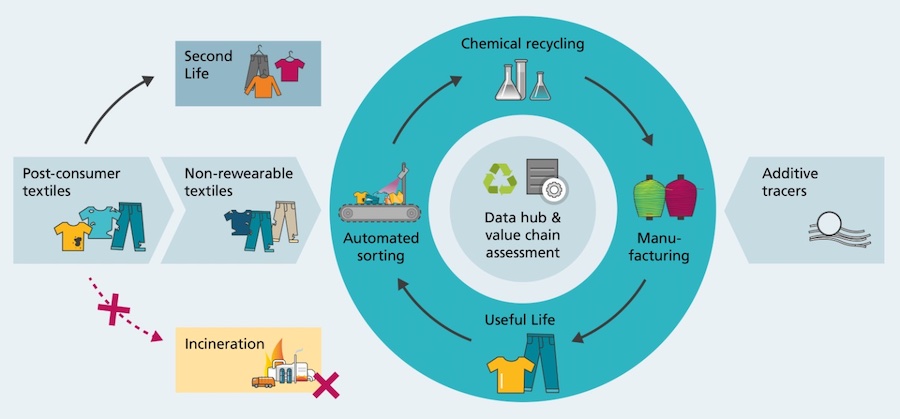

AUTOLOOP integrates technologies for sorting, tracking, recycling and reusing (second life) textiles in one system to avoid incineration © 2025 Fraunhofer UMSCHAU


More News from Fraunhofer UMSICHT Institute Branch Sulzbach-Rosenberg

More News on Recycling / Circular Economy

#Europe

New EU rules to stop the destruction of unsold clothes and shoes

The European Commission today (Feb 9) adopted new measures under the Ecodesign for Sustainable Products Regulation (ESPR) to prevent the destruction of unsold apparel, clothing, accessories and footwear.

#Recycling / Circular Economy

Sahil Kaushik appointed CEO of Infinited Fiber as the company advances a phased path to commercial scale

Infinited Fiber has appointed Sahil Kaushik as Chief Executive Officer. Kaushik has served as Acting CEO alongside his role as Chief Operating Officer and will continue to oversee operations until a new COO is appointed.

#Recycling / Circular Economy

trinamiX with new management

BASF is examining strategic options for its subsidiary trinamiX GmbH. trinamiX specializes in biometric imaging and mobile material analysis. These activities are not part of BASF’s core business, on which the company is focusing as part of the implementation of its new strategy.

#Recycling / Circular Economy

Reju announces site selection for first U.S. industrial sized facility regeneration hub in Rochester, New York

Reju, the textile-to-textile regeneration company, today announced it has selected the site for its first U.S.-based industrial facility marking a significant milestone in its efforts to scale globally. This future Regeneration Hub will be in Rochester, New York, reinforcing Reju’s commitment to the adoption of circular textile system across key regions worldwide.

Latest News

#Sustainability

Ying McGuire becomes new CEO of Cascale

Cascale today announced the appointment of Ying McGuire as Chief Executive Officer, effective June 1, 2026.

#Technical Textiles

Sustainable, lightweight, and sound absorbing: Polyester-based front trunk solution for BEVs

As car manufacturers look to further reduce their carbon footprint, Autoneum has developed an innovative front trunk solution for battery electric vehicles (BEVs), made entirely from polyester-based textile. The Ultra-Silent Frunk offers significant weight reduction, improved acoustic and thermal insulation, and uses up to 70 percent recycled material, supporting sustainable and efficient vehicle design. Autoneum, global technology leader in acoustic and thermal management for vehicles, has already received orders for the new frunk from three major OEMs in Asia and Europe to be built in three BEV models. Series production for two BEVs has been underway in China and Germany since last year.

#Raw Materials

Modern testing methods for raw cotton

The 38th International Cotton Conference Bremen will take place from 25 to 27 March 2026 at the Bremen Parliament. This conference has traditionally stood for in-depth expertise and international exchange. The program will focus on technical innovations, market trends, and regulatory frameworks across the entire value chain – from agriculture to the circular economy. With high-profile speakers, the conference is regarded as the key meeting point for the global cotton industry. Today’s focus: Cotton quality and testing methods.

#Spinning

Rieter responds to higher raw material prices

Global political and economic developments have been leading to rising raw material and energy costs for some time. The textile machinery industry is also affected by this trend. Rieter machines and components consist to a large extent of steel, copper, aluminum and electronics. These materials in particular have seen higher demand and higher prices in recent months.

TOP