[pageLogInLogOut]

#Recycling / Circular Economy

Reju announces the selection of Regeneration Hub One
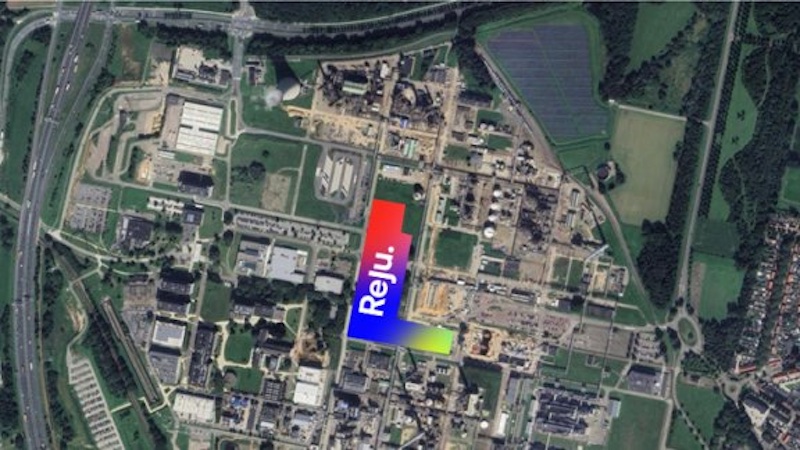
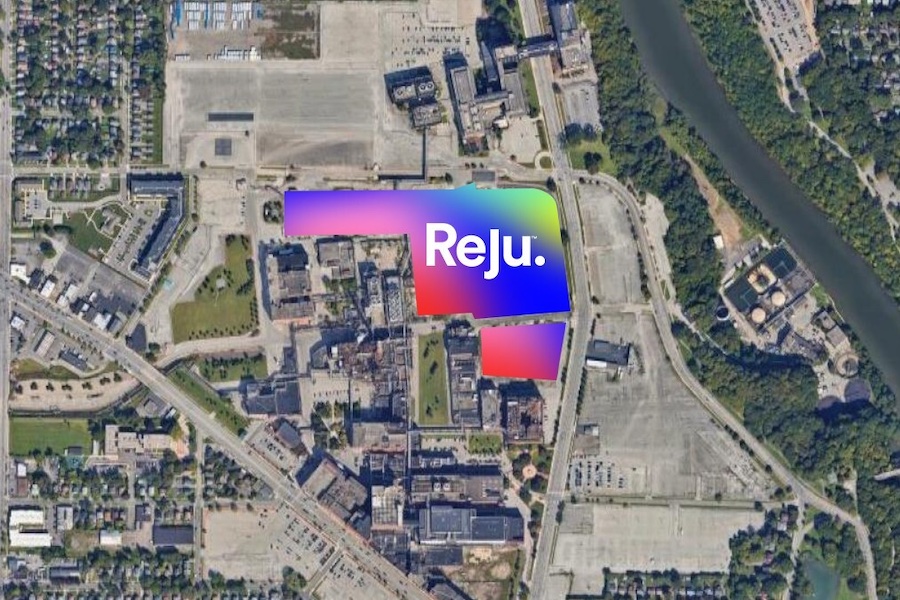
Reju™, the progressive textile-to-textile regeneration company, today announced that it had selected the Chemelot Industrial Park for its first industrial scale regeneration center.? Located in Sittard, Netherlands, Chemelot is a leading European industrial park and innovation hub. This follows the successful opening of Regeneration Hub Zero in Frankfurt in October 2025.
© 2025 Reju
© 2025 Reju


Regeneration Hub One will accelerate Reju’s path to build a circular infrastructure for textile waste regeneration at scale. This strategic location will enable Reju to leverage existing infrastructure and industrial synergies to scale its operations efficiently. The project will be subject to final investment decision by the board of Technip Energies, the parent company of Reju.

The Hub will regenerate the equivalent of 300 million articles annually that would otherwise end up as textile waste, resulting in a production capacity of 50,000 tonnes of rBHET per year and will then be repolymerized into Reju PET. This output, originating from textile waste, will be transformed into Reju Polyester with 50% lower carbon emissions than virgin polyester. The Reju Polyester will then be reintroduced into the downstream supply chain, where it will be converted into yarns and fabrics ready for consumer use.

Textile consumption in Europe has grown from 17kg per person in 2019 to 19kg per person in 2022 - enough to fill a large suitcase for every person living in Europe. And as a result, so is textile waste, in the EU Member States in 2022 about 94 million tonnes* of textiles were discarded and likely to be burnt or buried. Through collaboration with upstream partners, Reju will be ensuring textile-to-textile traceability. 

“This is a major milestone for Reju. With this announcement of a site for Regeneration Hub One, we are reinforcing our commitment to transforming the textile industry through innovation and collaboration,” said Patrik Frisk, CEO of Reju. “Chemelot is the ideal environment for scaling our technology and integrating into a broader network of industrial power houses which are also focused on circularity. This is where we will prove that textile-to-textile circularity at scale is achievable.” 

Owned by Technip Energies, a leading engineering and technology company, Reju utilizes proprietary technology originally developed by IBM Research. By recovering, regenerating, and recirculating textile waste, starting with polyester, Reju is creating a new, scalable circular system reducing the industry’s reliance on virgin materials. 

“At Chemelot, we are committed to fostering sustainable innovation and enabling circular solutions across industries,” said Koos van Haasteren, CEO of Chemelot. “Reju’s Regeneration Hub One aligns with our mission to drive the transition toward a circular economy. By integrating their advanced textile recycling technology within our industrial ecosystem, we can help accelerate the reduction of textile waste and set new benchmarks for sustainability in the materials sector.” 

Thanks to the efforts of the Netherlands Foreign Investment Agency (NFIA), the Ministry of Infrastructure and Water Management and the Ministry of Climate Policy and Green Growth, the recycling center is to be located on the Chemelot Industrial Park in the Netherlands. Minister Sophie Hermans (Climate Policy and Green Growth) said: ‘With Reju’s decision to locate its innovative recycling plant at Chemelot, the Netherlands is achieving a first: the country’s first large-scale recycling facility where discarded textiles are turned into raw material for new and even better textiles. This is the kind of new industry we are aiming for – sustainable, circular and future-orientated. It contributes to green growth and strengthens our position in circular chemistry. Despite the challenges in the sector, the Netherlands remains attractive for green industrial investments. With this new plant, we are actively building the industry of tomorrow, and I am proud that Reju has chosen the Netherlands.’ 

Through collaboration with upstream partners, Reju will be ensuring textile-to-textile traceability for waste that would otherwise be buried, burnt, or dumped.


More News from Reju

#Recycling / Circular Economy

Reju announces site selection for first U.S. industrial sized facility regeneration hub in Rochester, New York

Reju, the textile-to-textile regeneration company, today announced it has selected the site for its first U.S.-based industrial facility marking a significant milestone in its efforts to scale globally. This future Regeneration Hub will be in Rochester, New York, reinforcing Reju’s commitment to the adoption of circular textile system across key regions worldwide.

#Recycling / Circular Economy

Reju and Circle-8 Textile Ecosystems partner to further large-scale textile recycling in the U.K.

Reju™, the progressive textile-to-textile regeneration company, and Circle-8 Textile Ecosystems, a key builder of ecosystems and infrastructures unlocking textile-to-textile recycling, today announced a partnership to further facilitate a circular textiles ecosystem in the U.K.

#Recycling / Circular Economy

Reju COO Alain Poincheval Appointed Chairman of Petcore Europe’s Textile SIG

Reju has announced that Alain Poincheval, the company’s Chief Operations Officer, has been appointed Chairman of the Textile Special Industry Group (SIG) at Petcore Europe, the leading Brussels-based association representing the PET value chain in Europe.

#Recycling / Circular Economy

Reju announces strategic partnerships with Utexa in Central America and Antex in Europe

Reju™, the purpose-driven, leading textile-to-textile regeneration company, today announced plans for product validation and adoption with Utexa, and Antex, two global leaders in multifilament yarn production with manufacturing locations in Europe and the Americas. The companies will be validating Reju’s proprietary material, REJU Polyester™, for commercial adoption in multifilament yarns for textile applications.

More News on Recycling / Circular Economy

#Europe

New EU rules to stop the destruction of unsold clothes and shoes

The European Commission today (Feb 9) adopted new measures under the Ecodesign for Sustainable Products Regulation (ESPR) to prevent the destruction of unsold apparel, clothing, accessories and footwear.

#Recycling / Circular Economy

Sahil Kaushik appointed CEO of Infinited Fiber as the company advances a phased path to commercial scale

Infinited Fiber has appointed Sahil Kaushik as Chief Executive Officer. Kaushik has served as Acting CEO alongside his role as Chief Operating Officer and will continue to oversee operations until a new COO is appointed.

#Recycling / Circular Economy

trinamiX with new management

BASF is examining strategic options for its subsidiary trinamiX GmbH. trinamiX specializes in biometric imaging and mobile material analysis. These activities are not part of BASF’s core business, on which the company is focusing as part of the implementation of its new strategy.

#Business

Canopy introduces a first-of-its-kind $2 billion USD investment blueprint to decarbonize global materials supply chains

Today, the global, solutions-driven not-for-profit Canopy joined partners at Davos to introduce a new finance model designed to accelerate the growth of low-carbon materials and transform the paper, packaging, and textile supply chains. The event was anchored by a keynote speech from Sri A Revanth Reddy, Hon’ble Chief Minister of Telangana, with India set to host the first iteration of the new investment blueprint.

Latest News

#Sustainability

Ying McGuire becomes new CEO of Cascale

Cascale today announced the appointment of Ying McGuire as Chief Executive Officer, effective June 1, 2026.

#Technical Textiles

Sustainable, lightweight, and sound absorbing: Polyester-based front trunk solution for BEVs

As car manufacturers look to further reduce their carbon footprint, Autoneum has developed an innovative front trunk solution for battery electric vehicles (BEVs), made entirely from polyester-based textile. The Ultra-Silent Frunk offers significant weight reduction, improved acoustic and thermal insulation, and uses up to 70 percent recycled material, supporting sustainable and efficient vehicle design. Autoneum, global technology leader in acoustic and thermal management for vehicles, has already received orders for the new frunk from three major OEMs in Asia and Europe to be built in three BEV models. Series production for two BEVs has been underway in China and Germany since last year.

#Raw Materials

Modern testing methods for raw cotton

The 38th International Cotton Conference Bremen will take place from 25 to 27 March 2026 at the Bremen Parliament. This conference has traditionally stood for in-depth expertise and international exchange. The program will focus on technical innovations, market trends, and regulatory frameworks across the entire value chain – from agriculture to the circular economy. With high-profile speakers, the conference is regarded as the key meeting point for the global cotton industry. Today’s focus: Cotton quality and testing methods.

#Spinning

Rieter responds to higher raw material prices

Global political and economic developments have been leading to rising raw material and energy costs for some time. The textile machinery industry is also affected by this trend. Rieter machines and components consist to a large extent of steel, copper, aluminum and electronics. These materials in particular have seen higher demand and higher prices in recent months.

TOP