[pageLogInLogOut]

#Recycling / Circular Economy

Esquel and China Recycling Group sign strategic cooperation agreement
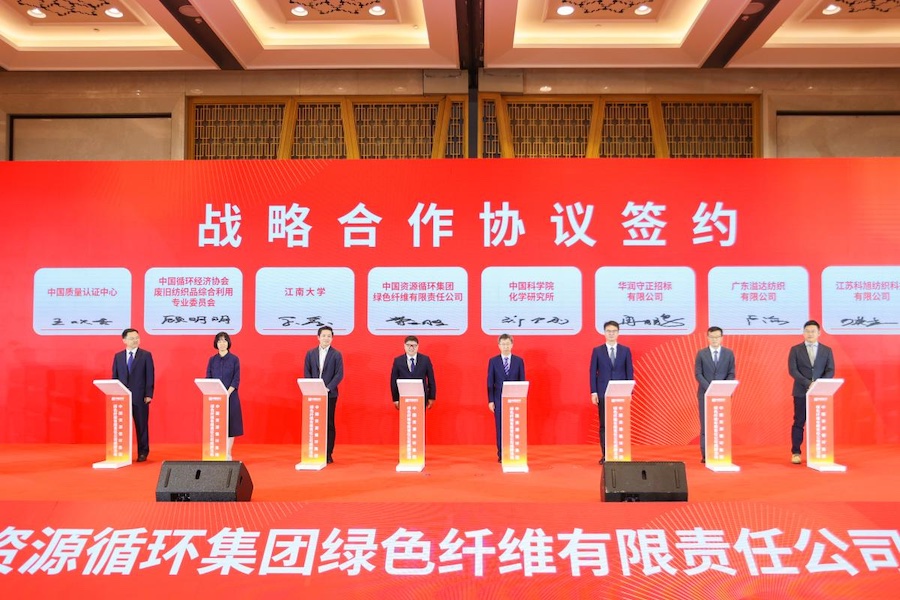
On April 23, 2025, Guangdong Esquel and China Recycling Group signed a strategic cooperation agreement in Wuxi, Jiangsu. The partnership aims to promote the recycling and reuse of waste textiles, supporting China’s carbon neutrality goals.
© 2025 Esquel
© 2025 Esquel


The strategic collaboration marks a new phase of cooperation between the two companies. By leveraging their market resources and technological strengths, they will focus on overcoming technical challenges in waste textile recycling, developing green recycled textile products, and promoting fiber product design. Through resource sharing and technological synergy, the two parties will jointly build a complete industrial chain ecosystem, from recycled materials and green products to service platforms, creating a green fiber recycling industrial ecosystem. 

Esquel and China Recycling Group jointly stated their commitment to continuously increasing investment in green technology to drive deep decarbonization of the industrial chain through innovation. They will work closely with upstream and downstream partners to build a responsible and sustainable textile ecosystem, promoting the industry's transition to green and low-carbon practices. 

This collaboration is an important milestone in Esquel’s sustainability strategy and will inject new momentum into the green transformation of China’s textile industry. Esquel will continue leveraging its more than 40 years of experience in successfully operating a vertically-integrated supply chain, to provide customized solutions and technical support for green recycled textile products.

More News from Esquel Group.

#Raw Materials

Esquel Group adds two new extra-long staple cotton varieties approved

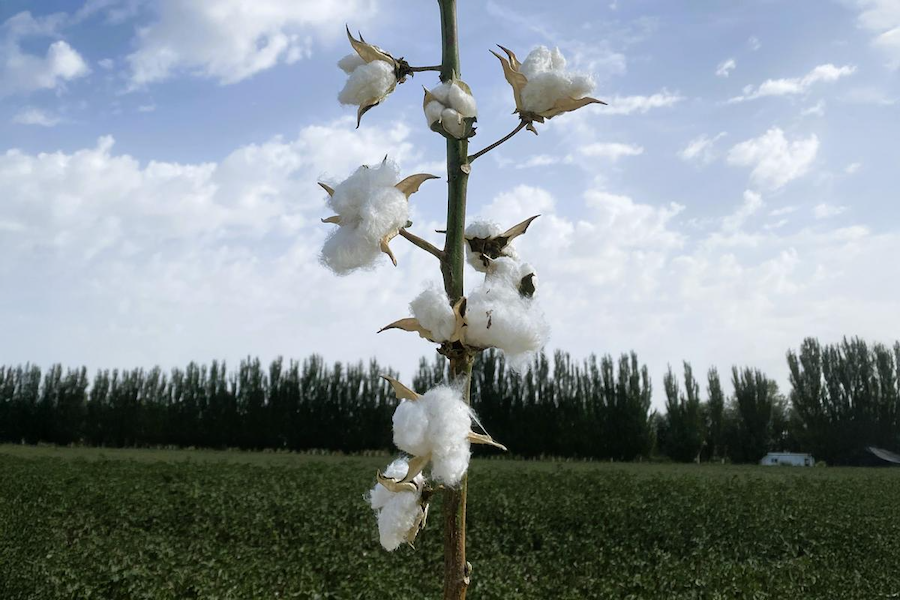
Esquel Group’s Xinjiang Research & Development Center has successfully developed two new Sea Island cotton (Extra-Long-Staple cotton, ELS cotton) varieties named “Yuan Loong 37” and “Yuan Loong 42,” which have been officially approved and granted registration numbers. Both varieties have also obtained Plant Variety Rights certificates, marking another significant breakthrough for the Group in cotton breeding and commercial application.

#Textiles & Apparel / Garment

HKUST & Esquel unveil five-year study: Empowering students for sustainable innovation

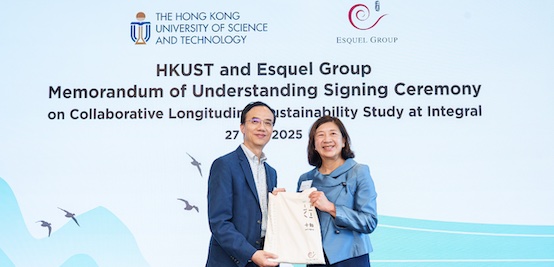
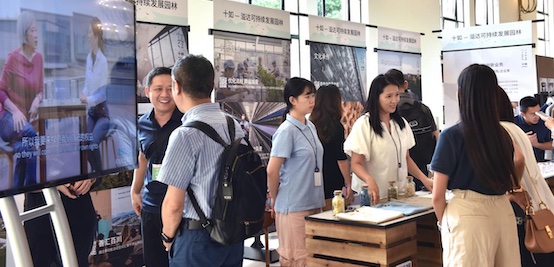
The Hong Kong University of Science and Technology (“HKUST”) has partnered with Esquel Enterprises Limited (“Esquel Group”) to launch a five-year study program that allows HKUST students to conduct biannual field research at the textile manufacturer’s 500,000-square-meter Sustainable Development Garden Integral, recognized as one of China’s top 20 sustainable development projects by the United Nations.

#Raw Materials

Official approval granted for Esquel Group’s new Sea Island Cotton variety "Yuan Loong 30"

Esquel Group Xinjiang Research & Development Center has successfully developed a new self-bred Sea Island cotton (Extra-Long-Staple cotton, ELS cotton) variety named "Yuan Loong 30," which has been officially approved and designated by the 11th Main Crop Variety Assessment Committee of Xinjiang. With this addition, Esquel has now successfully bred and named a total of six Sea Island cotton varieties, including "Xinhai 33", "Xinhai 50", "Xinhai 55", "Xinhai 63", "Yuan Loong 17" and "Yuan Loong 30".

#Textiles & Apparel / Garment

Integral highlights sustainable innovation at GREENEXT EXPO

Integral, the sustainable development garden of Esquel Group, a leading global knowledge-based innovation company, participated in the prestigious “GREENEXT EXPO” in Shanghai, unveiling its innovative achievements in sustainable development. Coinciding with the 20th anniversary of the United Nations Global Compact (UNGC)’s advocacy of ESG principles, the event brought together industry leaders to explore the future of sustainable development and ESG practices.

More News on Recycling / Circular Economy

#Research & Development

ALADIN paves the way for circular and demand-driven textile production in Europe

Textile production can be organized sustainably by utilizing short supply chains and preventing overproduction. This can already be achieved today by intelligently connecting and efficiently utilizing existing infrastructure. At the same time, production becomes circular when innovative technologies and materials are used that enable high-quality recycling. The ALADIN research project, launched in May 2026 and co-funded with five million euros under the EU Horizon Europe program, is creating the conditions for this.

#Recycling / Circular Economy

Ence and ShareTex begin initial testing of the ATENEA innovation project to promote textile recycling in Spain

Ence and ShareTex are making progress on the Atenea R&D project, which aims to develop a complete value chain for textile recycling in Spain. Specifically, the goal of the ATENEA project—which is funded by the Center for Technological Development and Innovation (CDTI)—is to connect all the necessary stages for the recovery of textile waste, from collection and management, through recycling and transformation into new raw materials, to their incorporation into new textile products.

#Recycling / Circular Economy

DePoly Inaugurates its Showcase Plant in Monthey Switzerland

What if used plastic bottles, PET packaging material and polyester textiles could become raw materials just as high performing as virgin resources? That is the ambition of DePoly, a circular materials company based in Sion, Switzerland which inaugurated its Showcase Plant in Monthey on July 6th & 7th. The first depolymerization facility of its kind and scale in Switzerland, this industrial Showcase Plant represents a major milestone in the company's growth and its journey toward commercialization.

#Recycling / Circular Economy

Commission clarifies rules on plastic bottles recycling

The European Commission today adopted new rules on recycling of single-use plastic beverage bottles made primarily of polyethylene terephthalate (PET bottles). These rules establish, for the first time, a methodology to calculate, verify and report chemically recycled content. This is part of the Commission’s December 2025 plastics package.

Latest News

#Nonwovens

Katharina Obergruber appointed to the Management Board of Sandler AG

The Supervisory Board of Sandler AG has appointed Katharina Obergruber to the company’s Management Board. Effective September 1, 2026, the Board will consist of Philipp Ebbinghaus (CEO), Dr. Ulrich Hornfeck (currently CCO, future COO), and Katharina Obergruber (CCO). Katharina Obergruber, currently Chief Sales Officer Hygiene and member of the Management Team of Sandler AG, will assume responsibility for all sales activities as Chief Commercial Officer. She will assume this role from Dr. Ulrich Hornfeck, who will focus primarily on production and supply chain topics.

#Sustainability

Global Standards establishes new non-profit foundation to strengthen governance

Global Standards gGmbH, the nonprofit organisation behind the globally recognised Global Organic Textile Standard (GOTS), announced a new governance structure designed to support its long-term mission and reinforce organisational autonomy of its Voluntary Sustainability Standards and programmes.

#Textile chemistry

DyStar releases FY2025 sustainability report, marking a new milestone towards its 2030 targets

DyStar, a leading specialty chemicals company with more than a century of expertise in product development and innovation, today announced the release of its FY2025 Sustainability Report, marking a significant milestone in its sustainability journey and reinforcing its commitment to long-term value creation.

#Research & Development

TERIS reaches milestone: Fraunhofer consortium develops new standards for tire analysis

In the “TERIS” project, the Fraunhofer institutes ICT, IGD, and IWM—led by the Fraunhofer Institute for Structural Durability and System Reliability LBF—have reached a decisive milestone. For the first time, the teams aim to generate, analyse, and predict tire wear in the laboratory in a standardized and practical manner. As part of this milestone, results are now available on reference abrasion, particle analysis, tribological models, AI-based surface analysis, a test bench concept, and methods for accelerated aging and VOC detection. The tire industry, testing services, and environmental agencies will in future benefit from reliable, rapid laboratory procedures for emissions assessment.

TOP