[pageLogInLogOut]

#Raw Materials

Teijin Frontier announces global availability of biodegradable BIOFRONT® PLA resin
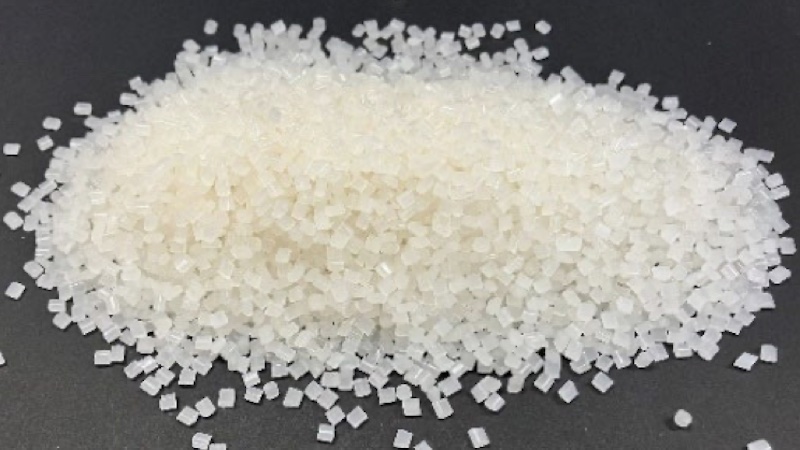
Teijin Frontier Co., Ltd., today announced the global availability of its BIOFRONT® polylactic acid (PLA) resin, which biodegrades faster in oceans, rivers and soil compared to conventional PLA products. Incorporation of a novel biodegradation accelerator in the polymer can enhance its decomposition rate without significantly compromising strength, crystallinity or moldability. This resin, named to signify cutting-edge biotechnology, is now fully commercialized in Japan and internationally.
BIOFRONT® resin pellets © 2024 Teijin Frontier


BIOFRONT® resin aligns with Teijin Frontier’s THINK ECOR environmental strategy and joins the company’s wide range of sustainable materials and products. Teijin Frontier plans to continue developing biodegradable materials to help reduce the environmental impact of plastics.

Features and benefits of BIOFRONT® resin

The resin’s biodegradation accelerator promotes hydrolysis and speeds up material consumption and decomposition by bacteria and fungi compared to PLA polymers without additives. BIOFRONT® resin exhibits rapid biodegradation performance even in marine, riverine and soil environments, where there are fewer bacteria and fungi than in high- temperature, high-humidity composting systems. Further, the decomposition period can be controlled by adjusting the loading and incorporation parameters of the accelerator. Accordingly, the decomposition period can be adjusted to the required lifetime.

Another advantage of BIOFRONT® resin is its ability to be processed like conventional PLA polymer resins used in films and injection-molded and extruded products. It can also be used for fibers in textiles and non-woven fabrics.

From the standpoint of sustainability, BIOFRONT® PLA resin is expected to help reduce microplastics, thanks to its accelerated biodegradation rate, and to reduce CO2 emissions during the product lifecycle since it is made from plant-derived raw materials.

More News from Teijin Frontier

#Man-Made Fibers

Teijin and Asahi Kasei to merge textile subsidiaries into joint venture

Teijin Limited and Asahi Kasei Corporation have signed a definitive agreement to integrate their textile subsidiaries Teijin Frontier Co., Ltd. and Asahi Kasei Advance Corporation. The announcement was approved by Teijin’s Board of Directors on 1 December 2025 and marks a significant consolidation move within Japan’s advanced materials and textile sector.

#Yarn & Fiber

Teijin Frontier develops a next-generation stretch fabric

Teijin Frontier Co., Ltd., announced today that it has developed a next-generation stretch fabric made of an extra-fine three-dimensional structure with randomly sized crimps. The newly developed fabric combines exceptional elasticity with a soft, airy texture and a natural uneven surface that helps make the fabric lightweight while providing quick drying and moisture wicking performance.

#Man-Made Fibers

New high-performance polyester fabric with a natural fiber-like texture and appearance

Teijin Frontier Co., Ltd., announced that it has developed a new high-performance polyester fabric, which combines the elegant appearance and texture of natural fibers made of yarns of random thickness with advanced functionalities such as cool touch, anti-stickiness, quick dry, opacity and ultraviolet (UV) protection.

#Sustainability

Nantong Teijin’s efforts to reduce water usage certified as model activities for supporting the environment in the Yangtze River Delta Region

Teijin Frontier Co., Ltd., announced today that its group company, Nantong Teijin Co., Ltd., has been recognized by China’s Jiangsu Provincial Department of Ecology and Environment for reducing water usage by approximately 300,000 tons/year. Nantong Teijin, which manufactures polyester long-fiber woven and knitted fabrics in Jiangsu Province, independently developed equipment and systems for analyzing, recovering, storing and reusing wastewater from its water-intensive dyeing process.

More News on Raw Materials

#Raw Materials

New study shows low environmental impact by Cotton made in Africa Organic Cotton from Tanzania

Today, the Aid by Trade Foundation (AbTF) is announcing the results of a comprehensive life-cycle analysis (LCA) for cotton produced in Tanzania under the Cotton made in Africa Organic (CmiA Organic) standard. The study emphasises the small ecological footprint of CmiA Organic verified cotton. This can largely be traced back to the absence of synthetic pesticides, artificial fertilisers, and artificial irrigation. Consequently, CmiA Organic cotton can help the textile industry meet regulatory requirements as well as science-based targets. The results also show that the consequences of climate change threaten the livelihoods of these cotton farmers, even though the type of agriculture they practise barely contributes to climate change.

#Raw Materials

Better Cotton Initiative strengthens regenerative focus in standard update

The Better Cotton Initiative (BCI) has strengthened the regenerative focus of its field-level standard with the launch of a new version of its Principles & Criteria (P&C), which marks the next step in the organisation’s journey to becoming a regenerative standards system.

#Raw Materials

Global production expected to decline in 2026/27 as policy shifts and weak demand reshape trade

Early projections for the 2026/27 season indicate that global cotton lint production will decline by 4% to 24.9 million tonnes, while world consumption is expected to remain stable at approximately 25 million tonnes, according to the April 2026 issue of Cotton This Month.

#Raw Materials

Textile Exchange publishes cotton Life Cycle Assessment study to strengthen impact data

Textile Exchange has published the first in a series of seven Life Cycle Assessment (LCA) studies designed to improve the quality and robustness of environmental impact data for raw material production across the fashion, textile, and apparel industry. The first LCA study focuses on cotton and addresses critical data gaps and methodology variability through new high-quality data across key producing countries. The study includes organic, regenerative, recycled, and country averages for conventional cotton production systems, providing a clearer picture of the associated environmental impact.

Latest News

#Recycled Fibers

RE&UP partners with Madewell and ISKO on textile-to-textile denim capsule

RE&UP Recycling Technologies is accelerating the shift toward a closed-loop textile economy through a collaboration with American denim brand Madewell and global fabric manufacturer ISKO. By transforming approximately 20,000 pairs of post-consumer jeans into recycled feedstock for a textile-to-textile denim capsule, RE&UP demonstrates the commercial viability of circular systems in the denim sector.

#Techtextil 2026

Sedo Treepoint will exhibit smart technologies for technical textile production

As technical textile production becomes increasingly complex and sustainability requirements intensify, digital integration is evolving from an efficiency tool into a strategic task. At Techtextil 2026 (April 21–24, Frankfurt am Main), Sedo Treepoint will present smart digital systems designed to address the demanding production environments of technical textile manufacturing. The company’s focus will be on practical technologies that enhance process transparency, reproducibility, and efficient resource use. Visitors will meet Sedo Treepoint in Hall 12, Booth D05.

#Techtextil 2026

ITM presents cutting-edge textile research at Techtextil

From April 21 to 24, 2026, the Chair of Textile Machinery and High Performance Material Technology (ITM) at TUD Dresden University of Technology will be presenting its current research at Techtextil, the leading international trade fair for technical textiles and nonwovens. In Hall 12.0, Stand D41, the team will be demonstrating how it combines high-performance fibers, AI-supported digital development tools and innovative machine technologies to develop textile solutions for lightweight construction, construction, medical technology and sustainable production from atom to product.

#Techtextil 2026

CHT Group to showcase intelligent specialty chemical solutions at Techtextil 2026

At this year's Techtextil 2026 in Frankfurt am Main, the CHT Group will be presenting its comprehensive portfolio of tailor-made specialty chemicals and process solutions for technical textiles. As a reliable partner to the global textile industry, the company offers innovative products and in-depth technical expertise across all areas of the textile value chain – from pretreatment, dyeing, and printing to finishing, coating, and fiber auxiliaries.

TOP