[pageLogInLogOut]

#Raw Materials

Higher-Further-Faster: Textile processes on the fast track
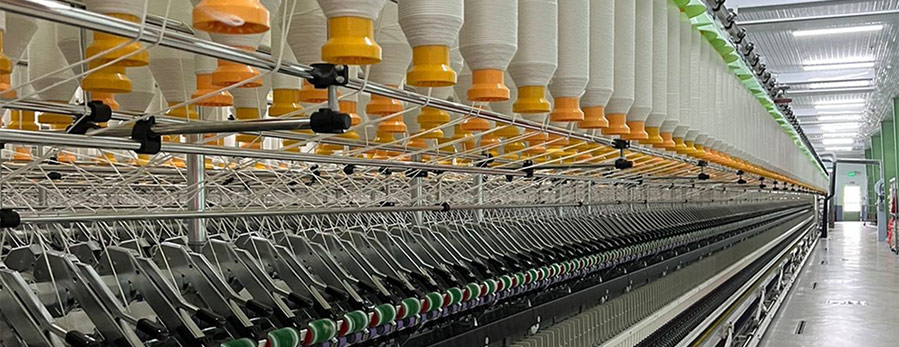
© 2022 Bremen Cotton Exchange
The Bremen Cotton Exchange and the Bremen Fibre Institute e.V. together are inviting to the 36th International Cotton Conference Bremen on 29th and 30th September. Under the Slogan “Cotton Decoded”, all conference participants will be offered an ambitious programme with topical lectures and lively discussion groups on location in Bremen as well as online via a conference platform.

Cotton testing methods, fiber quality, and the impact on spinning process productivity have been at the heart of the International Cotton Conference since 1965. Experts in textile processing discuss from different perspectives. We take a deep look into textile processes with a focus on greater efficiency and speed.
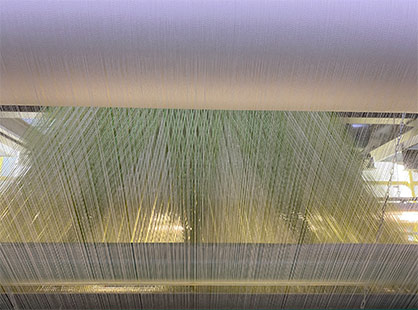
© 2022 Bremen Cotton Exchange


On Friday, 30th September, two sessions at the Cotton Conference will address some problem areas within textile processes and at the same time offer ideas for suitable solutions. Examples include:

Precleaning of Cotton

For Ralf Müller from the German textile machine manufacturer Trützschler, a higher cleaning performance, growing production demands and flexibility of the processing of raw materials are key topics of the spinning preparation of cotton. The removal of coarse contaminations is of particular importance here. For this purpose, Trützschler has developed a new generation of a precleaning aggregate that due to doubled production capacity leads to a reduction of energy consumption and to a significant increase of cleaning efficiency compared with the forerunners. With this, Trützschler wants to make the preliminary stage of the blow room more productive, especially because the processes could be regulated by an electronic waste control system. After all, according to Trützschler, intelligent cleaning can spare the wastage of up to 150 bales of cotton per year if it causes a maximum utilisation of raw material and a minimal loss of good fibres. 

Targeted Raw Material Management Pays off

Oswald Baldischwieler from Swiss company Uster explains in his speech that in order to reach a consistent quality of cotton products like yarns and fabrics it is necessary to carry out an intensive examination of the cotton fibres in the early stages of production. Uster is a world leader in textile examination and quality control.

For Uster, targeted raw material management is important for the success of a spinning mill because it absorbs the main part of costs for the spinning mill. In most countries, the raw material cotton accounts for more than 60 percent of total yarn production costs. An optimal blending of fibres at the moment of opening the bale is prerequisite for a consistent and long-lasting yarn quality. It is crucial to keep yarn quality variations at a minimum and the quality as constant as possible in the long term. Bail management pays off.

Spinning Waste Cotton

Rieter AG, Harald Schwippl: The recycling of raw materials has been an increasing trend for several years to achieve more sustainability. In addition to the recycling of chemically or mechanically dissolved raw materials, the recycling of spinning waste is also a possibility to meet the increasing demand for raw material recycling.

For this purpose, carding or blowroom waste is processed. The study shows which adjustments are necessary in the spinning process for recycling. It also shows which spinning units and qualities are possible as a result. The raw material was used to produce a rotor yarn.

Shortening Production Processes

Yonathan Sissay from the Ethiopian Textile Industry Development Institute, Addis Ababa, will report on the results of his research. It is about reducing lead times in production processes of clothing from the fabric warehouse and manufacturing to packaging and delivery. In the study, necessary and unnecessary working steps were analysed based on a cause analysis and new process flow charts for economically efficient work were defined following the Pareto principle.


Effect of Cotton Short Fiber Content on Drafting Force and its Variability in the Drafting Zone

These results are relevant for the machine setup. Within his research project, the Pakistani researcher Quaim Siddiqui found that the drafting force is the intuitive factor initiated by the dynamic frictional forces between slow moving and fast moving fibers in the drafting zone. According to Siddiqui, the fibre length is one of the most important factors influencing the drafting force and its variability. Using data from the online-draftometer, the scientific study analyses the interaction between the dynamic drafting force and its variability with respect to the short fiber content of carded cotton sliver.

In Advance:

Spinning and Textile Seminar: Expert meeting at the beginning of the cotton conference

On 28th September, that is on the eve of the conference, an exchange among experts will take place under the headline “Quality Requirements along the Textile Value-Added Chain”. All textile raw materials will be included here, we are thus going beyond cotton. The Bremen Fibre Institute e. V. (FIBRE), the Bremen Cotton Exchange, the Industrial Association Finishing – Yarns – Fabrics and Technical Textiles (IVGT) and the International Textiles Manufacturers Federation (ITMF) are inviting to this together.

Conference Venue

The conference venue this year is not the historic town hall, but the Chamber of Commerce in Bremen in the immediate vicinity of the Cotton Exchange. The Chamber of Commerce has been representing the interests of trade in Bremen since 1451 and is in close contact with the Bremen Cotton Exchange.

Other highlights of the anniversary week

This year´s International Cotton Conference is taking place in the anniversary year of the Bremen Cotton Exchange. The organisation was founded in 1872 and is celebrating its 150th birthday this year.

The International Cotton Conference is therefore embedded in an entire anniversary week. On the evening of September 29th, following the first day of the conference, the Bremen Cotton Exchange and the Faserinstitut Bremen invite you to the popular and well-known Bremen Cotton Night. This event is dedicated to the 150th anniversary of the Bremen Cotton Exchange and will be held at the Bremen Übersee-Museum for good reason. At the same time, the doors will open to an exhibition well worth seeing on the cultural history of cotton. The participants of the conference will be able to celebrate in the big atrium of the museum and get a tour of the exhibition in the meantime. Enjoying good music and good food, it will at last be able once again to spin personal networks and at the same time to pass in review the multi-faceted world of cotton with a beautiful and well-conceived exhibition.
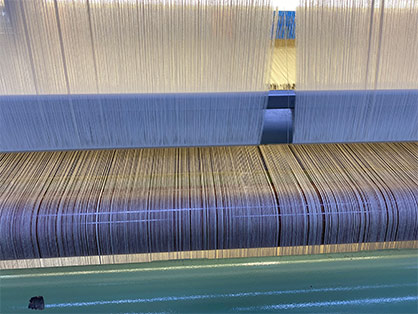
© 2022 Bremen Cotton Exchange


Registration is underway

The starting gun for the registration has been fired: you can register at https://cotton-conference-bremen.de/ from now on. You will also find regularly updated information there.

We will continually inform about the International Cotton Conference on 29 and 30 September and about the complete programme in the run-up in the form of further press releases as well as target-group-specific newsletters and also via our social media channels.


More News from Bremer Baumwollbörse

#Raw Materials

A Powerful Opening: Global thought leaders launch the International Cotton Conference Bremen

The International Cotton Conference Bremen will open on 25 March 2026 in the Parliament building of the Free Hanseatic City of Bremen with a keynote session of exceptional calibre. Distinguished international experts will set the stage for the conference by offering incisive perspectives on the most pressing challenges and the defining trends shaping the future of the global cotton trade. Their insights will span a broad spectrum — from geopolitically driven disruptions affecting global supply chains to the opportunities emerging from innovation-led agriculture capable of supporting a growing world population. Together, these opening keynotes will frame the dialogue of the conference, highlighting both the complexity of today’s market environment and the pathways toward a resilient and forward-looking cotton sector.

#Natural Fibers

Beyond Cotton: Natural Fibres in the Spotlight at the Bremen Cotton Conference - Branded by DNFI

Climate targets, fragile supply chains, and rising regulatory requirements are fundamentally changing the perspective of the textile industry - the focus is increasingly shifting toward the base material. Not only cotton, but natural fibres are gaining significant importance: they stand out not only because of their outstanding functional properties, but also because they make a valuable contribution to the bioeconomy and responsible product development.

#Raw Materials

Beyond the wardrobe – innovative cotton takes the spotlight

Cotton can do more – a lot more. Cutting-edge textiles and high-tech products made from 100% cotton prove just how powerfully performance and sustainability can come together. That very surge of innovation is front and centre at the 38th Bremen Cotton Conference, taking place March 25–27, 2026, at Bremen’s Parliament on the historic market square – culminating in a bold and dedicated closing session on Friday. In the spotlight: performance upgrades for pure cotton, smart strategies for circular textile waste solutions, and pioneering concepts for demanding technical applications. From natural fibre–reinforced composites to highly effective flame-retardant solutions, cotton steps out of the closet and shows the future potential woven into every fibre.

#Raw Materials

Modern testing methods for raw cotton

The 38th International Cotton Conference Bremen will take place from 25 to 27 March 2026 at the Bremen Parliament. This conference has traditionally stood for in-depth expertise and international exchange. The program will focus on technical innovations, market trends, and regulatory frameworks across the entire value chain – from agriculture to the circular economy. With high-profile speakers, the conference is regarded as the key meeting point for the global cotton industry. Today’s focus: Cotton quality and testing methods.

More News on Raw Materials

#Raw Materials

New study shows low environmental impact by Cotton made in Africa Organic Cotton from Tanzania

Today, the Aid by Trade Foundation (AbTF) is announcing the results of a comprehensive life-cycle analysis (LCA) for cotton produced in Tanzania under the Cotton made in Africa Organic (CmiA Organic) standard. The study emphasises the small ecological footprint of CmiA Organic verified cotton. This can largely be traced back to the absence of synthetic pesticides, artificial fertilisers, and artificial irrigation. Consequently, CmiA Organic cotton can help the textile industry meet regulatory requirements as well as science-based targets. The results also show that the consequences of climate change threaten the livelihoods of these cotton farmers, even though the type of agriculture they practise barely contributes to climate change.

#Raw Materials

Better Cotton Initiative strengthens regenerative focus in standard update

The Better Cotton Initiative (BCI) has strengthened the regenerative focus of its field-level standard with the launch of a new version of its Principles & Criteria (P&C), which marks the next step in the organisation’s journey to becoming a regenerative standards system.

#Raw Materials

Global production expected to decline in 2026/27 as policy shifts and weak demand reshape trade

Early projections for the 2026/27 season indicate that global cotton lint production will decline by 4% to 24.9 million tonnes, while world consumption is expected to remain stable at approximately 25 million tonnes, according to the April 2026 issue of Cotton This Month.

#Raw Materials

Textile Exchange publishes cotton Life Cycle Assessment study to strengthen impact data

Textile Exchange has published the first in a series of seven Life Cycle Assessment (LCA) studies designed to improve the quality and robustness of environmental impact data for raw material production across the fashion, textile, and apparel industry. The first LCA study focuses on cotton and addresses critical data gaps and methodology variability through new high-quality data across key producing countries. The study includes organic, regenerative, recycled, and country averages for conventional cotton production systems, providing a clearer picture of the associated environmental impact.

Latest News

#Man-Made Fibers

Selenis and Kintra Fibers partner to scale 100% bio-based synthetic fiber technology

Selenis, a leading global specialty polyester manufacturer, today announced a strategic manufacturing partnership with materials science company Kintra Fibers to scale Kintra’s patented fiber-grade PBS resin - a 100% bio-based and biodegradable material designed for textile applications.

#Functional Fabrics

PERFORMANCE DAYS proves its relevance as the industry’s key meeting point

Held on March 18–19, 2026, PERFORMANCE DAYS once again confirmed its position as a leading international platform for functional textiles. A total of 3.366 trade visitors and around 560 exhibitors gathered in Munich, with the event already kicking off successfully on DAY 0, which received highly positive feedback for its interactive format. Despite challenging conditions caused by the public transport strike in Munich, the event saw strong attendance and a consistently high level of activity across both exhibition days.

#Recycling / Circular Economy

Reju secures €135 Million in Dutch NIKI Funding for industrial-scale textile-to-textile regeneration hub at Chemelot Industrial Park, the Netherlands

Reju™, the progressive textile-to-textile regeneration company, has been awarded €135 million in funding under the Netherlands’ Nationale Investeringsregeling Klimaatprojecten Industrie (NIKI) program. The funding will support Reju’s planned industrial-scale Regeneration Hub at Chemelot Industrial Park in Sittard-Geleen, covering both the investment phase and ongoing operations, and represents a critical milestone on the path toward final investment decision.

#Techtextil 2026

TTL showcases nonwoven and needlefelt solutions at Techtextil 2026

Technische Textilien Lörrach GmbH & Co. KG (TTL), part of the Yanpai Group, will present its latest nonwoven and needlefelt solutions for industrial applications at Techtextil 2026 in Frankfurt.

TOP