[pageLogInLogOut]

#Raw Materials

U.S. Cotton Trust Protocol welcomes Sri Lankan Origin Global Apparel manufacturer Hela Clothing as a new member

The U.S. Cotton Trust Protocol welcomes global apparel manufacturer Hela Clothing, a provider of sustainability-focused supply chain solutions, as a new member. With facilities located in Sri Lanka, Kenya, Ethiopia and Egypt, the company supplies products for some of the world’s most recognizable brands, including Calvin Klein, Tommy Hilfiger, VF Corporation (VFC), Michael Kors, Tesco, NEXT and more.

“At Hela Clothing, we have been committed to designing and manufacturing sustainable apparel for more than two decades,” said Sachith Balage, Group General Manager – Sourcing & Supply Chain of Hela Clothing. “Our membership with the U.S. Cotton Trust Protocol will allow us to further advance our sustainable supply chain road map and demonstrate our leadership in ethical working environments to continue designing innovative apparel for our customers.” 


The Trust Protocol is a farm level, science-based program that sets a new standard in more sustainably grown cotton. It brings quantifiable and verifiable goals and measurements to sustainable cotton production as well as drives continuous improvement in six key sustainability metrics: Land use, soil carbon, water management, soil loss, GHG emissions, and energy efficiency. Members will also be provided with full supply chain transparency through the Protocol Consumption Management Solution.

“We are pleased to welcome Hela Clothing to the Trust Protocol,” said Dr. Gary Adams, president of the U.S. Cotton Trust Protocol. “Members of the Trust Protocol receive the critical assurances they need to further prove to their customers that they are sourcing sustainably grown cotton with lower environmental and social risk. We look forward to working with Hela Clothing as they continue to develop their sustainability and transparency commitments.”


The Trust Protocol has welcomed more than 450 brand, retailer, mill and manufacturer members since its launch in 2020. This includes PVH Corp. and its iconic brands, Levi Strauss & Co. and its legacy brands, Gap Inc. and its collection of purpose-led lifestyle brands as well as global apparel manufacturer Gildan. The Trust Protocol has also welcomed UK retailers Tesco, Byford and Next Plc. Other Trust Protocol member announcements include the first 10 U.S. member mills and the first members in Latin America.

The U.S. Cotton Trust Protocol is aligned with the UN Sustainable Development Goals and recognized by Textile Exchange and Forum for the Future, and it is also part of the Sustainable Apparel Coalition, Cotton 2025 Sustainable Cotton Challenge, Cotton 2040, and Cotton Up initiatives.

To learn more about the U.S. Cotton Trust Protocol visit:

http://TrustUSCotton.org.



More News from TEXDATA International

#ITM 2026

ITM 2026: The new geography of textile production

New production hubs are emerging across North Africa and Central Asia, while Türkiye is accelerating its transformation toward higher-value, technology-driven and more sustainable textile manufacturing.

#Research & Development

“Production is a product”

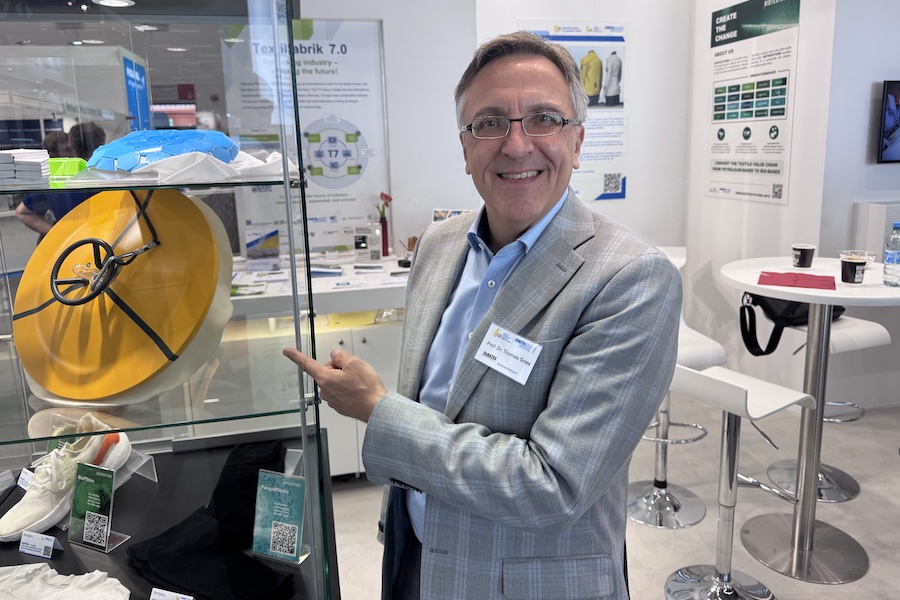
From technical textiles and AI-driven robotics to the limitations of textile circularity: Professor Dr Thomas Gries looks back on more than two decades of development at ITA Aachen. In the interview, he explains why production technology remains a decisive success factor, discusses international collaborations and innovation ecosystems, and shares his views on the transformation of production landscapes and the challenges facing an increasingly regulated industry.

#Knitting & Hosiery

“We need to move away from the price trap and return to a value-driven mindset.”

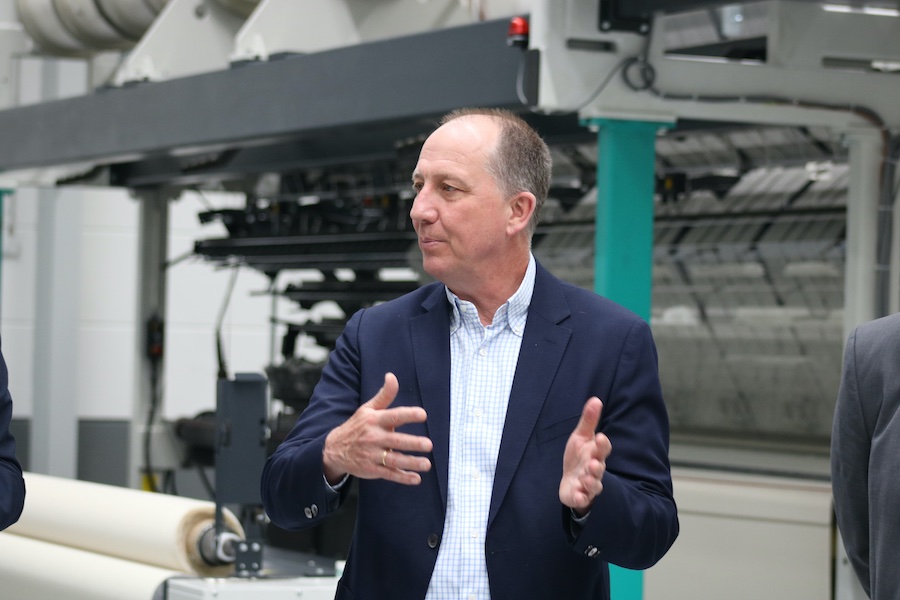
With its new Textile Innovation Center, KARL MAYER is sending a strong signal for innovation, collaboration, and the future of textile applications. In this interview, Karl Josef Mayer discusses new opportunities in warp knitting, the processing of staple fibres, recycling, the changing role of machinery manufacturers, and why the textile industry must once again focus more strongly on the value of textiles. by Oliver Schmidt

#Associations

“Innovation, resilience and international experience remain the great strengths of the Swiss textile machinery industry”

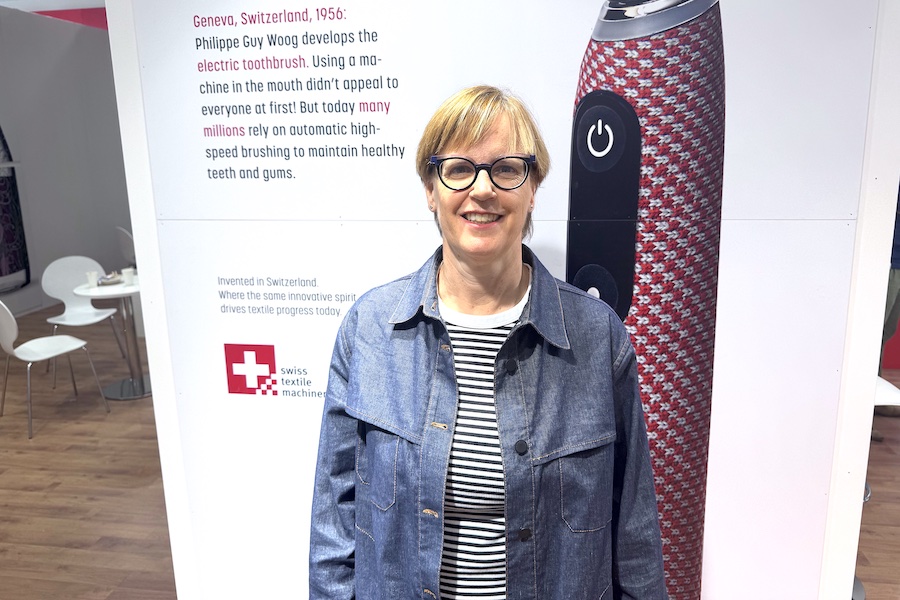
Geopolitical uncertainty, growing competitive pressure from China, new free trade agreements and the shift towards a circular economy are currently reshaping the global textile industry. In this interview, Cornelia Buchwalder discusses the current mood within the Swiss textile machinery sector, the industry’s distinctive innovative strength, new market opportunities in India and Asia, and the technological trends that could shape the upcoming trade fair cycle leading up to ITMA 2027.

More News on Raw Materials

#Natural Fibers

ICAC announces 84th Plenary Meeting in Egypt with focus on cotton industry resilience

Registration is now open for the International Cotton Advisory Committee’s 84th Plenary Meeting, which will take place from 24 to 26 March 2027 in Alexandria, Egypt. The conference will address climate resilience, technological developments, sustainability and competitiveness across the global cotton and textile value chain.

#Raw Materials

New Cotton Review examines competitiveness, market risk, and opportunities

From moving record volumes of Brazilian cotton to market, to managing price volatility, unlocking Ethiopia’s production potential, and strengthening African textile trade, the latest edition of Cotton: Review of the World Situation examines some of the most consequential opportunities and challenges facing the global cotton industry.

#Raw Materials

Kraig Labs ships first commercial spider silk yarn

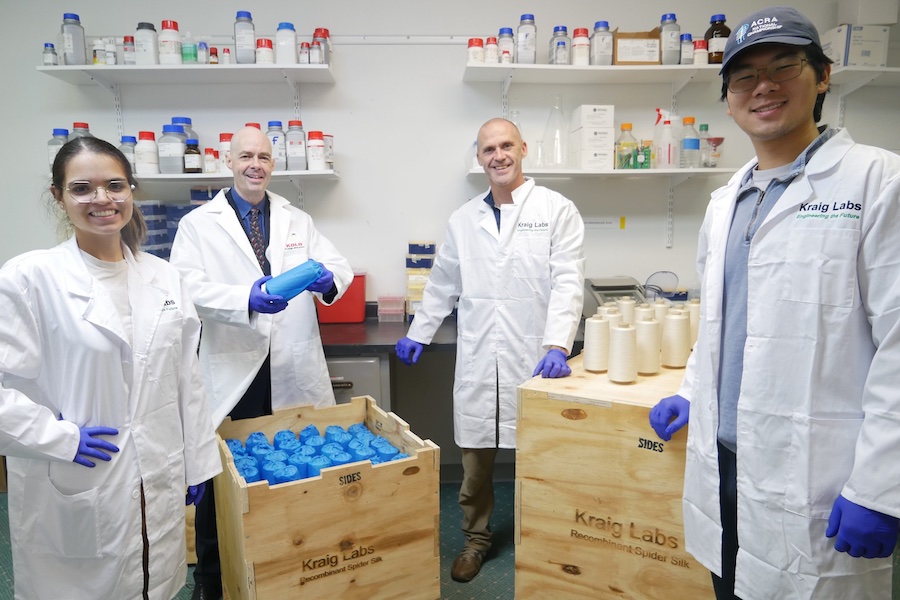
Kraig Biocraft Laboratories, Inc. (OTCQB: KBLB) (“the Company”, “Kraig Labs”, or “Kraig’s”), a world leader in spider silk technology*, today announced the shipment of its first commercial order of recombinant spider silk yarn. The custom-engineered yarn was produced to fulfill a purchase commitment from a globally recognized performance sports brand and is slated for development into a first-of-its-kind performance textile.

#Raw Materials

ALLIED expands down traceability with lot-level carbon footprint data

ALLIED Feather + Down has expanded its TrackMyDown traceability platform to include validated cradle-to-gate carbon footprint data linked to individual down lots. The initiative is designed to provide brands and consumers with more detailed environmental information on the materials used in finished products and could also support future data requirements associated with Digital Product Passports.

Latest News

#ITMA Asia + CITME 2026

KARL MAYER expands TM WEFT capabilities for fashion fabrics at ITMA ASIA 2026

A new E 36 gauge, an EL pattern drive and improved yarn tension regulation extend the application possibilities of KARL MAYER's TM WEFT warp knitting machine. At ITMA ASIA 2026, the company will demonstrate the developments alongside a collection of woven-like warp knitted fabrics for fashion and apparel.

#Recycling / Circular Economy

Textiles Recycling Expo USA 2027 opens registration and expands with manufacturing exhibition

The second edition of Textiles Recycling Expo USA will take place on 7–8 April 2027 in Charlotte, North Carolina. Following a debut that attracted more than 1,800 visitors and 95 exhibitors, the event will expand its exhibition and conference programme and will be held alongside the new Textiles Manufacturing Expo.

#Research & Development

First "Korea Day" at RWTH Aachen attracts more than 300 participants

The inaugural Korea Day in Aachen brought together representatives from science, business and Korean institutions to strengthen German-Korean cooperation in research, technology and education. The Institut für Textiltechnik (ITA) of RWTH Aachen University was among the participating organisations.

#Textiles & Apparel / Garment

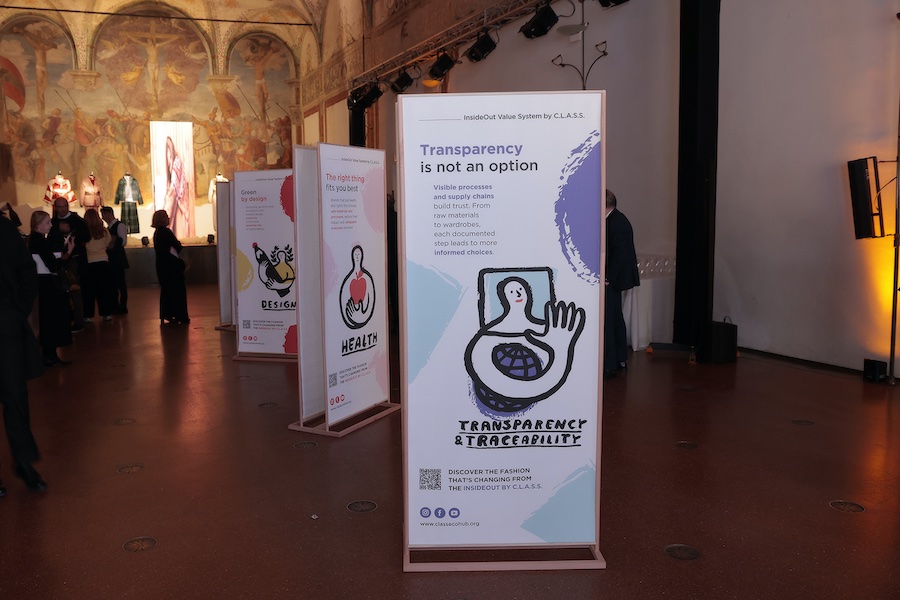
MarediModa highlights transparency and traceability with InsideOut by C.L.A.S.S.

The InsideOut by C.L.A.S.S. exhibition at MarediModa 2026 in Cannes focused on transparency, traceability and the measurable values behind fashion products. Its Decalogue of Values aims to make environmental, social and production-related information more accessible throughout the textile supply chain.

TOP