[pageLogInLogOut]

#Nonwovens / Technical Textiles

Global nonwoven fabrics market (2021 to 2026) - Industry trends, share, size, growth, opportunity and forecasts

The "Nonwoven Fabrics Market: Global Industry Trends, Share, Size, Growth, Opportunity and Forecast 2021-2026" report has been added to ResearchAndMarkets.com's offering.

The global nonwoven fabrics market exhibited moderate growth during 2015-2020. Looking forward, the market is expected to grow at a CAGR of around 6% during 2021-2026. 

Companies Mentioned

• Ahlstrom-Munksjo Oyj

• Berry Global Group Inc.

• DuPont de Nemours Inc.

• Fitesa S.A.

• Affiliates (Petropar SA)

• Freudenberg Performance Materials SE & Co. KG

• Johns Manville Corporation (Berkshire Hathaway)

• Kimberly-Clark Corporation

• PFNonwovens Czech s.r.o. (PFNonwovens Holding s.r.o)

• Suominen Oyj

• Toray Industries Inc.

• TWE GmbH & Co. KG

Keeping in mind the uncertainties of COVID-19, the analyst is continuously tracking and evaluating the direct as well as the indirect influence of the pandemic on different end use industries. These insights are included in the report as a major market contributor.

Nonwoven fabrics refer to cohesive fabric-like textiles manufactured by arranging fibers together using heat, chemicals or pressure. Some of the commonly used production methods include fiber entanglement and chemical and thermal bonding of materials, such as olefin, polyester and rayon. In comparison to the traditionally used fabrics, such as cotton, linen, wool and silk, nonwoven fabrics are lighter, do not require weaving or knitting to manufacture interlinings, insulation and protection clothing, industrial workwear, chemical defense suits and footwear components. As a result, they find extensive applications across various industries, such as personal care & hygiene, automotive, healthcare, building & construction and filtration.

Significant growth in the textile industry across the globe represents one of the key factors creating a positive outlook for the market. Furthermore, as the coronavirus disease (COVID-19) continues to spread across the globe, there has been a substantial increase in the demand for nonwoven hygiene products in the healthcare centers. This, in turn, is contributing to the market growth. Nonwoven fabrics are widely used to manufacture healthcare essentials, such as face masks, isolation gowns, drapes, single-use caps and shoe and headcovers. In line with this, the widespread adoption of these fabrics for the production of light-weight automobile components is also contributing to the growth of the market. Additionally, various product innovations, such as the development of smart nonwoven fabrics and blast-resistant curtains, are acting as other growth-inducing factors. These textiles expand under tension, thereby absorbing shockwaves and catching flying debris. Other factors, including the technological advancements in the manufacturing technologies, along with research and development (R&D) in the production of environment-friendly fabrics, are anticipated to drive the market further.

Key Questions Answered in This Report

• How has the global nonwoven fabrics market performed so far and how will it perform in the coming years?

• What has been the impact of COVID-19 on the global nonwoven fabrics market?

• What are the key regional markets?

• What is the breakup of the market based on the material type?

• What is the breakup of the market based on the technology?

• What is the breakup of the market based on the application?

• What are the various stages in the value chain of the industry?

• What are the key driving factors and challenges in the industry?

• What is the structure of the global nonwoven fabrics market and who are the key players?

• What is the degree of competition in the industry?


Key Topics Covered:

1 Preface

2 Scope and Methodology

3 Executive Summary

4 Introduction

4.1 Overview

4.2 Key Industry Trends

5 Global Nonwoven Fabrics Market

5.1 Market Overview

5.2 Market Performance

5.3 Impact of COVID-19

5.4 Market Forecast

6 Market Breakup by Material Type

7 Market Breakup by Technology

8 Market Breakup by Application

9 Market Breakup by Region

10 SWOT Analysis

11 Value Chain Analysis

12 Porters Five Forces Analysis

13 Price Analysis

14 Competitive Landscape

14.1 Market Structure

14.2 Key Players

14.3 Profiles of Key Players

For more information about this report visit:

https://www.researchandmarkets.com/r/sl5vh5



More News from TEXDATA International

#ITM 2026

ITM 2026: The new geography of textile production

New production hubs are emerging across North Africa and Central Asia, while Türkiye is accelerating its transformation toward higher-value, technology-driven and more sustainable textile manufacturing.

#Research & Development

“Production is a product”

From technical textiles and AI-driven robotics to the limitations of textile circularity: Professor Dr Thomas Gries looks back on more than two decades of development at ITA Aachen. In the interview, he explains why production technology remains a decisive success factor, discusses international collaborations and innovation ecosystems, and shares his views on the transformation of production landscapes and the challenges facing an increasingly regulated industry.

#Knitting & Hosiery

“We need to move away from the price trap and return to a value-driven mindset.”

With its new Textile Innovation Center, KARL MAYER is sending a strong signal for innovation, collaboration, and the future of textile applications. In this interview, Karl Josef Mayer discusses new opportunities in warp knitting, the processing of staple fibres, recycling, the changing role of machinery manufacturers, and why the textile industry must once again focus more strongly on the value of textiles. by Oliver Schmidt

#Associations

“Innovation, resilience and international experience remain the great strengths of the Swiss textile machinery industry”

Geopolitical uncertainty, growing competitive pressure from China, new free trade agreements and the shift towards a circular economy are currently reshaping the global textile industry. In this interview, Cornelia Buchwalder discusses the current mood within the Swiss textile machinery sector, the industry’s distinctive innovative strength, new market opportunities in India and Asia, and the technological trends that could shape the upcoming trade fair cycle leading up to ITMA 2027.

More News on Nonwovens / Technical Textiles

#ITMA Asia + CITME Singapore 2025

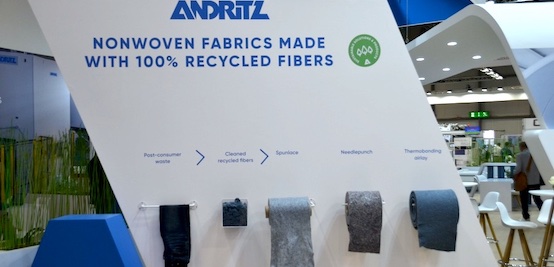
ANDRITZ sets focus on textile recycling and durable nonwoven production technologies at ITMA Asia 2025

International technology Group ANDRITZ will be presenting its innovative nonwovens production and textile solutions at ITMA ASIA + CITME 2025 in Singapore, from October 28 to 31, 2025 (Hall 2, D106). ANDRITZ will showcase its MMCF production plants, textile sorting and recycling, bast fiber processing, needlepunch, airlay, and life-cycle service technologies, with a focus on sustainable solutions. Discover how these innovations can grow your business opportunities and support a greener future.

#ITMA Asia + CITME Singapore 2025

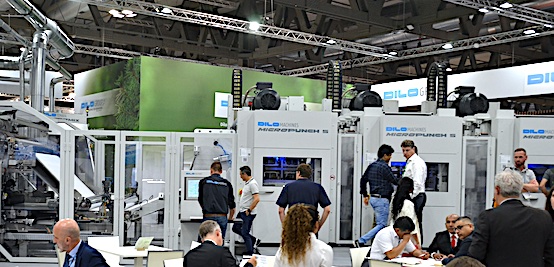
Dilo Group at ITMA ASIA Singapore 2025

At ITMA ASIA Singapore, the Dilo Group will exhibit at Booth No. H2 – D202. Together with Kansan Materials, Izmir, the company will present its latest developments and looks forward to welcoming visitors to exchange ideas and explore innovations in needling technology.

#Nonwovens

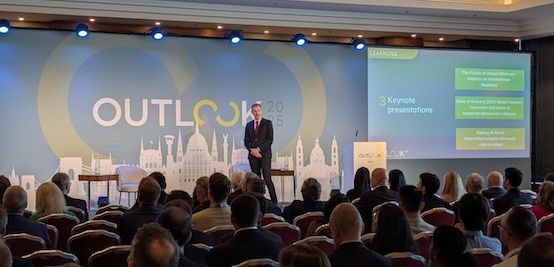
OUTLOOK™ 2025: Charting a sustainable and innovative future for the Nonwovens Industry

EDANA concluded its flagship event, OUTLOOK™ 2025, last week, marking it as a major success and addressing the biggest questions facing the industry. The three-day conference highlighted the urgent need for a unified approach to sustainability, regulation, and innovation in the absorbent hygiene and wipes sectors.

#Nonwovens

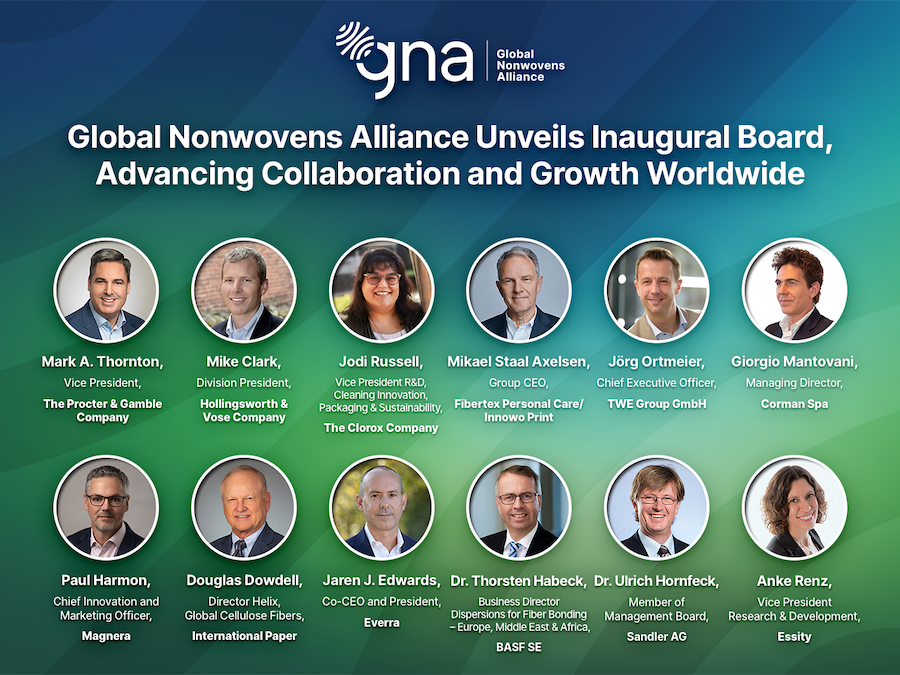
Global Nonwovens Alliance unveils Inaugural Board, advancing collaboration and growth worldwide

The Global Nonwovens Alliance (GNA), a tax-exempt federation jointly founded by INDA, the Association of the Nonwoven Fabrics Industry, and EDANA, the Voice of Nonwovens, announces the appointment of its founding Board of Directors. This group of leaders represents some of the most influential executives across the nonwovens value chain and reflects GNA’s mission to foster global collaboration, innovation, and growth in the industry.

Latest News

#ITM 2026

The future of textiles, the power of trade, and the summit of technology come together at ITM 2026

ITM 2026 International Textile Machinery Exhibition, one of the most prestigious organizations in the textile technologies sector, opens its doors to visitors between June 9-13. Expected to break records in terms of both exhibitor and visitor numbers, as well as the technological vision it presents, ITM 2026 will transform into a global trade hub with machine sales, and new business collaborations.

#Nonwoven machines

ATCO Hygienics, Uzbekistan, orders baby diaper production line from ANDRITZ

International technology group ANDRITZ has received an order from ATCO Hygienics to supply a new baby diaper production line for its plant in Tashkent, Uzbekistan. The order is included in ANDRITZ’s order intake for the first quarter of 2026. Commissioning of the production line is scheduled for the end of 2026.

#Weaving

Itema manufactures the first Projectile Weaving Machines “Made in Italy” at its Colzate Headquarters.

Itema proudly announces an important industrial milestone: in early May, the first Itema projectile weaving machines manufactured in Italy were successfully produced at the Group’s headquarters in Colzate.

#Spinning

Nico Pedretti appointed as Managing Director Graf Group

As of June 1, 2026, Nico Pedretti has assumed the role of Managing Director Graf Group. With more than 20 years of international industrial experience and extensive expertise in Operations, Supply Chain Management, Finance and Controlling, he brings a broad range of leadership and business experience to support Graf’s continued success.

TOP