[pageLogInLogOut]

#Nonwovens / Technical Textiles

Tackling coronavirus with meltblown and spunbond technologies
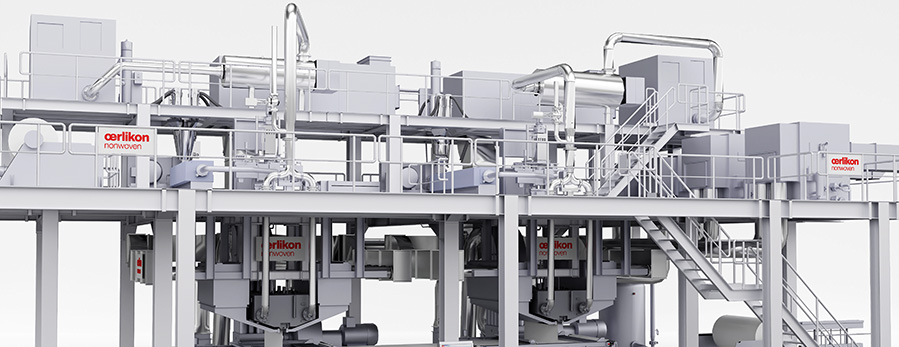
Oerlikon Nonwoven meltblown technology. @ 2020 Oerlikon
Since the outbreak of the coronavirus pandemic, the worldwide demand for protective masks and apparel has resulted in a record number of new orders in the high double-digit millions of euros at Oerlikon Nonwoven. The meltblown technology from Neumünster is recognized by the market as being one of the technically most efficient methods for producing highly-separating filter media made from plastic fibers.

The rising demand for protective masks and other medical protective equipment since the start of the coronavirus pandemic and the associated global ramping up of production capacities has also resulted in an increase in the demand for nonwovens for the production thereof. Initially, this resulted in bottlenecks in the provision of meltblown filter nonwovens. To this end, there had until this point be very few producers of medical filter nonwovens outside China. Meanwhile, the demand for spunbond systems is also rising. “Due to the structure of our group, we are in the fortunate position to swiftly reallocate and free up our production capacities. This means that we are able to relatively quickly deliver not only meltblown systems, but also spunbond equipment”, explains Dr. Ingo Mählmann, Head of Sales & Marketing at Oerlikon Nonwoven, talking about the positive situation at the company.

The capacities for respiratory masks available in Europe to date are predominantly manufactured on Oerlikon Nonwoven systems. “Our machines and systems for manufacturing manmade fiber and nonwovens solutions enjoy an outstanding reputation throughout the world. Ever more manufacturers in the most diverse countries are hoping to become independent of imports”, comments Dr. Mählmann. The Oerlikon Nonwoven meltblown systems are being delivered to Germany, China, Turkey, United Kingdom, South Korea, Italy, France, North America and – for the very first time – to Australia until well into 2021.

The nonwoven used in protection classes FFP1 through FFP3 respiratory masks plays a decisive role. © 2020 Oerlikon


Quality and efficiency in demand

Depending on the purpose of the application, medical PPE (personal protection equipment) should be breathable and comfortable to wear, protect medical staff against viruses, bacteria and other harmful substances and form a barrier against liquids. For these reasons, they are often made of either pure spunbond or of spunbond-meltblown combinations. Here, the meltblown nonwoven core assumes the barrier or filter task, while the spunbond has to retain its shape, while being tear-resistant, abrasion-proof, absorbent, particularly flame-resistant and nevertheless extremely soft on the skin.


Oerlikon Nonwoven is one of only a few European systems manufacturers able to offer both meltblown and spunbond systems. The systems are convincing with their combination of effectiveness and productivity, while simultaneously being highly-efficient. The homogeneous nonwoven formation ensures high-quality end products. “We offer our customers systems that are explicitly tailored to their requirements. We supply them with the total package – from the extrusion process all the way through to the nonwoven roll goods, all from a single source”, states Dr. Mählmann.

All masks are not created equal – thanks to the ecuTEC+

Protection against infections such as coronavirus can only be guaranteed with the right quality. On the one hand, this relates to how the masks are made. On the other hand, it is above all – as is so often the case – about what’s inside. Because the nonwoven used in protection classes FFP1 through FFP3 respiratory masks plays a decisive role.

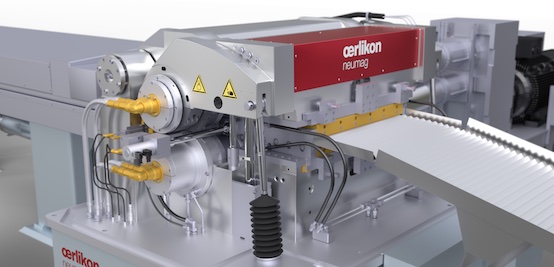
The nonwovens can be electrostatically-charged in order to further improve the filter performance without additionally increasing breathing resistance. Here, Oerlikon Nonwoven?s patented ecuTEC+ electro-charging unit excels in terms of its extreme flexibility. Nonwovens manufacturers can freely choose between numerous variation options and set the optimal charging method and intensity for their specific applications. In this way, even the smallest particles are still attracted and reliable separated by a relatively open-pored nonwoven. Nevertheless, mask wearers are still able to easily breathe in and out due to the comparatively loose formation of the fibers. To this end, it comes as no surprise that all meltblown systems currently destined for the production of mask nonwovens are equipped with the ecuTEC+ unit.
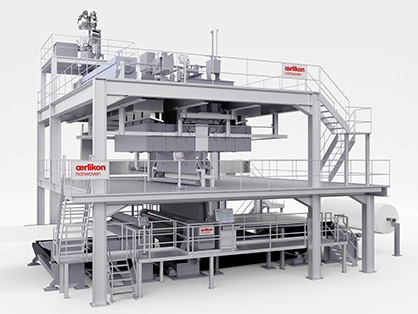
Oerlikon Nonwoven spunbond technology.<br />
 © 2020 Oerlikon
Oerlikon Nonwoven spunbond technology. © 2020 Oerlikon


More News from Oerlikon Textile GmbH & Co. KG

#Nonwovens / Technical Textiles

Crimper repair workshop begins operations

Since the beginning of the year, Oerlikon Textile Inc. has been offering a crimper repair service, making it the company's first location worldwide to do so. The workshop in Charlotte specializes primarily in Fleissner and Neumag crimpers.

#Spinning

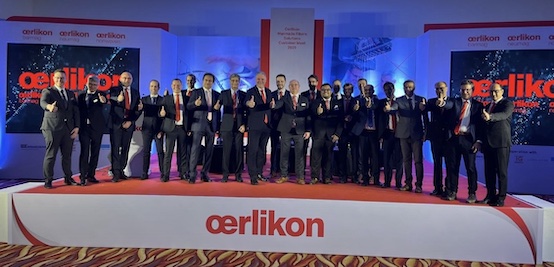
Oerlikon Manmade Fibers Solutions hosted successful Technology Day 2025 in India

Oerlikon Manmade Fibers Solutions recently hosted its highly anticipated Innovation and Technology Day at the Deltin Hotel in Daman by end of January 2025. The event attracted over 300 participants, including industry experts, partners, and stakeholders, who gathered to explore the latest advancements and trends in the manmade fibers industry in India.

#Spinning

Industrial yarn producer sees growth potential in tire cord sector

The Chinese Junma Group has expanded its HMLS capacities by 20 positions, hence becoming one of the largest tire cord manufacturers in China. At present, the company has 64 positions of HMLS systems, all of which are from Oerlikon Barmag.

#Spinning

Oerlikon reports third quarter 2024 results, highlights strong execution in a challenging market landscape

In the third quarter of 2024, Oerlikon reported a stable operational Group EBITDA margin, despite challenging market conditions, thanks to a focus on pricing, cost management, and efficiency across both divisions. Group order intake saw a 4% year-over-year decline at constant FX, attributed to temporary market softness in Surface Solutions, while orders in Polymer Processing Solutions showed signs of stabilization.

More News on Nonwovens / Technical Textiles

#ITMA Asia + CITME Singapore 2025

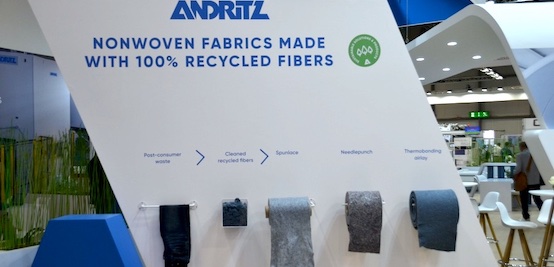
ANDRITZ sets focus on textile recycling and durable nonwoven production technologies at ITMA Asia 2025

International technology Group ANDRITZ will be presenting its innovative nonwovens production and textile solutions at ITMA ASIA + CITME 2025 in Singapore, from October 28 to 31, 2025 (Hall 2, D106). ANDRITZ will showcase its MMCF production plants, textile sorting and recycling, bast fiber processing, needlepunch, airlay, and life-cycle service technologies, with a focus on sustainable solutions. Discover how these innovations can grow your business opportunities and support a greener future.

#ITMA Asia + CITME Singapore 2025

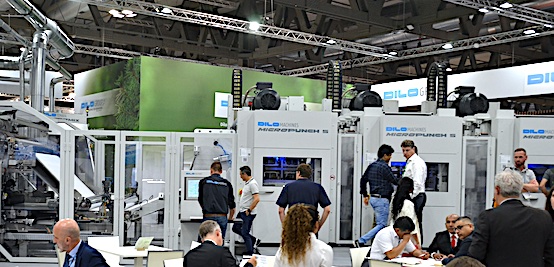
Dilo Group at ITMA ASIA Singapore 2025

At ITMA ASIA Singapore, the Dilo Group will exhibit at Booth No. H2 – D202. Together with Kansan Materials, Izmir, the company will present its latest developments and looks forward to welcoming visitors to exchange ideas and explore innovations in needling technology.

#Nonwovens

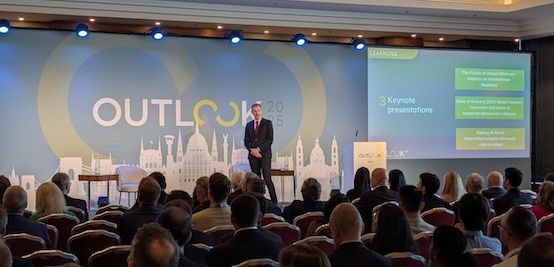
OUTLOOK™ 2025: Charting a sustainable and innovative future for the Nonwovens Industry

EDANA concluded its flagship event, OUTLOOK™ 2025, last week, marking it as a major success and addressing the biggest questions facing the industry. The three-day conference highlighted the urgent need for a unified approach to sustainability, regulation, and innovation in the absorbent hygiene and wipes sectors.

#Nonwovens

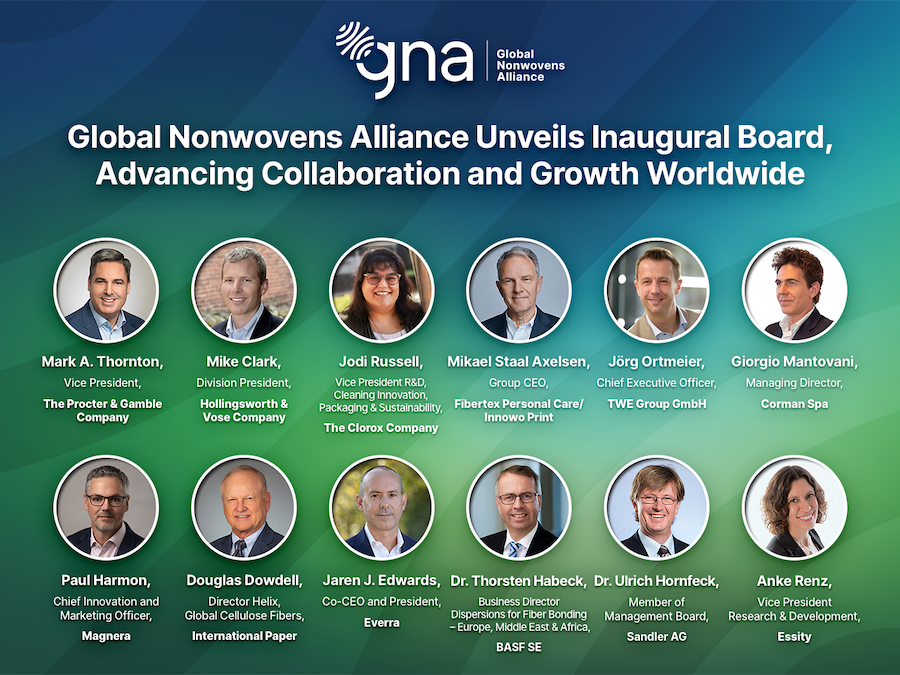
Global Nonwovens Alliance unveils Inaugural Board, advancing collaboration and growth worldwide

The Global Nonwovens Alliance (GNA), a tax-exempt federation jointly founded by INDA, the Association of the Nonwoven Fabrics Industry, and EDANA, the Voice of Nonwovens, announces the appointment of its founding Board of Directors. This group of leaders represents some of the most influential executives across the nonwovens value chain and reflects GNA’s mission to foster global collaboration, innovation, and growth in the industry.

Latest News

#Research & Development

Innovation center for textile circular economy inaugurated

Just over eight months after the foundation stone was laid, the new Innovation Center for Textile Circular Economy was officially inaugurated today at TITK Rudolstadt. Thuringia's Minister President Mario Voigt, TITK Director Benjamin Redlingshöfer, and other guests of honor cut the ribbon to the modern building complex and viewed the premises, which are now ready for occupancy. The “DICE – Demonstration and Innovation Center for Textile Circular Economy” is TITK's largest single investment to date. The Free State of Thuringia supported the total cost of €11.5 million with €8 million in GRW and FTI funding.

#Research & Development

Sustainable design of Geosynthetics and roof underlayments made from recyclates

Is it possible to recover plastic recyclates from previously unused waste streams in order to produce high-quality fibers and films? How can bio-based polymer fibers be manufactured so as to allow adjustable biodegradability? These are the questions being addressed by researchers from the Fraunhofer Cluster of Excellence Circular Plastics Economy CCPE in the Zirk-Tex project.

#Associations

Waste2Fashion: FTTH Committed to advancing Circular Fashion in the Mediterranean

As an official partner of the Waste2Fashion project, the Tunisian Federation of Textile and Apparel (FTTH) participated in the Kick-off Meeting held on 10–11 December in Spain. The event brought together project partners from across the Mediterranean, including Spain, Italy, Egypt, Lebanon, and Tunisia, to align on a shared vision and initiate the first implementation steps.

#Associations

AATCC announces 2025 Herman & Myrtle Goldstein Graduate Student Paper Competition winners

The American Association of Textile Chemists and Colorists (AATCC) recognized the winners of the 2025 Herman & Myrtle Goldstein Graduate Student Paper Competition. Founded in 1982 to give student members the chance to conduct and present original research, the competition was renamed in 1994 in honor of Herman and Myrtle Goldstein, following their US$60,000 endowment. Their gift is a lasting remembrance of their dedication to young people in the textile industry.

TOP