[pageLogInLogOut]

#Nonwovens / Technical Textiles

Pandemic & nonwovens industry response: challenges turned into opportunities - a resilient and recession-proof industry?

In the upcoming online version of OUTLOOK™20, a whole session is dedicated on the Nonwovens industry response to the pandemic. Jacques Prigneaux, Market Analysis & Economic Affairs Director at EDANA, reflects on what has been done by the association, its members and the industry.

When did EDANA first become aware that Covid-19 might become a problem and what was your initial response?

Being understandably ‘close to the coalface’ on this topic we were engaged very early on, actively tracking supply chain issues and the challenges for authorities since March. EDANA was drawn into an instantaneous role as an advisor and facilitator to a wide range of public and private-sector players. Early in the pandemic, government and European Union officials who previously knew little about facemasks and nothing at all about the nonwoven fabrics that go into them needed to get up to speed overnight.

EDANA was proactive in flagging the issues, writing to the European Commission, requesting its support in working with Member States to ensure that all production facilities where these products are manufactured are kept fully operational in the interest of public health. EDANA has been recognized by the European Commission as the voice of industry on all issues relevant to the nonwoven-based face masks supply chain.

Over the last five months, EDANA has also been liaising with partner associations including MedTech Europe, ESF, and EURATEX to ensure sufficient supplies of essential public health equipment.

EDANA was also busy from the off working to see how supply could match up with demand. One of its first steps was to conduct a survey, subsequently updated, of meltblown lines with appropriate charging equipment, and meltblown manufacturers who might be able to adapt their machines to make the facemask grade, as well as surveying facemask operations requiring meltblown.

Overall, you could group our activities under three headings:

  • counselling national government and EU officials on industry issues and challenges and relaying the supply chain concerns to authorities
  • dealing with practical issues related to major roadblocks including a scarcity of meltblown capacity in the Union and the need for appropriate testing and standards
  • and contributing to the emerging discussion about how to maintain adequate long-term surge capacity for future crises

In retrospect, how well prepared would you say the authorities were for the spike in demand for facemasks and PPE?

It’s a tough question, the situation surprised us all. This is an industry used to long term, reasonably stable demand and established supply lines. Authorities understandably did not have need to pay attention to many of the specifics. What impressed me was the speed in reacting to such an unforeseeable development by both industry and the authorities. The rapid reaction by a number of producers in adapting lines and prioritising mask production has been impressive. In mid-April if you were looking for meltblown I would have said you won’t get any before the third quarter or even the fourth quarter. However, now all kinds of people are adding capacity. Many of the authorities have matched this momentum where possible and most have done a good job in liaising with the relevant players.


What subsequent actions have been put in place specifically by nonwovens manufacturers?

EU production of face masks, essential for tackling the coronavirus crisis, is set to increase 20-fold by November this year compared to pre-crisis times. This means that EU-based producers will be able to make the equivalent of 1.5 billion three-layer masks a month. These figures show how EDANA’s members in the nonwovens sector have responded in record time to the unprecedented challenge of the COVID-19 pandemic and the call by EU and national authorities to ramp up production of face masks to protect public health.”

To meet the ongoing challenges EDANA and our members convened a new sector group representing face mask converters, nonwoven suppliers, testing laboratories and equipment manufacturers to work together to develop an independent and self-sufficient supply chain for medical face masks and personal protective masks in the EU. The group works to ensure adherence to applicable European Standards and to encourage responsible product stewardship throughout the life cycle of face-masks from raw material sourcing to end-of-life solutions. During the OUTLOOK session the output of the meetings held by this group will be presented.

What lessons will be learned for the future and how will Covid-19 influence the industry’s drive to develop more sustainable products and processes?

In short, evaluation and preparation. It was notoriously difficult to estimate the quantities needed but this has improved. Local production has also been prioritised. The Commission took steps to ensure that nonwovens plants were considered to be essential services. It also set up the Emergency Support Instrument, with a budget of €2.7 billion, to make expenditures to fight COVID-19. It immediately set aside €100 million to buy “healthcare related material”. The Commission also established the strategic rescEU medical stockpile along with a related distribution system, with upto €380 million available for purchase of medical supplies. The stockpile includes ventilators, PPEs, medicines and laboratory supplies.

Product innovation will be important in meeting future challenges and we know many of our members are investigating alternates to meltblown.

What about the issue of the disposal of these products? There will be so many, could they be an environmental hazard?

Indeed, this unprecedented spike in demand for masks and other PPE equipment has meant billions of these products placed on the market with the resulting implications for refuse collection and yes, unfortunately, litter. The ability for recycling of face masks/respirators and ideas for circular economy concepts is a key point in one of the presentations at OUTLOOK which will include a number of presentations from expert actors covering much of what we’ve discussed above.

More News from EDANA

#INDEX 2026

EDANA unveils nominees for INDEX™26 Awards: Highlighting the next generation of nonwoven excellence

EDANA is proud to unveil the highly anticipated nominees for the INDEX™26 Awards, the nonwoven industry’s highest accolade for technical and sustainable excellence. Out of a record-breaking field of entries, these finalists represent the cutting edge of material science—from bio-based hygiene fibers and PFAS-free protective textiles to revolutionary water-filtration machinery. Each nominee has been selected by a jury of industry experts for their ability to solve critical global challenges, including the transition to a circular economy and the pursuit of enhanced consumer performance.

#INDEX 2026

INDEX™26: Pioneering highlights at the World’s leading nonwovens exhibition

INDEX™26, the World’s Leading Nonwovens Exhibition, will take place from 19 to 22 May 2026 at PALEXPO in Geneva. The upcoming edition serves as a hub for innovation, inspiration, and networking with international decision-makers, positioning itself as a cross-industry platform for exchange across all nonwoven sectors. With 600 exhibitors expected, INDEX™26 represents the entire value chain of the industry, from raw materials and machinery to producers of nonwovens, components, and converters.

#Associations

EDANA joins industry coalition urging a strong internal market legal basis for the New Circular Economy Act

EDANA has joined 67 European industry associations in a joint industry statement calling on the European Commission and co-legislators to anchor the forthcoming New Circular Economy Act (CEA) in the Internal Market legal basis (Article 114 TFEU).

#Associations

EDANA warns of consequences of misclassification of PET spunbond imports

EDANA would like to remind its members and industry stakeholders of the legal requirement to comply with the EU rules on customs classification when importing nonwovens from third countries outside the EU. In this regard, it was recently discovered that there appears to be a high level of customs misclassification occurring in our industry. This could have dangerous and costly consequences for importers.

More News on Nonwovens / Technical Textiles

#ITMA Asia + CITME Singapore 2025

ANDRITZ sets focus on textile recycling and durable nonwoven production technologies at ITMA Asia 2025

International technology Group ANDRITZ will be presenting its innovative nonwovens production and textile solutions at ITMA ASIA + CITME 2025 in Singapore, from October 28 to 31, 2025 (Hall 2, D106). ANDRITZ will showcase its MMCF production plants, textile sorting and recycling, bast fiber processing, needlepunch, airlay, and life-cycle service technologies, with a focus on sustainable solutions. Discover how these innovations can grow your business opportunities and support a greener future.

#ITMA Asia + CITME Singapore 2025

Dilo Group at ITMA ASIA Singapore 2025

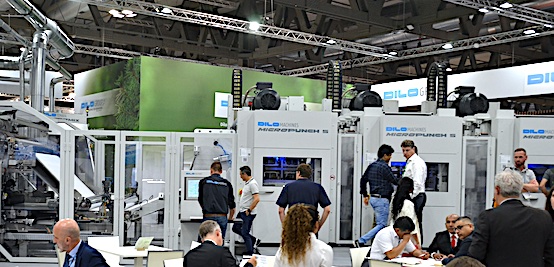
At ITMA ASIA Singapore, the Dilo Group will exhibit at Booth No. H2 – D202. Together with Kansan Materials, Izmir, the company will present its latest developments and looks forward to welcoming visitors to exchange ideas and explore innovations in needling technology.

#Nonwovens

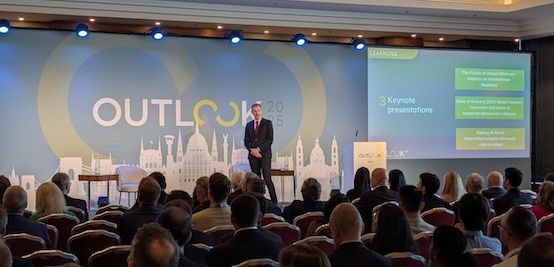
OUTLOOK™ 2025: Charting a sustainable and innovative future for the Nonwovens Industry

EDANA concluded its flagship event, OUTLOOK™ 2025, last week, marking it as a major success and addressing the biggest questions facing the industry. The three-day conference highlighted the urgent need for a unified approach to sustainability, regulation, and innovation in the absorbent hygiene and wipes sectors.

#Nonwovens

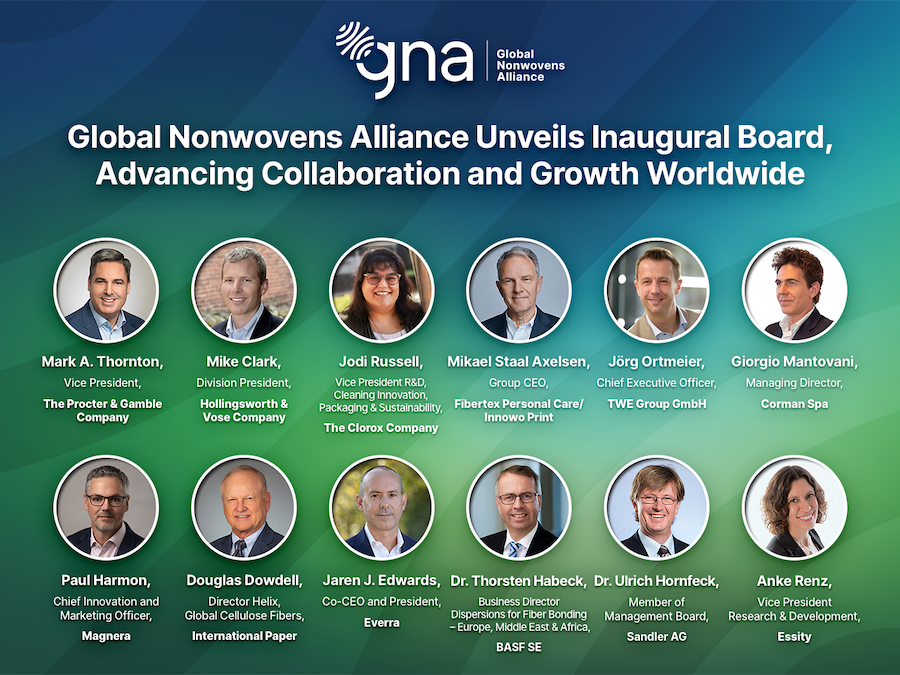
Global Nonwovens Alliance unveils Inaugural Board, advancing collaboration and growth worldwide

The Global Nonwovens Alliance (GNA), a tax-exempt federation jointly founded by INDA, the Association of the Nonwoven Fabrics Industry, and EDANA, the Voice of Nonwovens, announces the appointment of its founding Board of Directors. This group of leaders represents some of the most influential executives across the nonwovens value chain and reflects GNA’s mission to foster global collaboration, innovation, and growth in the industry.

Latest News

#Raw Materials

A Powerful Opening: Global thought leaders launch the International Cotton Conference Bremen

The International Cotton Conference Bremen will open on 25 March 2026 in the Parliament building of the Free Hanseatic City of Bremen with a keynote session of exceptional calibre. Distinguished international experts will set the stage for the conference by offering incisive perspectives on the most pressing challenges and the defining trends shaping the future of the global cotton trade. Their insights will span a broad spectrum — from geopolitically driven disruptions affecting global supply chains to the opportunities emerging from innovation-led agriculture capable of supporting a growing world population. Together, these opening keynotes will frame the dialogue of the conference, highlighting both the complexity of today’s market environment and the pathways toward a resilient and forward-looking cotton sector.

#Techtextil 2026

Where performance becomes product strategy: Techtextil 2026 puts functional apparel in the spotlight

The demand for high-performance textile solutions for the apparel industry increases – and with it the sector’s innovative strength. Techtextil 2026 addresses these developments: The Performance Apparel Textiles area (Hall 9.0) presents around 130 exhibitors from 13 countries showcasing innovative materials for workwear, protective clothing, smart fashion, outdoor and sports. Global key players such as Concordia Textiles, Getzner, Kermel, Klopman International and YKK Europe are among the participants. The live show “Performance Apparels on Stage” brings forward-looking wearables on stage and demonstrates textile innovations where they matter most: in action.

#Denim

Jeanologia launches Billy

The new AI extracts precise laser designs from a garment image in minutes, transforming how vintage denim is recreated for production. If Jeanologia’s laser changed the way jeans were made at the end of the last century, its AI now takes the next step: moving from reproducing wear to designing it. / archive photo © 2026 Jeanologia

#Raw Materials

Lenzing Group positions bio‑based materials as a strategic asset for Europe’s economic security

The Lenzing Group, a leading supplier of regenerated cellulose fibers for the textile and nonwovens industries, hosted a high‑level roundtable in Brussels to discuss how bio‑based materials can strengthen Europe’s economic security and support the shift toward a fossil‑free future. Organized in cooperation with Euractiv, the event brought together representatives of the European Commission, the UK Mission to the EU, academia, civil society, and industry.

TOP