[pageLogInLogOut]

#Nonwovens / Technical Textiles

Protective masks for Europe
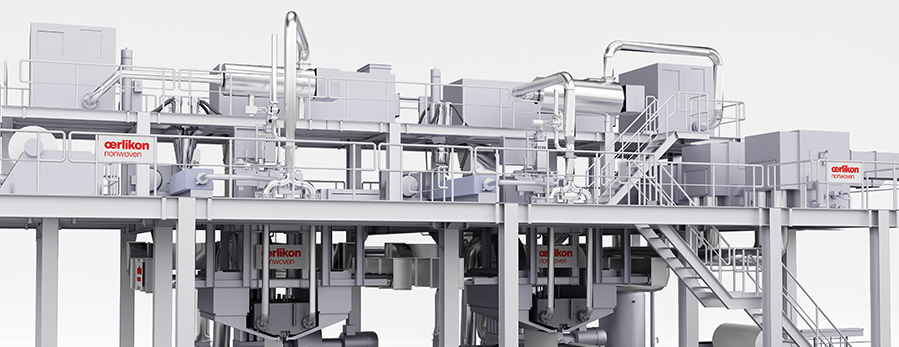
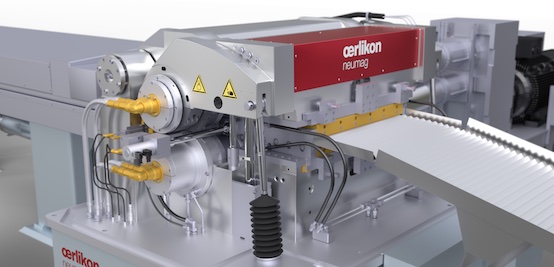
The Oerlikon Nonwoven meltblown technology is recognized by the market as being the technically most efficient method for producing highly-separating filter media made from plastic fibers. (c) 2020 Oerlikon
Two companies newly-established in Germany to manufacture and distribute high-end protective masks were in the spotlight at the beginning of May: with FleeceforEurope and Lindenpartner, Düsseldorf-based Kloepfel Group purchasing consultancy and Berlin-based industrial consultancy Bechinger & Heymann Holding plan to manufacture and distribute up to 50 million protection class FFP1 through FFP3 respiratory masks a month exclusively for the European market from the beginning of fall. And the primary focus will be on quality.

With protective masks – including those used in operating rooms – this quality is provided above all by virus-absorbing nonwovens. And these will be manufactured by the new venture ‘FleeceforEurope’ in Germany using an Oerlikon Nonwoven meltblown system.But all masks are not created equally. For this reason, protection against infections such as corona-virus can only be guaranteed with the right quality. On the one hand, this relates to how the masks are made. On the other hand, it is above all – as is so often the case – about what’s inside. Because the nonwoven used in protection class FFP1 through FFP3 respiratory masks plays a decisive role.

Here, the globally-leading and long-established meltblown technology from Oerlikon Nonwoven will be deployed. In a special, patented process, the fibers laid into a nonwoven fabric during manufacture are subsequently electrostatically-charged, before the material is further processed down-stream.

Inquiries from all over the world

“Our patented electrostatic charging ensures that even the smallest particles, and therefore also viruses, are drawn in and absorbed by the nonwoven fabric for several hours. As a result of the comparatively loose formation of the fibers, the wearer can nevertheless breathe in and out easily”, explains Rainer Straub, Managing Director of Oerlikon Nonwoven with pride. And rightfully so. Because Oerlikon is currently dispatching one meltblown system after the other. “We identified the situation early on and have adapted to demand. We started manufacturing in advance at the beginning of the year and can now start reliably delivering and quickly assembling systems and, due to our global Oerlikon Manmade Fibers segment network, we are able to offer the necessary service as well”, explains the experience engineer. Currently, the company is receiving inquiries from across the globe, but specifically also from Europe and from Germany itself.
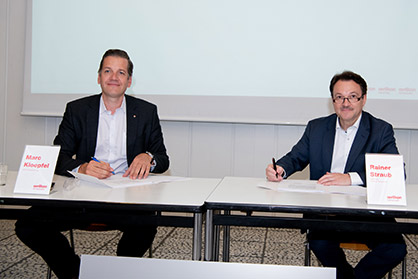
Marc  Kloepfel, CEO  of  the  Kloepfel  Group, and  Rainer  Straub, Managing  Director  of  Oerlikon Nonwoven (right), signing the contract for the purchase of a new Oerlikon Nonwoven meltblown technology system. (Photo: Oerlikon)
Marc Kloepfel, CEO of the Kloepfel Group, and Rainer Straub, Managing Director of Oerlikon Nonwoven (right), signing the contract for the purchase of a new Oerlikon Nonwoven meltblown technology system. (Photo: Oerlikon)


“The Federal States all currently want to be self-sufficient in order to better control the so-called critical infrastructure in the future. The investment program announced by Germany’s Federal Minister for Economic Affairs Peter Altmaier this week will additionally boost the demand for our meltblown technology”, continues Straub.

European market for protective masks with a promising future

Those responsible at Oerlikon Nonwoven and FleeceforEurope, which will primarily focus on producing high-end nonwovens, and Lindenpartner, which will manufacture and distribute the protective masks, are certain of one thing: the market for protective masks has a very promising long-term future in Europe. What has been commonplace in Asia for many years now will also become normal in Europe. People will be increasingly wearing face masks when venturing out, in order to better protect themselves against health risks such as the current pandemic and also against increasing environmental pollution in the form of fine particles and exhaust fumes in the future.


“We didn’t know what meltblown technology was three months ago. We helped our customers procure protective masks, at the same time discovering the in part hair-raising conditions in the global markets”, explains Marc Kloepfel, CEO of the Kloepfel Group. According to him, around 200 businesses in China were manufacturing protective masks until 2019, a figure that has meanwhile risen to include thousands of micro-producers. “And there is a lot of very poor quality on the market and, unfortunately, counterfeits as well. But customers from all over the world are knocking on the door with bags of cash and buy everything they can get their hands on – even items that may have been stolen further up the supply chain.”
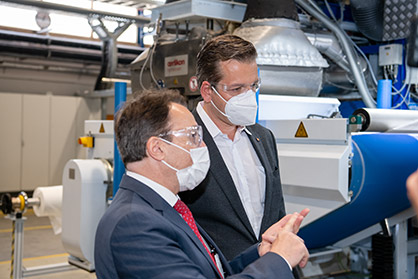
Marc  Kloepfel, CEO  of  the  Kloepfel  Group, and  Rainer  Straub, Managing  Director  of  Oerlikon  Nonwoven (left), viewing  the  Oerlikon  Nonwoven  meltblown  laboratory  system  in  Neumünster, Germany. (Photo: Oerlikon)
Marc Kloepfel, CEO of the Kloepfel Group, and Rainer Straub, Managing Director of Oerlikon Nonwoven (left), viewing the Oerlikon Nonwoven meltblown laboratory system in Neumünster, Germany. (Photo: Oerlikon)


The prices have practically exploded. “While masks used to cost ten cents to purchase, prices has risen to two euros or more during the coronavirus crisis”, explains Philipp Heymann, CEO of Lindenpartner. However, there is – as in the case of many other industrial and consumer goods – a huge level of dependency on Asia, and China in particular, among Europeans and Americans. In order to become competitive here, the focus will be on state-of-the-art production processes for manufacturing protective masks. “At the end of the day, we will be able to manufacture products in Germany at Chinese prices as a result of our automation technology”, explains Heymann. 
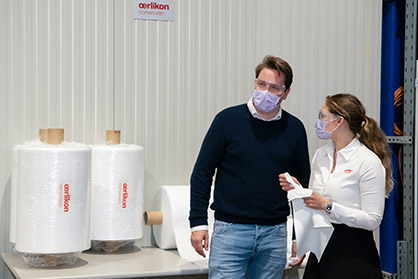
Oerlikon expert Juliane Müller-Weigel explains the benefits of an Oerlikon Nonwoven meltblown technology system to Philipp Heymann, CEO of Lindenpartner (Photo: Oerlikon)


Medical face masks from a vending machine

Mask producer Lindenpartner has already secured supplies of nonwovens and will be producing face masks for the European healthcare sector over the coming weeks. To fight the coronavirus pandemic, Lindenpartner is planning to install 100 self-service face mask vending machines in Germany over the next four weeks, positioning them in publicly-accessible places such as shopping centers and airports, for example. FFP2 masks will initially cost around five euros from vending machines. As soon as Lindenpartner is able to manufacture the masks with its own nonwoven fabrics, prices will fall to approx. 2 to 3 euros
More News from Barmag GmbH & Co. KG

#Spinning

Barmag showcases pump solutions for demanding PU applications at PU China 2026

At PU China, taking place November 3–5, 2026, at the Shanghai World Expo Exhibition Center in Shanghai, Barmag’s Pumps Division will present high-performance metering solutions for the processing of polyurethane systems (Hall 1, Booth 135). The focus is on high-precision gear metering pumps that enable the exact delivery of PUR components as well as other high-viscosity and reactive media. With their high metering accuracy, they help reduce material consumption, stabilize processes, and ensure consistently high product quality.

#Spinning

Barmag presents metering pump solutions at ASE China

From September 15 to 17, 2026, Barmag’s Pumps Division will present its solutions for the precise delivery and metering of adhesives, sealants, and other high-viscosity media at ASE China at the Shanghai New International Expo Centre. The focus of the exhibition will be on high-precision gear metering pumps that help plant managers sustainably optimize material usage, process stability, and product quality. (Booth E4235).

#Spinning

Barmag expands its portfolio for PA6/PA6.6 applications — also available as a retrofit solution

With the new type 6020 ceramic oiler, Barmag is introducing a powerful addition to its product portfolio for processing PA6 and PA6.6 yarns. The solution is specifically designed for low-titer applications in the range of 5 to 100 denier.

#Nonwovens / Technical Textiles

Crimper repair workshop begins operations

Since the beginning of the year, Oerlikon Textile Inc. has been offering a crimper repair service, making it the company's first location worldwide to do so. The workshop in Charlotte specializes primarily in Fleissner and Neumag crimpers.

More News on Nonwovens / Technical Textiles

#ITMA Asia + CITME Singapore 2025

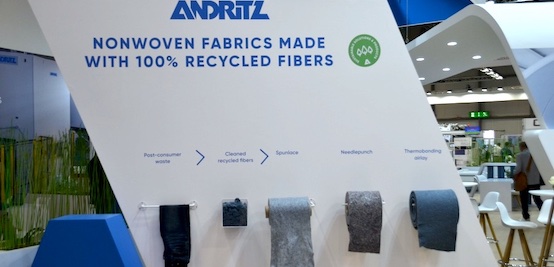
ANDRITZ sets focus on textile recycling and durable nonwoven production technologies at ITMA Asia 2025

International technology Group ANDRITZ will be presenting its innovative nonwovens production and textile solutions at ITMA ASIA + CITME 2025 in Singapore, from October 28 to 31, 2025 (Hall 2, D106). ANDRITZ will showcase its MMCF production plants, textile sorting and recycling, bast fiber processing, needlepunch, airlay, and life-cycle service technologies, with a focus on sustainable solutions. Discover how these innovations can grow your business opportunities and support a greener future.

#ITMA Asia + CITME Singapore 2025

Dilo Group at ITMA ASIA Singapore 2025

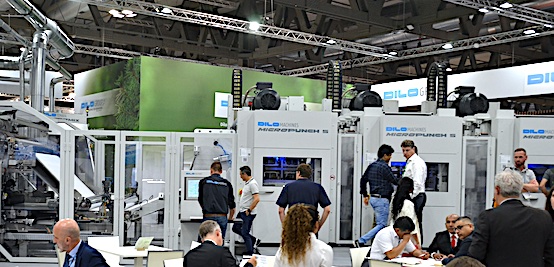
At ITMA ASIA Singapore, the Dilo Group will exhibit at Booth No. H2 – D202. Together with Kansan Materials, Izmir, the company will present its latest developments and looks forward to welcoming visitors to exchange ideas and explore innovations in needling technology.

#Nonwovens

OUTLOOK™ 2025: Charting a sustainable and innovative future for the Nonwovens Industry

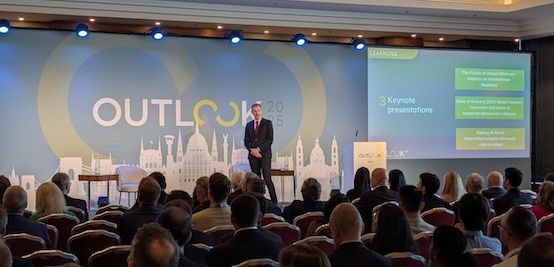
EDANA concluded its flagship event, OUTLOOK™ 2025, last week, marking it as a major success and addressing the biggest questions facing the industry. The three-day conference highlighted the urgent need for a unified approach to sustainability, regulation, and innovation in the absorbent hygiene and wipes sectors.

#Nonwovens

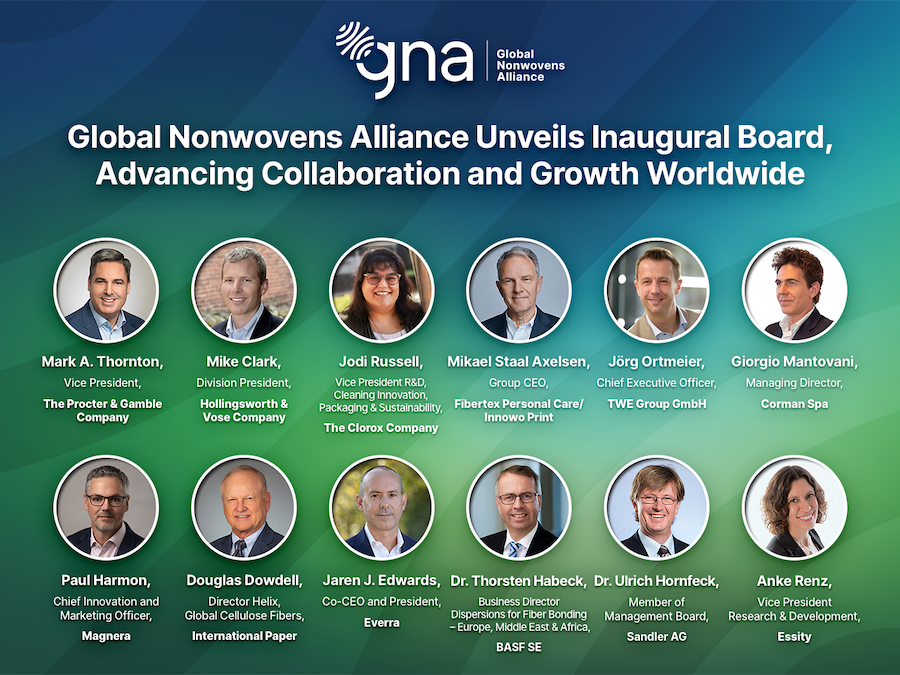
Global Nonwovens Alliance unveils Inaugural Board, advancing collaboration and growth worldwide

The Global Nonwovens Alliance (GNA), a tax-exempt federation jointly founded by INDA, the Association of the Nonwoven Fabrics Industry, and EDANA, the Voice of Nonwovens, announces the appointment of its founding Board of Directors. This group of leaders represents some of the most influential executives across the nonwovens value chain and reflects GNA’s mission to foster global collaboration, innovation, and growth in the industry.

Latest News

#Associations

Automation, digitalization and new business models are shaping the future of footwear and leather technology

The European footwear and leather machinery industry is facing profound transformations. Global competitive dynamics, technological innovation, automation and digitalization are fundamentally reshaping markets, production processes and business models. This is one of the key findings of the new study “Threads of the Future – Footwear and Leather Technology Edition”, which was presented today by VDMA Textile Care, Fabric and Leather Technologies (VDMA TFL) during a press conference at SIMAC Tanning Tech in Milan.

#Knitting & Hosiery

SHIMA SEIKI to showcase flat knitting and digital design solutions at Egypt Stitch & Tex

Leading Japanese computerized flat knitting technologist SHIMA SEIKI MFG., LTD. of Wakayama, Japan, together with its sales representative in Egypt, TTS (EL MASRIA FOR TRADE & TECHNICAL SERVICES), will participate in the upcoming 24th International Exhibition for Textile & Carpet Machineries, Printing Technologies and Accessories (Egypt Stitch & Tex) to be held in Cairo, Egypt this month.

#Associations

EURATEX calls for urgent action on industrial competitiveness

EURATEX, the European Apparel and Textile Confederation, welcomes today’s State of the Union Address by European Commission President, Ursula von der Leyen, and in particular her recognition of Europe’s need to rebalance unfair trade, cut red tape, and strengthen its industrial and strategic autonomy.

#Raw Materials

Cotton made in Africa puts farmer dialogue at the heart of agricultural training

A new manual created by the Aid by Trade Foundation and African People & Wildlife shows how Cotton made in Africa aims to transform cotton cultivation through dialogue rather than directives.

TOP