[pageLogInLogOut]

#Industry 4.0 / Digitalization

Going digital: Swiss textile machinery shows the way

Digitalization is a big story in the world of business. It’s all about change, making use of technology to transform attitudes and create new opportunities to grow revenue. At its heart is innovation, with new systems and intelligent use of data. In textiles, the entire value chain is going digital, as evidenced by the commitment of Swiss Textile Machinery Association member firms. Their story – presented here in six ‘chapters’ – spans industry sectors through spinning, weaving, finishing and nonwovens.

Innovative technology for new business models

Cost savings and more

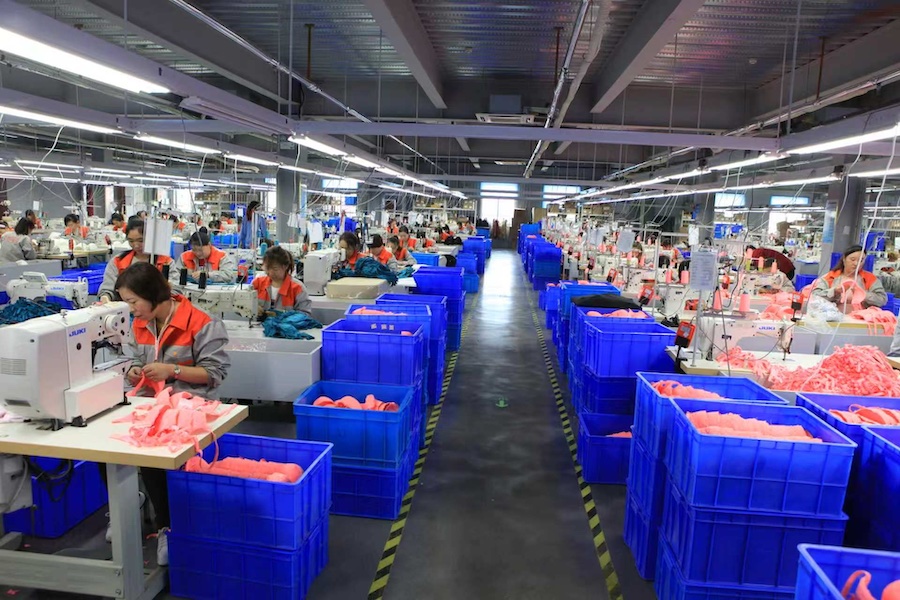
The process of digitalization in the textile industry today is continuous – faster in some segments than others – but noticeable everywhere. Automation is promising in many areas of finishing and making-up, where initial investments are being made. An example is folding of finished goods, previously a slow manual operation. Now, high-performance automatic folding machines from Swiss company Espritech deliver the potential for cost savings, unlocking new options for positive change at this most labor-intensive stage of production. For manufacturers in low-cost areas, the benefit results from its volume and is a simple financial one. In higher-cost segments, the application of this technology can be part of a completely new business model, taking production closer to the end customer. 

© 2022 SWISSMEM
© 2022 SWISSMEM


Better process, better workplace

Pioneering in the field of digitalization embraces social responsibility along with the introduction of bold new technological innovation. That’s a commitment made by Uster, as it aims to shape future working practices in the textile industry in areas where its systems are applied. In fabric inspection, that means combining the strengths of human capabilities with the performance of Artificial Intelligence. Automatic defect classification with machine learning technology is the next leap in digitalization for fabric manufacturers, following on from automated detection of fabric faults, which is already well established in weaving and finishing mills. This will bring benefits in profitability for the manufacturer – as well as an improved working environment for their operatives, freed from repetitive tasks.

Information, flexible and fast

Access to data is critical in the digitalized world of textiles. It must be flexible, fast and secure, and available to all levels of the company – worldwide. Jakob Muller serves the narrow fabrics industry ideally with a digitalization portal, perfectly developed to provide essential production information. The portal is a browser-based production data acquisition system, with direct access to the machine controls. The system offers unique data monitoring and communication on a global framework. Digitized weave rooms present information 24/7 on desktops at the customer’s plant, as well as on tablets and smartphones remotely.


Making the most of it

Rieter takes advantage of latest digital technology to offer customers a unique experience. Their digital spinning suite helps spinners overcome their daily challenges and manage costs and efficiency more effectively. This all-in-one mill management system connects all the machinery, giving quick access to the right information and a holistic view, from bale to yarn. Users profit from full transparency, and are presented with recommendations based on long-standing experience and know-how. This is digitalization at its most practical, applied to allow spinners to make the most of their installed machinery.

Production, service, training – digital everything

As a solutions provider, Saurer puts digitalization at the core of business, integral to its technology offering to customers. Some latest examples include self-optimization of spinning machines, and a fully automated transport of cylindrical or conical cross-wound packages. These are automatically stored in an internal buffer system, for later feeding to subsequent processes. Of course after-sales service is also digital: the e-shop and machine information hub, together with the web-based training centre, ensure that knowledge is transferred to customers – turning employees into experts.

See the future system today

Autefa Solutions uses the concept of digital twinning, visualizing any real-world concept of a nonwovens line to make it easier for potential customers to grasp the idea. It’s also a big help for training and servicing needs. Most of all they digitalize important parts e.g. of a baling press line with perfectly interconnecting software tools. This is an excellent method for reducing commissioning times. Ordered bale presses reach technical readiness in the form of a digital twin, before they are commissioned in the real world. This typically halves the total time to get the line up and running.

Speaking on behalf of Swiss Textile Machinery Association members, André Imhof, CEO of Autefa Solutions Switzerland AG, says: “Making digitalization our friend opens doors for business model innovations, which is essential for our industry competitiveness. The approach is to digitalize everything that can be digitalized. We won’t stop.”

It’s also quite certain that there will be many more chapters of the digitalization story invented in Switzerland.

More News from Swissmem Textile Machinery Division

More News on Industry 4.0 / Digitalization

#Software

Tunicotex Group boosts OTDP to 85%, cuts planning time by 25% & expands production capacity by 40%

Coats Digital is delighted to announce that following the implementation of FastReactPlan, leading Tunisian premium knitwear manufacturer, Tunicotex Group, has significantly improved its on-time delivery performance from 75% to 85%, reduced planning time by 25%, minimised delays and penalty costs, and unlocked 40% additional capacity to take on more customer orders and support sustained business growth.

#Industry 4.0 / Digitalization

Suzhou Tianyuan boosts costing accuracy to 98% with Coats Digital’s GSDCost

Coats Digital is delighted to announce that Suzhou Tianyuan Garments Co., Ltd., a leading manufacturer of high-quality sportswear and functional apparel for global brands such as Adidas, FILA, ANTA, and The North Face, has achieved remarkable productivity and cost management improvements following the implementation of Coats Digital’s award-winning method-time-cost optimisation solution, GSDCost.

#Industry 4.0 / Digitalization

Lenze receives IEC 62443-4-1 certification: TÜV Rheinland confirms cyber-secure development process

Lenze SE has been certified according to IEC 62443-4-1 since November 2025. TÜV Rheinland thus confirms that Lenze meets the requirements of this internationally recognized standard for a secure development process for industrial automation and drive products. The certification is an important milestone on the way to implementing the EU Cyber Resilience Act (CRA), which will become mandatory for machine manufacturers and their suppliers from December 2027.

#Industry 4.0 / Digitalization

Mango joins TextileGenesis pioneering traceability solution, a Lectra company, for a transparent value chain

Mango, one of the leading international fashion groups, has joined TextileGenesis, the pioneering traceability solution for the fashion and textile industries, to trace their natural and animal fibers, synthetics, man-made cellulosic fibers and leather. TextileGenesis, a Lectra company, offers a complete and secure cutting-edge technology with its six-dimensional (6D) offering and unique “fiber forwards” approach. Mango, has long been committed to maintaining a fully transparent supply chain, and TextileGenesis will reinforce this commitment.

Latest News

#Knitting & Hosiery

Terrot introduces T-Frame platform to redefine stability and flexibility in large-diameter circular knitting

Terrot Textilmaschinen GmbH has unveiled the new T-Frame, a universal machine frame platform for large-diameter circular knitting machines. Designed to meet growing demands for flexibility, stability, and operational safety, the T-Frame provides a next-generation foundation for both current and future industrial knitting machines, combining German engineering expertise with a modular, future-ready design approach.

#Business

Canopy introduces a first-of-its-kind $2 billion USD investment blueprint to decarbonize global materials supply chains

Today, the global, solutions-driven not-for-profit Canopy joined partners at Davos to introduce a new finance model designed to accelerate the growth of low-carbon materials and transform the paper, packaging, and textile supply chains. The event was anchored by a keynote speech from Sri A Revanth Reddy, Hon’ble Chief Minister of Telangana, with India set to host the first iteration of the new investment blueprint.

#Yarns

Biella Yarn launches Collection “Reimagined” for Spring/Summer 2027 with fresh approach to fibre design

Biella Yarn, the flat knitting brand of Suedwolle Group, introduces its Spring/Summer 2027 collection “Reimagined” featuring refined yarn blends and advanced spinning technologies designed for contemporary summer knitwear. Under the motto “And the story goes on…”, Biella Yarn continues to push the boundaries of responsible yarn development, offering versatile materials that elevate modern craftsmanship.

#Recycled_Fibers

Circular progress: Trevira® CS Eco fabrics can now be made using textile-recycled, permanently flame-retardant fibers and yarns

Indorama Ventures, a global sustainable chemical company, takes an important next step toward making textiles more circular for homes and public spaces. To support fabric makers in creating a more sustainable version of the well-known flame-retardant Trevira CS fabric, the company now offers Trevira® flame-retardant fibers and filament yarns that contain 50% recycled textile material. First customers were introduced to the new offering during Heimtextil trade show mid-January in Frankfurt, Germany.

TOP