[pageLogInLogOut]

#ITMA 2019

First global showing of new hybrid textile printer at ITMA 2019

The Mimaki Tiger-1800B MkII was honored by the European Digital Press Association with two EDP Awards back in May. (c) 2019 Mimaki
Mimaki Engineering, a leading manufacturer of inkjet printers and cutting systems, today announces that it will showcase its broad portfolio of cutting-edge digital print technologies at ITMA 2019 (20-26 June 2019, Fira de Barcelona, Spain). This will include the first global showing of a brand-new hybrid digital textile printer, uniquely featuring both direct-to-textile and direct-to-transfer print capabilities. Crucially, these features enable textile and garment manufacturers to achieve unparalleled flexibility and enhanced application opportunities for increased business growth.
  • New textile printer delivers unparalleled flexibility and unprecedented application capabilities
  • Mimaki to showcase a wealth of technological breakthroughs and creative opportunities to drive digital print adoption in textiles

To facilitate these benefits, the new Mimaki printer also allows multiple sets of inks to be loaded simultaneously, supporting increased fabric range versatility and maximum product variety.

As the future of textile printing and for further production benefits, Mimaki will also give a sneak preview of its new and upcoming TA Job Controller software, specifically designed for textile production environments. For use on Mimaki’s successful, EDP-awarded Tiger Pro Series and Rimslow TR Series – and all Mimaki textile printers –, TA Job Controller enables users to connect one-on-one to the RIP and other devices, for an automated workflow from design to pre-print, print and post print processes.

At ITMA 2019, Mimaki will collaborate with Dutch fashion designer Tessa Koops, printing her designs onto a variety of applications, including curtains, cushions, and wallpapers. (c) 2019 Mimaki


Featuring pioneering inkjet printing equipment, advanced workflow software and top-performance inks, Mimaki will demonstrate how its long-term commitment to the textile arena and extensive investment in R&D, can help textile print service providers to boost their business. It will also show them how they can cut their production costs and diversify their offering to maintain competitiveness. 

A not-to-be-missed highlight on the Mimaki booth (H3-B110), visitors will also see the company’s flagship industrial digital textile printer, the Mimaki Tiger-1800B MkII – in dye-sublimation configuration. Combining Mimaki’s Japanese expertise in electronics with La Meccanica’s know-how in building solid and robust belt printer bodies with ‘made-in-Italy’ design, the Tiger-1800B MkII – the latest model of Tiger-1800B Series – enables users to produce extremely high-quality products (up to 1200 x 1200 dpi resolution) at up to 385m2/h print speed, without the need to compromise on production and throughput. 

The Tiger-1800B MkII features a number of pioneering Mimaki core technologies, including MAPS (Mimaki Advanced Pass System) and NRS (Nozzle Recovery System). MAPS prevents banding and colour-shifting during the printing process by spreading the edge of each pass to create a gradient. This feature, alongside NRS, enables the printer to replace damaged nozzles without stopping production - enhancing the printer’s performance and boosting productivity and print quality for the user.

From its advanced TR series, Mimaki will also show the TR300-1850C coating machine and the TR300-1850S steaming machine, and the benefits of a total solution for textile print production. Providing the equipment needed to operate the entire digital textile workflow, Mimaki’s all in on solution ensures complete technology compatibility, as well as increased productivity, print quality and reduced production costs.

Bringing a Total Solutions Approach to digital production of textiles, Mimaki also offers pre- and post-print treatment machines, such as the TR300-1850C coating machine (left) and TR300-1850S steaming machine (right). (c) 2019 Mimaki


“As a pioneer in textile printing, this industry has always been in our company’s DNA and we are excited to show our extensive textile portfolio at ITMA 2019,” comments Danna Drion, Marketing Manager EMEA, Mimaki Europe “The potential of digital printing in textiles is clearly evident, and we aim to provide the technology to enable our customers to take full advantage of it and grow profitably.”

Mimaki will also use ITMA 2019 to showcase its wide range of flagship solutions addressing different textile market segments. These include:

  • Mimaki TS55-1800: A dye-sublimation business-enhancing printer, the TS55-1800 addresses the entry and mid-level markets offering continuous operation and an unprecedented price-quality ratio. Equipped with Mimaki’s core technologies, the printer achieves high productivity and high-quality print with vibrant colours and vivid imagery and is suitable for interior fabrics, sports and fashion apparel and soft signage.?
  • Mimaki UCJV300-160: A roll-to-roll UV LED inkjet integrated printer/cutter, featuring a white ink capability. A versatile printing system, the UCJV300-160 uniquely enables four-layer printing for transformative backlit applications, and five-layer printing, allowing different designs to be viewed on both sides of a substrate simultaneously. Visitors at ITMA 2019 will see the UCJV300-160 printing wallpapers live.

This array of technological breakthroughs represents only one side of Mimaki’s commitment to the textile industry. At ITMA 2019, the company will also demonstrate its cooperation with world-renowned designers who are driving innovation with cutting-edge and inspirational printed textile applications. As part of this approach, Dutch retail fashion designer, Tessa Koops, will use the show to demonstrate the power of Mimaki digital print technology for increased creativity, personalisation and profitability within the fashion industry.

Discover Mimaki’s broad digital textile portfolio during the company’s press conference at ITMA 2019, Thursday June 20th, 14:00 – 15:00, CC1 – Meeting Room 1.4, Fira de Barcelona.
More News from Mimaki Europe B.V.

#Digital Printing

Mimaki highlights growing demand for hybrid UV printing across European markets

Insights from Mimaki's European partner network reveal how hybrid UV printing is responding to different regional market needs, driven by growing demand for flexible, application-oriented printing technologies.

#Digital Printing

Mimaki advances DTF productivity and stability with new TxF330-800

Mimaki Europe, a leading manufacturer of industrial inkjet printers and cutting plotters, announces the TxF330-800, its new direct-to-film (DTF) printer. Designed to support stable, high-quality garment decoration in demanding print environments, the system combines automated maintenance, expanded white ink capacity and advanced production capabilities to streamline workflow.

#Digital Printing

Where every detail counts: Experiential applications of DTF and UV-DTF printing

Personalisation has moved far beyond the traditional logo on a t-shirt. Today, brands want to create complete experiences, where every detail – from clothing and accessories to décor and packaging – feels distinctive and reflective of their identity.

#Digital Printing

DTF vs DTG Printing - The technologies shaping today’s custom merchandise market

From sportswear to branded tote bags, custom merchandise continues to grow in popularity across sectors, driving print shops to cater to short runs, personalisation, and rapid turnaround. As print providers look to this market, two printing technologies often stand out: Direct‑to‑Film (DTF) and Direct‑to‑Garment (DTG). Each offers its own benefits, and understanding these differences helps determine the most suitable production method for print service providers.

More News on ITMA 2019

Latest News

#Weaving

unspun and Arvind partner to bring 3D weaving into industrial-scale apparel production

US fashion technology company unspun and Indian textile manufacturer Arvind Limited have announced a strategic partnership to introduce OneWeave™ 3D weaving technology into industrial-scale apparel manufacturing. Two machines are expected to become operational at Arvind’s Ahmedabad facility by December 2026, with plans for a potential expansion involving more than 30 additional machines across India and North America in 2027 and 2028.

#Dyeing, Drying, Finishing

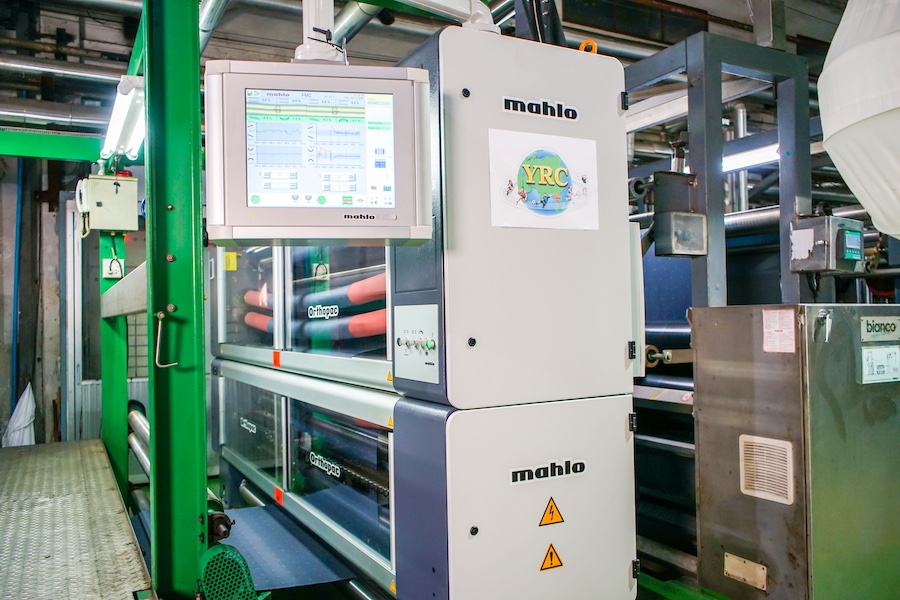
Nine Orthopac RXVMC-20 systems: Y.R.C. Textile relies on Mahlo for uncompromising fabric quality

In 2026, Y.R.C. Textile invested in nine Mahlo Orthopac RXVMC-20 straightening systems, a clear vote of confidence in technology engineered for textiles with high distortion dynamics and the tightest quality demands.

#Natural Fibers

Better Cotton Initiative partners with FarmRaise to simplify data management for US cotton growers

The Better Cotton Initiative (BCI) has announced a partnership with agricultural technology company FarmRaise to simplify data collection, reporting and program participation for cotton growers in the United States. The digital platform will help farmers manage certification requirements, document agricultural practices and track progress towards regenerative agriculture goals while reducing administrative work. The solution is scheduled to become available in January 2027.

#Research & Development

ITA spin-off TERNAfil wins third place at KUER.NRW 2026 with MAXCarbon technology

The Aachen-based ITA spin-off TERNAfil GmbH has secured third place in the KUER.NRW Business Plan Competition 2026 with MAXCarbon, an innovative carbon-ceramic hybrid fibre developed for applications in the hydrogen economy. The technology combines the mechanical properties of carbon fibres with the thermal and corrosion resistance of ceramic materials.

TOP