[pageLogInLogOut]

#ITM 2022

Erhardt+Leimer presents two new inspection technologies at ITM 2022
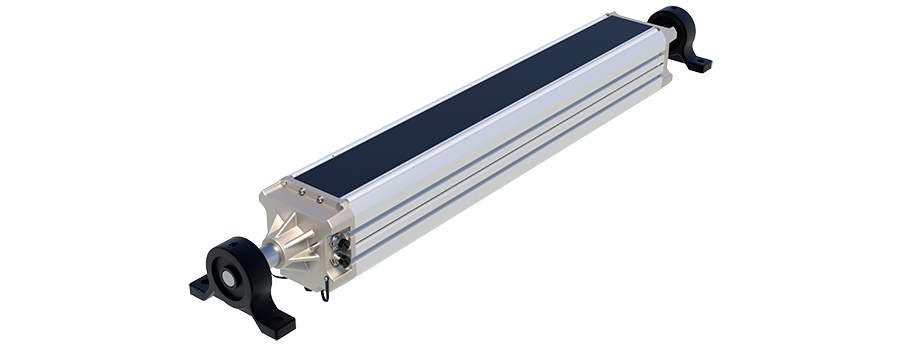
The metal detector MD 1005 protects textile machines against damage due to pieces of metal, e.g. broken needles, in the web © 2022 Erhardt+Leimer
At ITM the Erhardt+Leimer group will present, along with its proven systems and devices for web automation, two new inspection technologies, a seam sensor and a metal detector, for the detection of cross-seams and pieces of metal in the web. With these devices, production processes can be optimized and made more reliable.

New inspection technologies for improved 

Sensor acquires cross-seams as reliably as the human eye

The seam sensor marketed with the identifier SI 1001 detects, optically and therefore without contact, any type of seam on printed or single-color fabrics. New software algorithms make it possible for the first time to acquire cross-seams at the level of human perception. Along with a light transmitter and a matrix camera with lens, the sensor also includes a WLAN card for reliable communication with a smartphone, tablet or any other mobile terminal device. A dedicated app is also available using which, for instance, special seams can be tested offline. If a cross-seam is detected, a digital output in the sensor is switched so that, depending on the machine, for example the calender rollers can be opened, the shearing blade raised briefly or the seam left to run through the digital printing press without printing. The seam sensor can also be used to calculate the running meters per batch.

Metal detector with segment-by-segment evaluation

During the production of textiles, small metal particles find their way into the web due to the various processing steps. If these particles are not all detected, extremely costly damage may occur on the downstream calender rollers and shearing tools. In addition, there is also a risk of catalytic reactions in wet finishing. As a result, whole web sections are often converted into scrap. The metal detector ELMETA MDA 1005 / 1006 reliably and accurately detects the smallest metal particles over the entire width of the web. Per segment ?(300 mm) a signal LED on the sensor indicates the position of the metal particle in the web. The metal detector can be used for dry and damp web textiles, non-woven fabrics and carpets. Its function is assured at production speeds from 2 to 500 m/min.


Web cleaning for various application areas

ELCLEAN is a modular web cleaning system for the removal of dust and similar soiling in production lines where there is only little space. The system consists of components such as brushes and fabric rollers, as well as components that operate without contact such as powerful fans and a highly efficient vacuum system. The system is equipped with all components or only with certain components depending on the application. Suitable filter systems make possible straightforward, reliable disposal of the soiling. The system is available in both a cantilever version for narrow webs and with support on both sides for wide webs. It can be integrated into production lines or operated as a standalone machine.
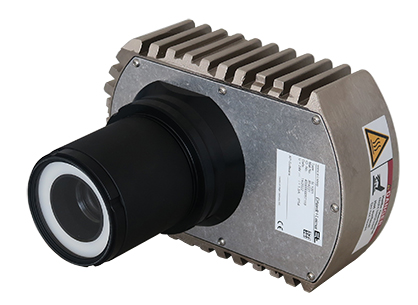
The seam sensor SI 1001 detects a very wide range of seams, even on printed textiles, thanks to special algorithms © 2022 Erhardt+Leimer


E+L will be present at ITM together with ITEKS and other partners in hall 14 on stand 06B.


More News from Erhardt + Leimer GmbH

More News on ITM 2022

Latest News

#Raw Materials

New study shows low environmental impact by Cotton made in Africa Organic Cotton from Tanzania

Today, the Aid by Trade Foundation (AbTF) is announcing the results of a comprehensive life-cycle analysis (LCA) for cotton produced in Tanzania under the Cotton made in Africa Organic (CmiA Organic) standard. The study emphasises the small ecological footprint of CmiA Organic verified cotton. This can largely be traced back to the absence of synthetic pesticides, artificial fertilisers, and artificial irrigation. Consequently, CmiA Organic cotton can help the textile industry meet regulatory requirements as well as science-based targets. The results also show that the consequences of climate change threaten the livelihoods of these cotton farmers, even though the type of agriculture they practise barely contributes to climate change.

#Raw Materials

Better Cotton Initiative strengthens regenerative focus in standard update

The Better Cotton Initiative (BCI) has strengthened the regenerative focus of its field-level standard with the launch of a new version of its Principles & Criteria (P&C), which marks the next step in the organisation’s journey to becoming a regenerative standards system.

#Man-Made Fibers

Selenis and Kintra Fibers partner to scale 100% bio-based synthetic fiber technology

Selenis, a leading global specialty polyester manufacturer, today announced a strategic manufacturing partnership with materials science company Kintra Fibers to scale Kintra’s patented fiber-grade PBS resin - a 100% bio-based and biodegradable material designed for textile applications.

#Functional Fabrics

PERFORMANCE DAYS proves its relevance as the industry’s key meeting point

Held on March 18–19, 2026, PERFORMANCE DAYS once again confirmed its position as a leading international platform for functional textiles. A total of 3.366 trade visitors and around 560 exhibitors gathered in Munich, with the event already kicking off successfully on DAY 0, which received highly positive feedback for its interactive format. Despite challenging conditions caused by the public transport strike in Munich, the event saw strong attendance and a consistently high level of activity across both exhibition days.

TOP