#Europe
Commission proposes Mercosur and Mexico agreements for adoption
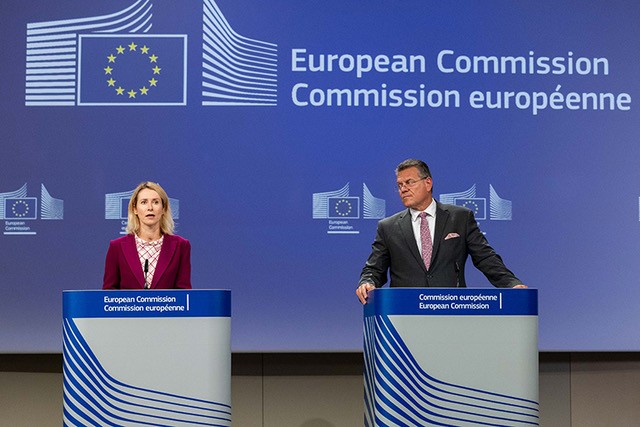
These partnerships will create billions of euro's worth of export opportunities for EU companies of all sizes, contribute to economic growth and competitiveness, support hundreds of thousands of European jobs, and promote EU interests and values. They will strengthen value chains, and help the EU to widen its range of reliable sources for critical inputs and raw materials. In a time of growing geopolitical instability, these agreements bind us closer to strategically important partners, providing a shared platform to strengthen mutual trust and tackle shared global challenges, including the modernisation of the rules-based global trading system.
Both agreements reaffirm our joint commitment to human rights, multilateralism and international peace and security. They will also reinforce our engagement on key issues such as sustainable development, transnational organised crime, and migration.
European Commission President, Ursula von der Leyen, said: “Our agreements with Mercosur and Mexico are important milestones for the EU's economic future. We are continuing to diversify our trade, foster new partnerships and create new business opportunities. EU businesses and the EU agri-food sector will immediately reap the benefits of lower tariffs and lower costs, contributing to economic growth and job creation. The EU is already the world's biggest trading block, and these agreements will cement this position.”
Unprecedented EU export and investment opportunities to Mercosur
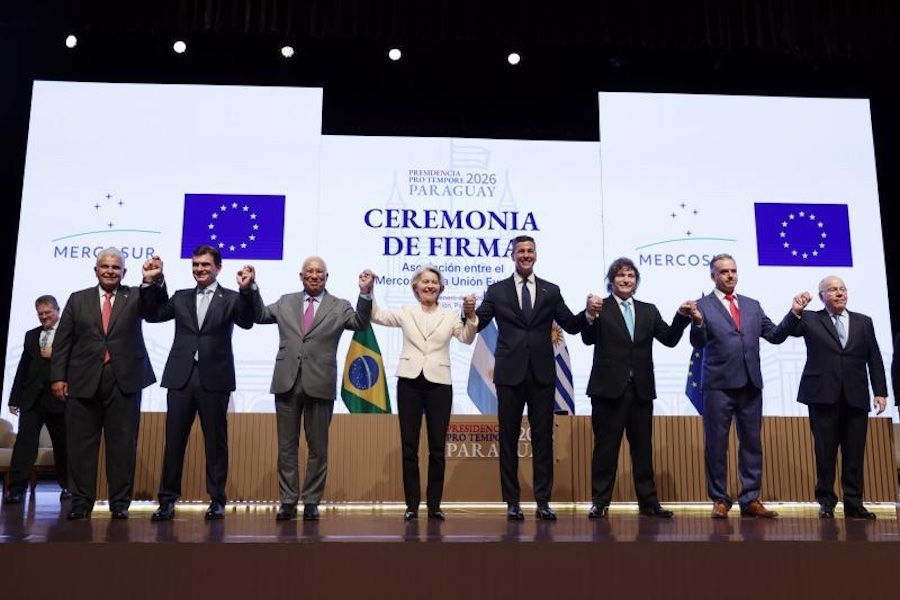
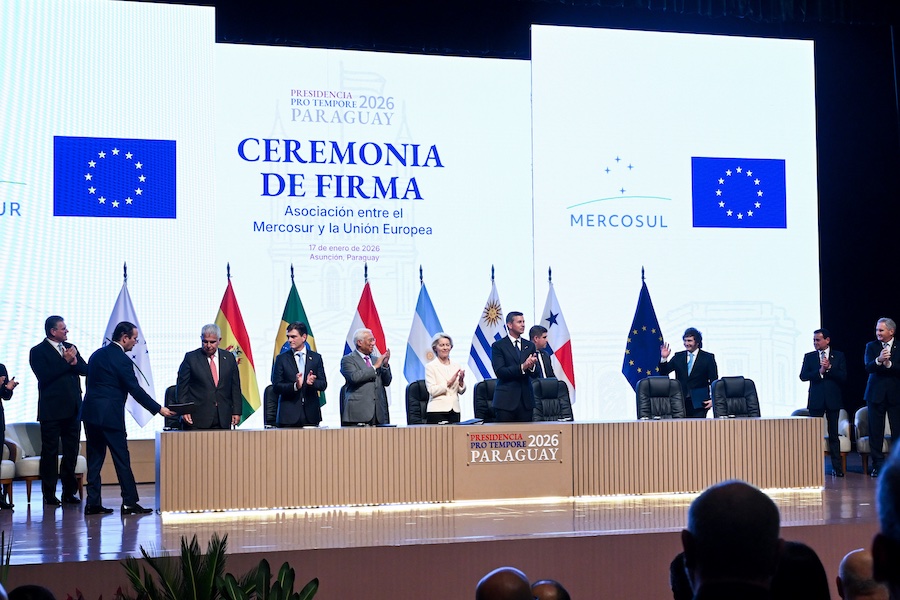
The deal with Argentina, Brazil, Paraguay and Uruguay (EU-Mercosur Partnership Agreement) will create the world's biggest free trade zone, covering a market of over 700 million consumers. EU firms will enjoy first-mover advantage, benefitting from lower tariffs in a region where most other countries face high tariffs and other barriers to trade.
It is estimated the agreement can increase EU annual exports to Mercosur by up to 39% (€49 billion) supporting more than 440,000 jobs across Europe. It will reduce often prohibitive Mercosur duties for EU exports, including on key industrial products, such as cars (currently 35%), machinery (14-20%), and pharmaceuticals (up to 14%).
The agreement will make it easier for EU companies to invest in key supply chains, including for critical raw materials and related goods, all with a high level of environmental and labour protection. This can play a pivotal role in advancing the green and digital economic transformations of both regions, while ensuring predictable and stable supply chains.
New opportunities for food exports, strong defences for EU farmers
EU agri-food exports to Mercosur are expected to grow by almost 50%, as the deal reduces high tariffs on key EU agri-food products, notably wine and spirits (up to 35%), chocolate (20%), and olive oil (10%).The deal will also support growth in exports of traditional, high-quality EU agri-food products. It will also put an end to unfair competition by Mercosur products that imitate authentic EU products by protecting 344 EU Geographical Indications.
The deal provides full and comprehensive protection for all EU sensitivities in the agricultural sector. First, it limits preferential agri-food imports from Mercosur to a fraction of EU production (for example, 1.5% for beef and 1.3% for poultry). Second, it establishes robust safeguards protecting sensitive European products against any harmful surge in imports from Mercosur. In this sense, the Commission proposes to supplement the agreement with a legal act that operationalises the bilateral safeguards chapter of the EMPA. This act, to be adopted by the European Parliament and the Council, aims in particular at protecting EU's crucial and most sensitive agricultural sectors, recognising the concerns of European farmers. The Commission will address the issue with Mercosur countries with a view to ensuring smooth implementation of the Agreement.
The Commission will move forward with a number of accompanying initiatives, including steps towards potential alignment of production standards on pesticides and animal welfare applicable to imported products. In line with the Vision for Agriculture and Food, the Commission will soon launch impact assessments on these issues.
The EMPA does not modify any EU sanitary and phytosanitary (SPS) import requirements. Our food health and safety standards will continue to apply to all products on the EU market – whether produced here or imported. In line with the ambition set out in the Vision for Agriculture and Food, the Commission is also stepping up SPS import controls by increasing the number of audits and checks in third countries, and by strengthening controls on the ground.
Finally, the Common Agriculture Policy (CAP) after 2027 proposal includes a ring-fenced budget of at least €300 billion for income support, ensuring that EU farmers continue to receive strong and stable income. The Commission is also introducing the new Unity Safety Net for crisis measures, with a total capacity of €6.3 billion — effectively doubling the current agricultural reserve. This reinforced support will help safeguard our farmers in times of market disturbances and growing geopolitical uncertainties.
Opening the Mexican market to EU exports
The new agreement will further support economic growth and boost competitiveness on both sides. Mexico is one of the EU's longest standing trading partners and second biggest trading partner in Latin America, with the original agreement dating back to 2000. The EU exports over €70 billion's worth of goods and services to Mexico every year under the existing trade deal, supporting over 630,000 EU jobs.
Mexico is a net food importing country, therefore the agreement will strongly benefit EU agriculture exporters. The modernised EU-Mexico agreement will remove the remaining prohibitive tariffs on EU agri-food exports to Mexico, such as cheese, poultry, pork, pasta, apples, jams as well as chocolate and wine. Removing these tariffs, which currently go up to 100% on certain EU exports, will make EU agricultural products much more competitive in Mexico. Furthermore, simpler procedures will make it quicker an cheaper for agri-food exporters to sell their product on the Mexican market. The deal also expands protection from imitation to 568 iconic traditional high-quality European food and drink products (Geographical Indications).
The modernised agreement will provide crucially important access to critical raw materials, thus benefiting strategic industries in Europe, Mexico being a top provider of fluorspar (used in a wide variety of chemical, steelmaking and ceramic processes), bismuth (used for pharmaceuticals and cosmetics) and antimony (used, for example, flame retardant, lead-acid batteries, glass and ceramics).
The modernised agreement will reinforce engagement on sustainable development, crime, migration, and gender equality. It promotes and protects human rights, multilateralism, and security, and facilitates strategic cooperation on key issues like de-risking supply chains, securing critical raw materials, and tackling climate change.
Next steps
The EMPA and the MGA require separate approval by the European Parliament and Member States before they each can enter into force. The Commission proposals for conclusion and signature include two parallel legal instruments for each agreement:
the EU-Mercosur Partnership Agreement (EMPA) and the the EU-Mexico Modernised Global Agreement (MGA), subject to separate ratification by all Member States; and
two Interim Trade Agreements (iTA), one for Mercosur and one for Mexico, covering only those parts of the EMPA and MGA that are of exclusive EU competence, to be adopted through the EU-only ratification process – that is, involving the European Parliament and the Council of the EU. The iTAs will expire when the EMPA and the MGA enter into force.